
London: While India's Supreme Court on Friday gave legal sanction to passive euthanasia by allowing patients to make a "living will", active euthanasia and assisted suicide remain illegal in the country - as in most of the developed countries too.
Active euthanasia entails the use of lethal substances, such as an injection, to kill a person and not just withdrawal of medical treatment. Assisted suicide differs from active euthanasia in that the person who wants to die must themselves take the dose.
As of March 2018, active euthanasia is allowed in the Netherlands, Belgium, Colombia, Luxembourg and Canada. Assisted suicide is legal in Switzerland, Germany, Japan, the American states of Washington, Oregon, Colorado, Vermont, Montana and California, and in Washington, DC.
Britain allows neither. So, when bestselling author Terry Pratchett, famous for his fantasy novels and creator of the Discworld series, died aged 66 in March 2015 after suffering for eight years with a rare form of Alzheimer's, obituary notices flagged that he had passed away "from natural causes".
This is because he had been a passionate supporter of assisted suicide, which is punishable by up to 14 years in prison in Britain.
The words of Death, one of his best known characters, were recalled: "Don't think of it as dying. Just think of it as leaving early to avoid the rush."
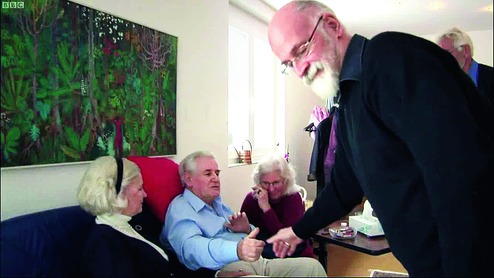
In 2011, Pratchett had made a powerful but harrowing BBC documentary, Terry Pratchett: Choosing to Die, in which he screened the final moments of Peter Smedley, a British millionaire who chose to die with the help of Dignitas in Switzerland after developing motor neuron disease.
Dignitas is a "non-profit members' society" that helps with assisted suicide for people suffering "from terminal illness and/or severe physical and/or mental illnesses, supported by qualified Swiss doctors".
Smedley, who had described his sufferings as a "beastly, undignified business", shook Pratchett's hand, swallowed a lethal dose of barbiturates, made some gasping sounds and slipped away cradled by his wife. He had paid £10,000 for the service.
The film was denounced by 1,219 people, some of whom accused BBC of being a "cheerleader" for assisted suicide. But there were 301 supporters as well.
Pratchett said he wanted to make the film because he was "appalled" at the state of the English law on assisted suicide. "I was ashamed that British people had to drag themselves to Switzerland."
In practice, England's Crown Prosecution Service has not undertaken legal action since 2009.
According to the lobby group, Dignity in Dying, "the vast majority of the public support a change in the law on assisted dying".
But three attempts to change the law have been rejected by Parliament, partly from religious principles and partly for fear that there might be coercion in some cases.