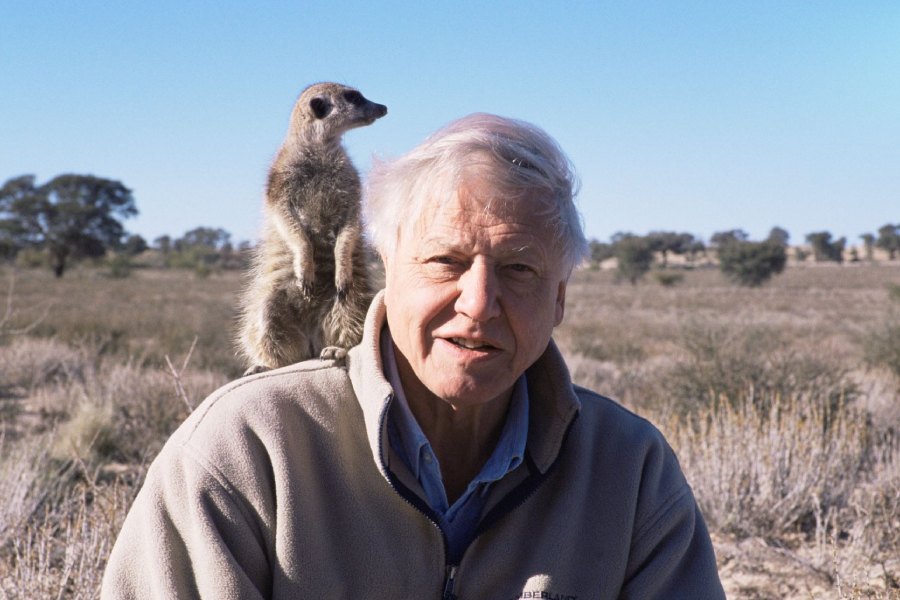
The world has always been the ‘greatest source’ of excitement and visual beauty — but many of nature’s unseen wonders would have remained shrouded in mystery had the grand old man of natural history, Sir David Attenborough, not arrived as the vision we never knew we were missing, revealing the marvels of the natural world to us.
Growing up in a Bengali household in an urban setting — one that has, over time, become increasingly reluctant to spare even the most harmless patches of lush greenery — imagining the richness of the wild, even from afar, often felt like a far-fetched dream to me.
Wherever I look around today, I see nothing but wide stretches of extensive construction work, gathering dust and smoke and almost nothing that is ‘wild and beautiful’.
David Attenborough arrived in my life in my early teens, almost like he did for every other kid.
We watched his wildlife shows on television, discussed the episodes in school with classmates, and stayed glued to his narration for hours — that felt like a stroke of calmness descending upon a chaotic household.
David Attenborough, who is celebrating his 100th birthday on Friday, is a living master of storytelling. Through his words, the driest African savannas heave in a calming downpour, the Pacific Ocean and its whales seem a little less spine-tingling, and stories of animals appear to unfurl as if they are communicating on their own.
He is a broadcaster and natural historian whose decades-long career as a filmmaker and narrator has brought the wonders of the natural world to millions, fostering a global dedication to environmental conservation.
His signature ‘semi-whisper’ creates a sense of intimacy and reverence — almost like a grandparent who lives overseas.
Attenborough’s mantra was: Don’t make them sound like encyclopedia entries. Keep each one anchored in your experience of watching them.
The nerve-wracking Iguana vs. Snakes chase scene
Remember the iconic scene where a slither of racer snakes chases a baby marine iguana, forcing it to run for its life? I still remember how I held my breath as the juvenile almost raced, with Attenborough’s voice echoing in the backdrop. It felt less like a wildlife documentary and more like a perfectly crafted thriller. Even today, few TV moments have matched that level of tension.
The strange beauty of deep-sea creatures
Nothing prepared me for the eerie glow of creatures living thousands of feet beneath the ocean’s surface. Hearing Attenborough describe translucent fish and alien-like organisms made the deep sea feel both terrifying and hypnotic — as though another universe existed quietly beneath ours.
Birds-of-paradise dancing for love
Among all the majestic predators and sweeping landscapes, it was oddly these tiny birds that stayed with me the most. Their elaborate courtship dances, absurdly vibrant feathers and awkward little performances felt deeply human at times — and Attenborough’s unmistakable delight made the sequence even more memorable, and I still remember laughing my heart out on the couch.
Boo! The ‘busy life’ of a sloth
Watching a sloth in the canopy feels like free therapy — thanks to Sir David. As the lazy animal, which hardly moves, dozes off on a branch to the brushing sound of leaves, and Attenborough talks to it, nothing feels more adorable to me than this.
Grumpiest cat’s gullible hunt
Last but, of course, not least, is the Pallas’s cat, whose inept pursuit of rodents for a hearty dinner seems like an impossible task — given its dense fur and tendency to get distracted. At least, that is what I prefer to believe, and so does Attenborough, whose amused narration makes the grumpy little feline all the more endearing.
This is what a whip of my childhood looked like — an oasis of wonders found in a concrete city, only for a man who made the world believe in being kind towards the wild and its endearing wonders, all along the way.