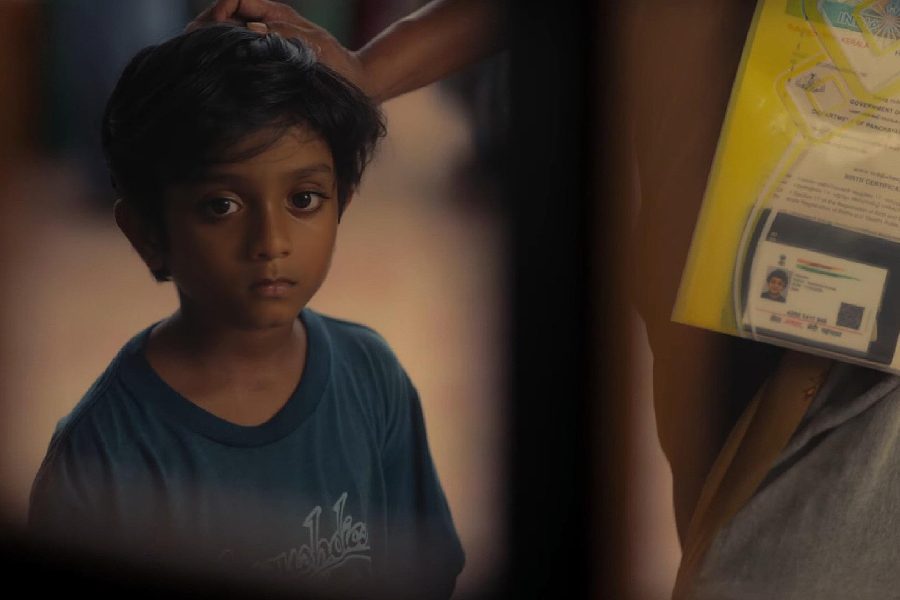
After the crowd-pleasing survival thriller Manjummel Boys, director Chidambaram is back with a completely different genre. Teaming up with Aavesham writer Jithu Madhavan, the filmmaker delivers a poignant drama wrapped in the shell of a suspense thriller in Balan, a film that is as much about survival as it is about the stories people tell themselves to keep living.
The story follows a mother and her young son who are perpetually on the run. Their names change, their addresses change, and their identities shift whenever the threat of exposure looms. The woman carries a troubled past that has effectively turned life into an endless journey of concealment.
The boy, meanwhile, grows up learning that reinvention is not merely a choice but a necessity.
What makes Balan compelling is the deliberate withholding of information. Chidambaram and Madhavan resist the temptation to explain everything upfront. Instead, they allow viewers to piece together fragments of the protagonists' lives. The mystery feels organic, and you remain glued to your seats till the end.
In lesser hands, such an approach could have created emotional distance. Surprisingly, Balan achieves the opposite. We never fully know who these people are, yet we feel deeply invested in their fate. The film understands that human faces often reveal more than exposition ever can. Every scar, hesitation and fearful look becomes part of the storytelling.
Farazana Palathingal delivers a remarkable performance as the mother. There is an old-school quality to her acting that feels increasingly rare in contemporary cinema. She communicates with her eyes and facial expressions. Her character spends much of the film performing different versions of herself, yet Palathingal ensures that the emotional truth beneath those disguises remains visible.
Equally impressive is young Adisheshan, who carries a significant portion of the narrative on his shoulders. His large expressive eyes often convey emotions that words cannot. As Balan, he embodies innocence and wisdom in equal measure — a child forced to mature too quickly by circumstances beyond his control.
The bond between mother and son never feels manufactured; it forms the emotional backbone of the film and gives every decision they make genuine weight.
Beneath the suspense lies a deeply human story about displacement, loneliness and the universal need for connection. Throughout their journey, the mother and son encounter people who are themselves carrying emotional voids. Some seek companionship, others redemption, and a few simply long for purpose.
One of the film's strongest stretches unfolds at the sprawling estate of an eccentric elderly woman played memorably by Dolly June. These sequences provide temporary relief from the constant tension while simultaneously reinforcing the film's themes of belonging. For a brief moment, it seems as though the protagonists may finally have found a place to stop running.
Another pillar of Balan is cinematographer Shyju Khalid. The camera frequently frames characters within confined spaces. Even open landscapes feel tinged with unease, as though danger could emerge from any direction.
Editor Vivek Harshan deserves equal praise for maintaining narrative momentum despite the film's measured pace. The transitions between different phases of the protagonists' lives are handled with finesse. Meanwhile, Sushin Shyam's score remains appropriately restrained, amplifying tension without overwhelming the drama.
The supporting cast also leaves a strong impression. Jean Paul Lal is menacing as a police inspector whose connection to the central mystery gradually becomes clearer. Tovino Thomas, appearing in an extended cameo role, injects charisma to the narrative. However, the portions involving Tovino's character, despite being engaging, feel slightly prolonged and disrupt the carefully calibrated rhythm established earlier.