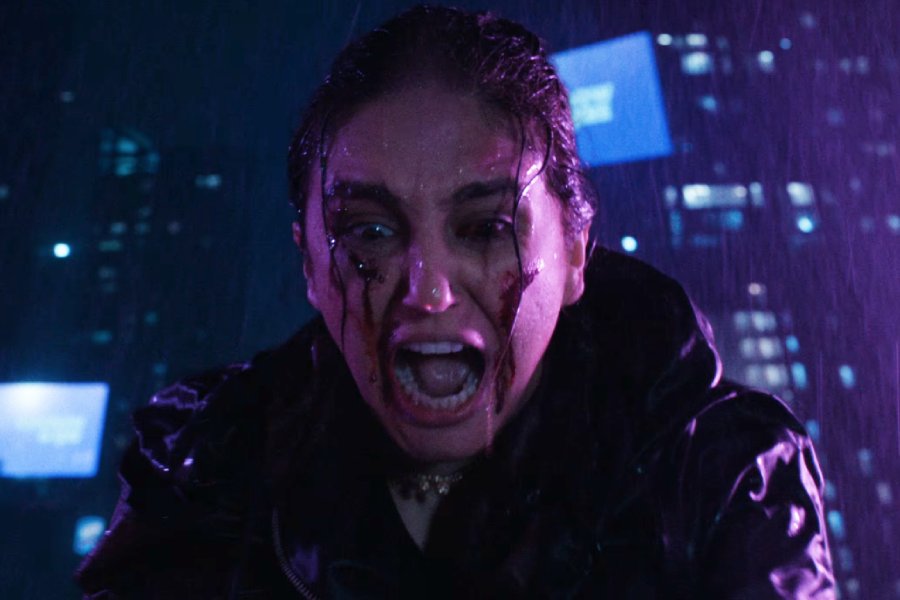
Hindi cinema has given us no shortage of hitmen, gangsters and vigilantes, but female assassins have remained surprisingly rare. Baby Do Die Do attempts to change that with Huma Qureshi as Baby Karmarkar (Do-Die-Do), a deaf and mute contract killer who hides in plain sight while carrying out hits across Mumbai. It’s a premise that instantly stands out, and director Nachiket Samant makes it even better with a noir treatment.
The film’s biggest challenge, however, is giving its fascinating protagonist a story worthy of her.
Baby works for Papa (Chunky Panday), the man who took her in after a childhood tragedy and trained her to become an assassin. She carries out hits with chilling efficiency while hiding her real profession from her family. Things become complicated when she meets Siddhu (Rachit Singh), a kind-hearted music teacher who offers her a glimpse of a normal life.
At the same time, unresolved events from her past begin resurfacing, pulling her back into a world of violence she can’t easily escape.
The setup is strong. The execution is less consistent.
Samant’s biggest achievement is the film’s visual storytelling. Because Baby cannot hear or speak, the narrative often relies on subtitles, phone messages, handwritten notes and silent stretches to communicate information. These moments give the thriller an identity that feels different from most mainstream Hindi action films.
The film also captures a version of Mumbai rarely seen in glossy commercial cinema. Instead of focusing on tourist landmarks, it explores the city’s underbelly — construction sites, cramped neighbourhoods, bars, back alleys and real-estate deals happening in the shadows.
Rain-soaked streets, neon lights, split screens, black-and-white flashbacks and inventive editing create a striking visual world. Mumbai doesn’t feel like a backdrop here; it feels alive, restless and constantly changing. The city’s crowded local trains, ageing chawls and rising skyscrapers become part of the story, giving the film a distinct personality.
Huma Qureshi commits fully to the role. She conveys Baby’s isolation and determination through body language and expression, even when the screenplay doesn’t give her enough emotional material to work with. Chunky Panday is surprisingly effective as Papa, balancing the paternal warmth and the menace of a shrewd businessman.
But the film raises several important questions and then leaves them hanging.
How did Baby become such a skilled assassin? What was her training like? How did her relationship with Papa evolve? How does she navigate everyday life as someone who is deaf and mute beyond exchanging occasional notes?
These aren’t small details. They are the emotional foundation of the story, and without them Baby remains more mysterious than compelling.
The first half also struggles with too many subplots. Corrupt cops, rival gangsters, property developers, family drama, revenge arcs and romance all compete for attention. Instead of building momentum, the narrative often feels crowded.
By the second half, the various threads begin connecting, but the film has already become more complicated than it needs to be.
The romance between Baby and Siddhu is another missed opportunity. Rachit Singh brings sincerity to the role, but the relationship develops so quickly that it never carries the emotional weight the film expects it to.
Interestingly, the most compelling aspect of Baby Do Die Do may not be the assassin story at all.
Beneath the noir thriller lies a commentary on a city being reshaped by money, redevelopment and ambition. Old neighbourhoods are disappearing, new towers are rising and moral compromises have become part of daily life. Baby, trapped between her past and the possibility of a different future, becomes a reflection of that changing Mumbai.