Why is the BJP so confident of victory in Bengal this time?
A part of the answer may lie, in no mean measure, in the seemingly nondescript but mind-bogglingly widespread courtyard meetings the party held across Bengal’s villages and mofussil areas more than two months before the first vote was cast.
Top BJP leaders who have handled election preparedness for the past three years said that if the party does win, the credit will go not entirely to the high-voltage campaign rallies, but to a large extent to the 1.65 lakh courtyard meetings it conducted across the state in February when the use of microphones was banned because of the board examinations.
“The party had its fewest scheduled public activities in February. But we did not sit idle. We fielded thousands of our leaders across the state to organise small courtyard meetings — each having an audience of barely 100 to 150,” a national-level BJP
leader said.
“When a narrative was sought to be created that all the accumulated anti-incumbency against Mamata Banerjee had been washed away because of the SIR, our men silently reached out to the people to remind them how the government had failed to provide security to women and jobs to the youth,” the leader added.
He pointed out that the campaign blitzkrieg that followed — with Prime Minister Narendra Modi, home minister Amit Shah, a dozen central ministers and around 19 BJP chief ministers joining the show — rested on the solid spadework the party did through the courtyard meetings.
Even Mamata has drawn attention to the aggressive campaign while alleging how the BJP had tried to hem her in by deploying all its political might while simultaneously targeting her government and party through central investigative agencies and the SIR deletions.
While Modi addressed 19 rallies and took part in 2 road shows, Shah helmed 29 rallies and 11 road shows. Additionally, Shah camped in Bengal for 16 days. Altogether, central BJP leaders and the party’s chief ministers conducted 640 public meetings during the Bengal campaign.
The national leader this newspaper spoke to said that while the big campaign rallies certainly boosted the election mood, the base of the party’s outreach drive had silently been laid through the courtyard meetings.
The leader pointed to the maths — 1.65 lakh meetings, each attended by 100 people on average, means the party reached out to 1.65 crore voters within a month.
A source in the party said the plan for such small courtyard meetings was the brainchild of the BJP’s Bengal minder, Sunil Bansal, who was appointed in 2022 to reshape the party’s organisational pyramid and launch a robust grassroots
strategy.
Such courtyard meetings had earlier been conducted by Bansal in Uttar Pradesh, and the BJP followed the same model in the Delhi, Haryana and Bihar elections — all of which culminated in victories.
“That is why we are confident,” the leader said.
BJP sources said those courtyard meetings not only focused on the anti-incumbency against the state government but also extensively highlighted the “plight of Hindus”, particularly by showcasing the “oppression” of Hindus in Bangladesh and the riot in Murshidabad’s Samserganj in which a father and son lost their lives.
“So, if you speak of Hindu consolidation, those 1.65 lakh meetings worked on thatfront too. Party leaders revisited those areas during thecampaign phase and observed how the narratives had worked among the people. However, the success of such a massive exercise will be known only on May 4,” another leader said.
BJP workers reached the doorsteps of voters with the slogan “Banchte Chai, BJP Chai (We want the BJP because we want to live)”. The party conducted 12,000 follow-up meetings in many of the areas covered during the courtyard meetings.
BJP sources said the majority of the people who took part in Modi’s March 14 Brigade rally, which the party said was attended by over 5 lakh people, came from the areas where the courtyard meetings were held.
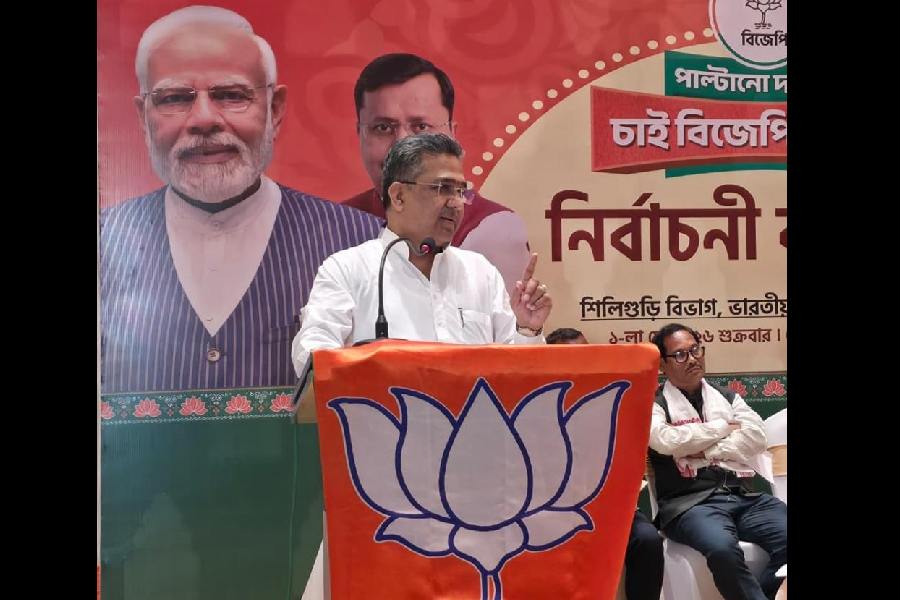
BJP leaders are now training their counting agents in different constituencies for May 4. Bansal and Union minister Bhupender Yadav, who is also the election-in-charge for Bengal, conducted a high-level meeting in Siliguri to inform local leaders about their role on counting day.
Mamata and Trinamool Congress national general secretary Abhishek Banerjee will conduct a virtual meeting on Saturday with the party’s candidates, counting agents and other leaders to guide them on their plan of action on the day of counting.
On Friday, a source said, Abhishek and Mamata held a closed-door meeting.