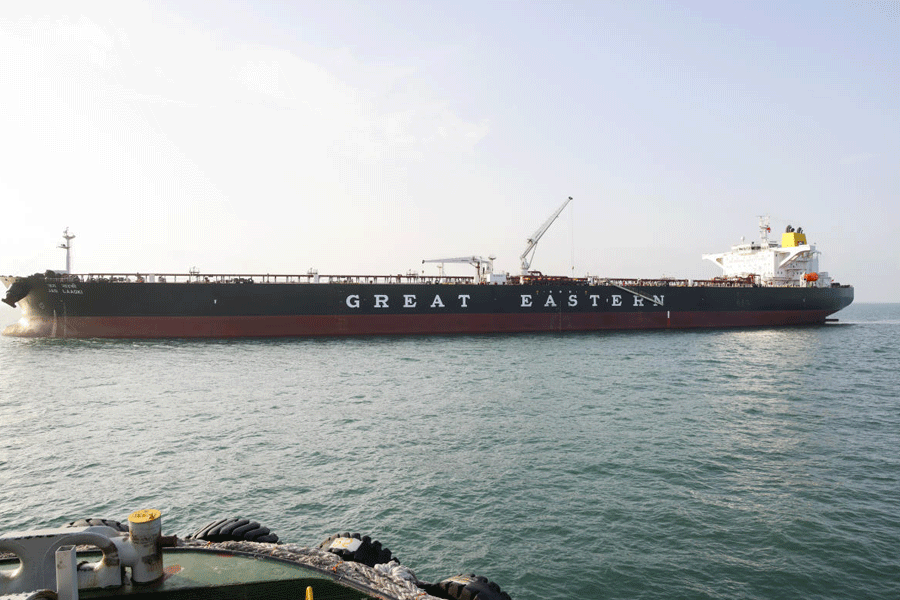
Indian-flagged tanker 'Jag Laadki', carrying around 80,886 metric tonnes (MT) of crude oil, arrived at Mundra Port in Gujarat on Wednesday, highlighting India’s continued energy imports despite disruptions triggered by the ongoing West Asia conflict, officials said.
A day earlier, LPG carrier 'Nanda Devi' reached Vadinar port in Gujarat’s Devbhumi Dwarka district with 46,500 metric tonnes of liquefied petroleum gas (LPG), navigating through the Strait of Hormuz. On Monday, another LPG vessel, 'Shivalik', had docked at Mundra Port.
Adani Ports, the operator of Mundra Port, said in a statement that the crude oil carried by Jag Laadki was sourced from the United Arab Emirates (UAE) and loaded at Fujairah Port.
"Measuring 274.19 metres in length overall and 50.04 metres in beam, the tanker boasts a deadweight tonnage of approximately 164,716 tonnes and a gross tonnage of about 84,735 tonnes," it said.
Highlighting the significance of the arrival, the company said the shipment reinforces Mundra Port’s role in handling large-scale crude imports.
"This delivery supports major refinery relies on such shipments to maintain operations and bolster India's energy security during supply disruptions in the region," Adani Ports added.
The port ensured safe berthing of the vessel and maritime coordination, helping safeguard India’s critical energy supply chains, it said.
Notably, Fujairah Port in the UAE has faced drone and missile attacks amid the ongoing Israel-US and Iran conflict.
India remains heavily dependent on imports, sourcing about 88 per cent of its crude oil, 50 per cent of natural gas and 60 per cent of its LPG requirements from overseas markets. Prior to the escalation following the US-Israel strikes on Iran on February 28 and Tehran’s retaliation, the Middle East — including Saudi Arabia and the UAE — accounted for a majority share of India’s energy imports.
The conflict has also led to a blockade of the Strait of Hormuz, a key transit route for global energy supplies. While India has partly mitigated crude shortages by increasing imports from countries such as Russia, gas supplies to industrial users have been curtailed, and LPG availability for commercial establishments like hotels and restaurants has been reduced.