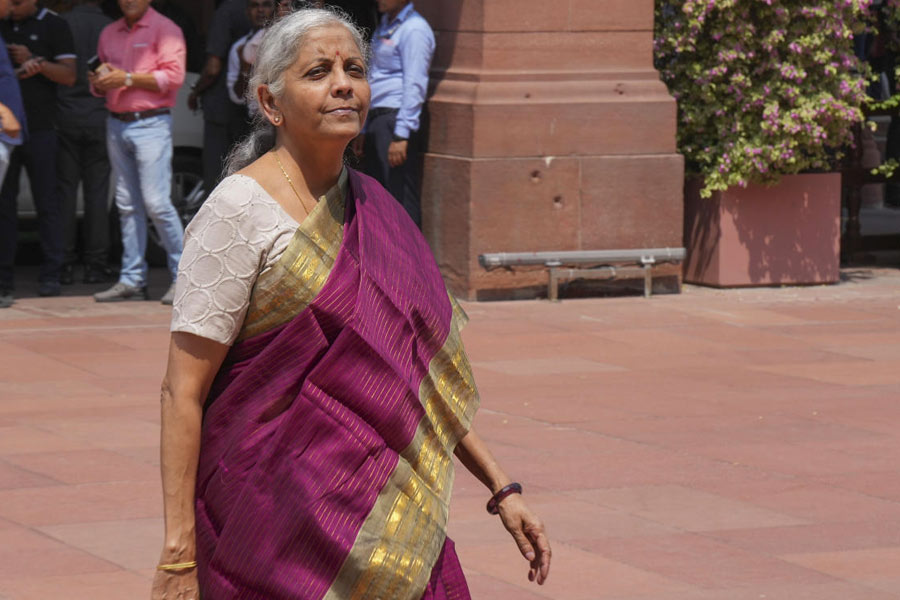
Finance Minister Nirmala Sitharaman will present her ninth consecutive Budget on February 1 in the Lok Sabha, with expectations centred on an overhaul of the customs duty regime, steps to lower India’s debt burden and further reforms to support growth amid heightened geopolitical uncertainty.
Officials and industry participants expect the Budget to pursue customs rationalisation on the lines of the Goods and Services Tax structure, while also outlining a clearer roadmap for reducing the debt-to-GDP ratio as fiscal focus gradually shifts from deficit management to debt consolidation.
For individual taxpayers, hopes remain for additional relief, particularly in the form of a higher standard deduction, following last year’s increase in the income tax exemption limit to Rs 12 lakh and subsequent GST rate cuts.

With the new, simplified Income Tax Act, 2025 set to come into force from April 1, industry is seeking clarity on transition provisions, rules and frequently asked questions to aid smoother adoption.
There is also an expectation of incentives, including a possible hike in standard deduction, to encourage a shift to the new tax regime that offers lower rates but removes exemptions available under the old system.
The Budget may also look at rationalising tax deducted at source categories into fewer rates and slabs, simplifying compliance.
On the trade front, a revamp of the customs regime could involve fewer tariff rates, an amnesty scheme to unlock Rs 1.53 lakh crore stuck in disputes, and procedural simplification to improve ease of doing business.
Other expectations include higher defence spending amid rising geopolitical tensions, provisions for the proposed 8th Pay Commission from January 1, 2026, greater outlays under the Viksit Bharat employment and livelihood mission, and incentives for MSMEs and tariff-sensitive sectors such as gems and jewellery, garments and leather.
It also includes funding for exploration and processing of critical minerals such as lithium, cobalt and rare earth magnets.