Budget 2026 will be judged less by what it announces, and more by its commitment to finishing the foundational work already started. Over the last two years, economic policy has centered on a crucial objective: simplification. From streamlined tax filing to robust digital rails, the groundwork has been laid for a more inclusive and formalised economy.
But the next phase of India’s growth will depend on whether this foundation of simplicity deepens into genuine economic resilience. This requires confronting the silent erosion of inflation, strengthening household balance sheets and ensuring that our credit-led growth is both affordable and sustainable.
Affordable housing
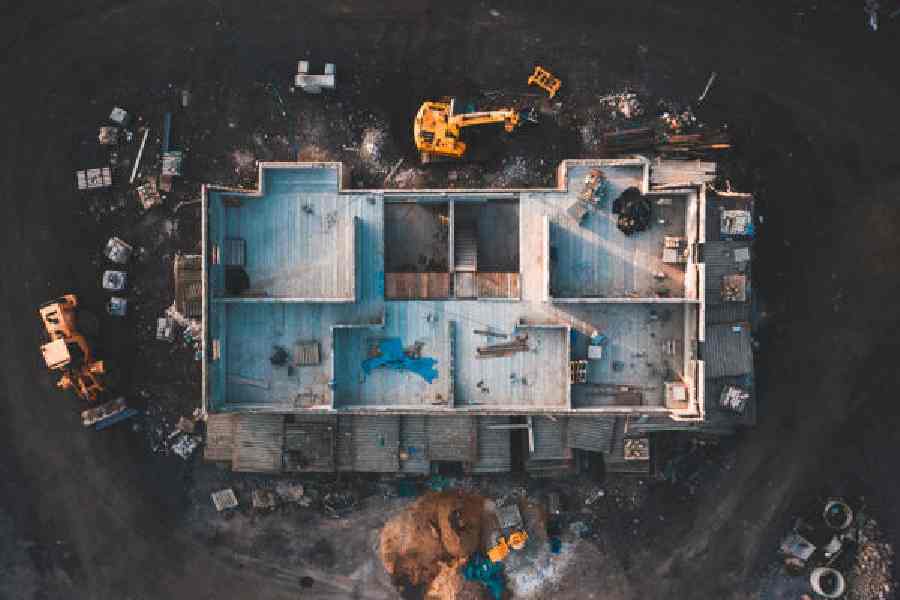
The disconnect between housing policy and market reality is significant. The sector’s affordable housing price cap of ₹45 lakh was established nearly a decade ago. Since then, urban property values and construction costs have moved on, rendering the definition obsolete for most major cities.
A recalibration of this threshold to ₹60 lakh is not a concession but a necessary inflation adjustment. The impact would be immediate. A homebuyer in this segment would save at least ₹2.4 lakh from the reduced GST incidence alone. This correction would make EMIs more manageable, revive stalled demand, and stimulate employment across dozens of housing-linked sectors. It is a policy repair that unlocks housing-led consumption.
Indexing taxation
While the increase of the 30 per cent tax slab threshold to ₹24 lakh was a historic step, the underlying issue of “bracket creep” persists. As inflation pushes nominal incomes higher, taxpayers are moved into higher tax brackets without any corresponding increase in their real purchasing power.
The structural solution is to index the upper tax slabs to the Cost Inflation Index automatically. This would institutionalise fairness and protect real incomes. For a typical urban household, this change could free up an estimated ₹2–3 lakh in discretionary income annually — capital that would flow back into the real economy through consumption, savings and investment, thereby supporting stable domestic demand.
Completing the new regime
The new tax regime’s primary virtue, simplicity, has produced an unintended consequence. By eliminating most deductions, it has weakened the incentive for households to invest in long-term financial protection products like insurance and pensions. This has led to a reduction in household financial savings and has left a critical insurance gap.
Budget 2026 can address this without reintroducing complexity. A single, consolidated social security deduction under the new regime, covering contributions to term life, health insurance, and pension products, would be a straightforward solution. This approach maintains ease of filing while steering households back toward financial resilience. It is not a rollback, but the logical conclusion of the reform.
Digital infrastructure
A proposed ₹1 lakh crore allocation for Digital India 2.0 can serve as a powerful catalyst for the retail credit ecosystem. Digital public infrastructure like DigiLocker and the Account Aggregator framework are no longer experimental add-ons; they are frontline enablers of trust, speed, and price discovery.
For lenders, this means lower acquisition costs and stronger underwriting. The policy focus must now shift from enabling access to driving efficiency, ensuring these gains are passed on to the end consumer through more competitive and transparent pricing.
Credit ecosystem
For India’s entrepreneurial economy, human capital is economic infrastructure. Extending ESOP tax parity to all Udyam-registered MSMEs would be a structural upgrade. When small businesses can attract and retain talent, their governance matures, their cash flows become more predictable, and their risk profile declines.
This, in turn, makes credit more accessible — not through subsidies, but on the strength of robust business fundamentals.
The bottom line
Budget 2026 does not require a raft of new schemes. It requires alignment. It needs tax policy that reflects inflation, housing definitions that reflect market prices and incentives that strengthen household balance sheets. The next phase of India’s economic development will be written not in complexity or concession, but in coherence.
The author is CEO of Bankbazaar.com