Book name- EMPEROR OF THE SEAS: KUBLAI KHAN AND THE MAKING OF CHINA
Author- Jack Weatherford
Publishers- Bloomsbury Continuum, Price- Rs 599
Perhaps the greatest compliment a reader can pay a book is to lose track of time while
reading it. Roald Dahl’s Matilda would often lose herself in the pages of stories at the local library, forgetting to go home till it was time for the library to close. The praise is doubly justified for a non-fiction book: Jack Weatherford’s Emperor of the Seas, which absorbed this reader with its political intrigues, violent conflict, and the expansion of empires, is a case in point.
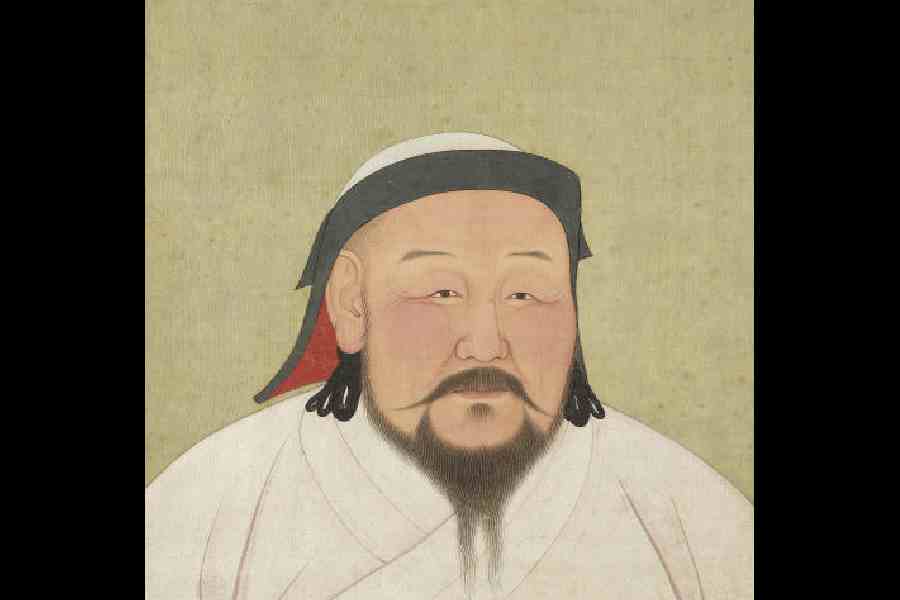
As all accounts about the Mongol empire must, Emperor of the Seas also begins with Genghis Khan and his conquests. The subject of this book, however, is Genghis’s grandson, Setsen Khan, better known by his familial name, Kublai. Not only did he build “the world’s largest navy, with which he unified China” but he also “... expanded a commercial network stretching from the Pacific Arctic to the coast of tropical China...”. Panoramic in its vision and cinematic in its description of the progression of history, the book moves through Kublai’s life like a fine-toothed comb, pausing at every important turn, carefully chronicling his strengths and weaknesses. From Kublai’s first meeting with Genghis, where the inaugural Mongol emperor was presented with animal carcasses hunted by his grandsons — he “... smeared the fat from the carcasses on the two boys’ middle fingers, a traditional gesture meant to sharpen their aim…” — to the promise of “... 5,000 silver ingots to every aristocratic family who attended his khuriltai and supported him” in the war of succession against Ariq Böke after Möngke Khan’s passing, every event which shaped Kublai’s legacy as the first Mongol emperor
to control “The Silk Road of the Sea” is narrated with enthusiastic colour.
Yet, it is in no way a hagiography — the fatal flaw of Kublai’s indolence when compared to the brutal, quick-to-anger temperaments of his brothers and uncles and how he depended most of his adult life on the opinions of his formidable mother, Sorghaghtani Beki, and his elder brother, Möngke, (often to his detriment) are all discussed at length. His demoralising defeats in Japan and Vietnam are accorded equal importance.
The book rounds itself out nicely as the last few chapters dwell upon the gradual decline of the Yuan dynasty a few generations after Kublai’s death. But Weatherford deserves exceptional praise for his recognition of the futility of a “... narcotic and ethereal vision of Kublai Khan...” emanating from the pen of S.T. Coleridge that “... seized the literary imagination of the West”. Wisps of wistfulness permeate the “... caverns measureless to man”; but maybe Kublai had no time to build the sunny dome and those caves of ice. Maybe he was too busy conquering the seas.