Book: THE DIG: KEELADI AND THE POLITICS OF INDIA’S PAST
Author: Sowmiya Ashok
Published by: John Murray
Price: Rs 799
Unless one has been living under a rock for the last decade, the remodelling project of India’s history spearheaded by the right-wing government at the Centre will not be unfamiliar to any of us. It is in this context that the archeological discovery of Keeladi is significant — it challenges the dominant notion of the Vedic fountainhead being in the Indo-Gangetic plains and presents an alternative history to the one the Bharatiya Janata Party would have you believe. Sowmiya Ashok traverses through the trenches to bring us this counterweight perspective.
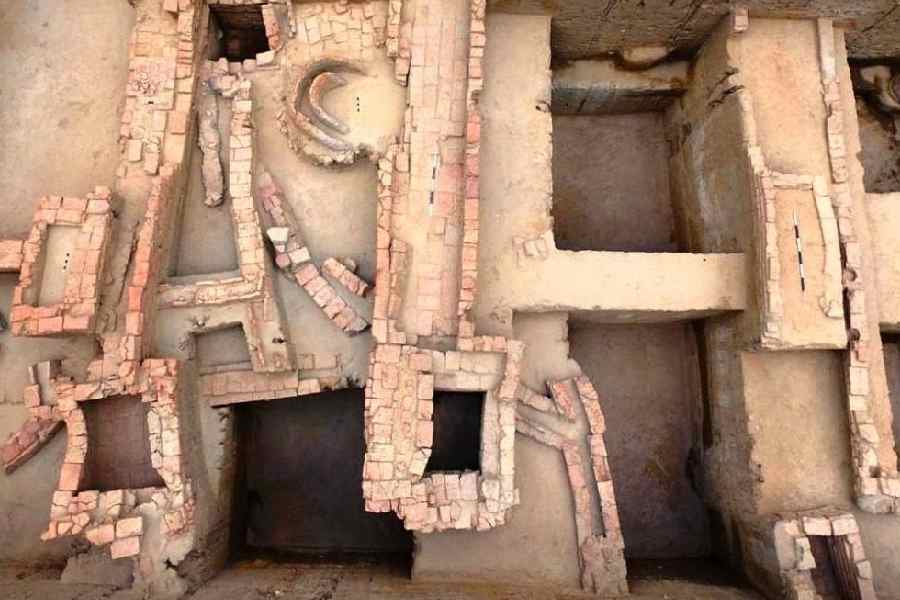
The Dig is a fascinating account of the discovery of an ancient civilisation in a village named Keeladi on the banks of the river, Vaigai, near Madurai, and how it changed the landscape of Indian history. It is also a tale of how facts can be twisted to suit different truths. The fierce battle to “legitimize an indigenous Vedic homeland” and to understand whether the Tamil civilisation emerged quite separately from but simultaneously with the Indus Valley Civilisation is analysed wonderfully by the seasoned journalist. Ashok, her tongue firmly in cheek, captures the reader’s attention with a hearty combination of personal anecdotes and factual evidence. Her mutton feasts in Madurai — the setting for her description of “an ancient Tamil ritual” involving goat sacrifice — and her conversations with experts from the Archaeological Survey of India combine to create one of the best treatments of ancient history to be published in recent times. The past and the present collide head-on in her narrative, and the personal becomes the political.
There are those who will argue that an article in the editorial pages of any leading English daily would have sufficed for Ashok’s source material. But the nuance and the level-headedness with which she treats her subject and the painstaking research which has gone into this book belie such flippant claims. She is unapologetic in calling out hypocrisy: the “clear shift” in Professor Vasant Shinde’s “interpretations since the BJP came to power…” finds as much space as does the critique of the Tamil political parties in converting Keeladi from an archaeological site to “a marker of Tamil identity and pride”. Every angle in the raging debate about the independent origin of the ancient Tamil civilisation has been covered, from literally ground-breaking DNA studies conducted in Rakhigarhi to the meticulous cataloguing of coins, beads and pottery shreds retrieved from Keeladi. And despite the academic subject matter, The Dig flows freely — there is no inaccessible jargon, no dry assortment of facts.
Today, politics signifies little apart from twisting the narrative and consuming the minds of the populace. No matter which side of the political spectrum you belong to, Sowmiya Ashok has something to validate your opinion, and something to challenge it. For her, the past is “just one important part of a wonderfully diverse country”. The future is in your hands.