Book: SACRED GROUNDS: A JOURNEY THROUGH PEOPLE’S FOOTBALL IN INDIA
Author: Sandeep Menon
Published by: Penguin Play
Price: Rs 499
Sandeep Menon’s book is an enquiry. The question being — is there an Indian style of football? Menon visits 10 Indian states — Kerala, Karnataka, Goa, Mizoram, West Bengal, Tamil Nadu, Meghalaya, Punjab, Nagaland and Manipur — in search of an answer.
But early on in the book, it becomes clear that he is not going to find one. Not due to a lack of effort on his part, but as he himself admits — perhaps the question is flawed. In a country as diverse as India, there is no one way of playing football. Rather, the sport is a filter through which one can learn a lot about a region's history, culture, politics and even popular concerns.
Menon writes how, in Malappuram in Kerala, during the colonial era, the police played football with the locals to keep tabs on them and their "anti-social” activities; the locals, in turn, played to beat the police at their own game. Again, in Mizoram, the ball is never carried but moved around with small, deliberate kicks to build technique. And in Thoothoor in Tamil Nadu, people’s days begin and end with football; everything in between is mere activity to pass the time.
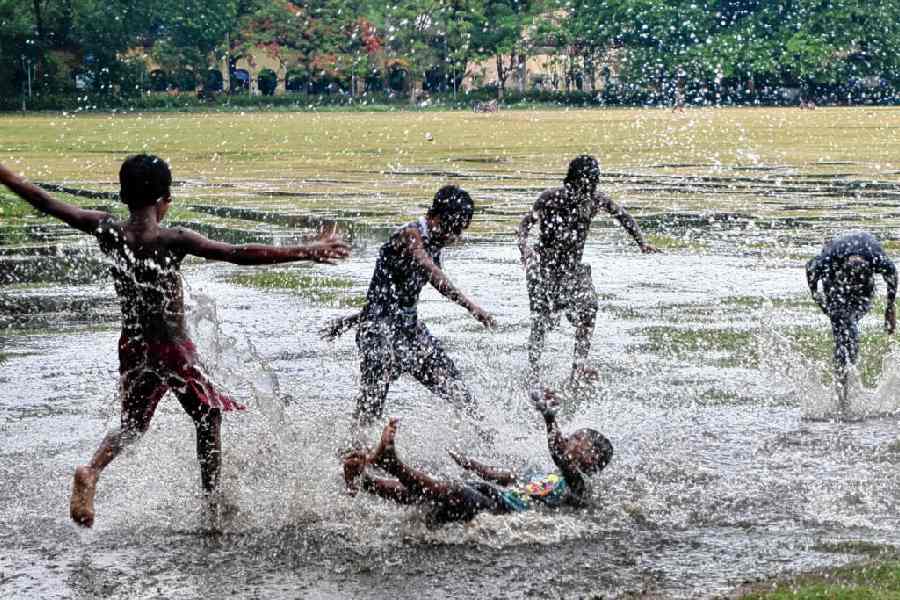
Examples of community legends embleatic of the football fever abound in the book. Menon writes about an impromptu match from the late 1950s, between a Kozhikode team — booted and ready — of the Olympian, Rahman, and the village of Areekode, that ended with a win for the latter. People of Areekode say that not even a blade of grass has grown on the road that sent the losing team home. Then there are stories of the Bengaluru player, Ahmed Khan, who was found juggling a ball on a muddy field drenched in buckets of water, just a day before the Calcutta derby, in preparation for the monsoons.
Menon also shows how football can make a dent in the language of a region: the Malayalam phrase, oru self adichu, means scoring for the rival team and is a snarky comment at that. And in Goa, they say “football is sossegado”, which means tranquillity.
The chapter on Calcutta is interesting, not only for the comprehensive history of the big three clubs but also for its exploration of the khep culture, the varying opinions regarding its impact on younger generations, and the politics of it.
The book offers nothing new. It does not intend to, either. Rather, Menon brings you an odd mix of legends and lores that take on a life of their own with each retelling.