TAIWAN TRAVELOGUE
Written By-Yang Shuang-Zi
Published by: Picador, Price- Rs 499
“Is there something good to eat around here?” This ‘pet phrase’ resonates loudly throughout Taiwan Travelogue: a question that defines the spirit and the character of the remarkable Aoyama Chizuko who, we are led to believe, is the author of the novel.
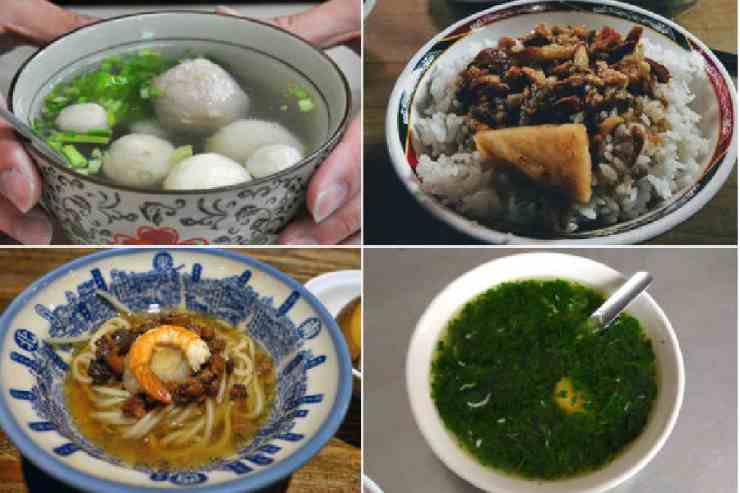
Aoyama is a Japanese writer who has been invited jointly by the Nisshinkai women’s organisation and the Government-General to visit Taiwan to promote her successful novel, A Record of Youth, the film adaptation of which became widely popular across Japan. The novel is set in 1938, and the young writer, already aspiring to visit Taiwan, eagerly accepts the invitation to the lecture tour. It becomes apparent that her principal interest in this tour is to indulge in all the flavours offered by the local cuisine of the island. Her first interpreter and guide, Mishima Aizo, from Taichu City Hall, proves to be a staid and uninteresting person who repeatedly disappoints Aoyama in her requests for local delicacies. Sensing her restlessness, Madame Takada, her gracious host from the women’s organisation, assigns her a local islander, Miss Ong Tshian-hoh, whom Aoyama fondly comes to call “Chi-chan”, a nickname fashioned from the common characters of both their Japanese names, O Chizuko and O Chizuru. In Chi-chan’s company, Aoyama’s experience of Taiwan changes into the breathless dream she had yearned for. In their travels through the island, Chi-chan deftly manages to give Aoyama a culinary haven by arranging every region’s local items for them to consume. Aoyama, later called “Aoyama-san” by Chi-chan, is enthralled by the mysterious girl, continuously referring to her ivory skin, ruby lips and dimples as an ‘angelic’ combination. She yearns for a deep friendship with Chi-chan, but her efforts are deflected and she slowly comes to realise that Chi-chan hides her true feelings behind a metaphorical “Noh mask”.
The words, “Mainlander” and “Islander”, are loaded terms that are repeated in the novel. Aoyama soon realises that all her pleadings with Chi-chan to accept her offer of friendship, to be her “best friend”, will never be accepted. This conundrum baffles her as Chi-chan’s impeccable behaviour is often laced with care and endearing gestures. However, the ‘Noh mask’ guard always returns after these fleeting moments of intimacy. Aoyama’s infatuation with the elusive Chi-chan envelopes the reader with its intensity and despair. The barrier between them is impermeable. Aoyama is a ‘Mainlander’, a symbol of Japanese supremacy, who holds the colonised ‘Islander’ captive in her snare, cementing the mismatch in class and social position between the two. Despite Aoyama’s loud proclamations that she is not going to write articles in favour of the Southern Expansion policy, that she is genuinely removed from the conviction of the division between Mainlander and Islander, she unwittingly makes several statements that are indicative of her subconscious allegiance to Japan.
Mishima, who replaces Chi-chan after she resigns from her post as Aoyama’s interpreter, quietly informs her that the way in which she talks about the island’s flavours does not sound like she is “appreciating them for being delicious, but more for being exotic, as one might appreciate a rare animal”. Even though she envisions herself as a hero, a protector, who has come to rescue Chi-chan from the cruelty of her future, her delusion meets with a cruel blow. Before their heartrending parting, Chi-chan says, “The truth is that gentle Aoyama-san never once asked me: Do you want this protection?”
Taiwan Travelogue is nestled within a complex structural web. Yang Shuang-Zi’s novel was originally published in Mandarin in 2020. Lin King’s English translation won the work the prestigious US National Book Award for Translated Literature in 2024. It has now won the International Booker Prize.
‘Shaung-Zi’ means twin sisters. The author, Yang Jo-tzu, is a twin to her late sister, Yang Jo-hui. Both sisters complemented each other in their academic interests; the former in her love for writing fiction, the latter in her dedication to history and translation, and the name, Shuang-Zi, Yang Jo-tzu’s pen name, is a tribute of love to her sister.
Taiwan Travelogue is also Yang’s resolute comment on her stance on Taiwan. She identifies fully as Taiwanese and her views of Taiwan being under threat intensify her need to express the troubled history of Taiwan’s colonisation. Interesting Forewords and Afterwords bracket the novel, making it deliberately confusing to identify its linguistic trajectory. Aoyama’s novel was published in 1954, in Japanese. Her adopted daughter states the book’s “hoped-for destination was Chi-chan”. There are multiple footnotes from both Yang and King that further obscure the authorship. In the end, after travelling through the hands of several fictional translators, an original Mandarin work of fiction comes to be identified as “the Japanese translation of a Taiwanese novel that claims to be a Taiwanese translation of a Japanese novel.”