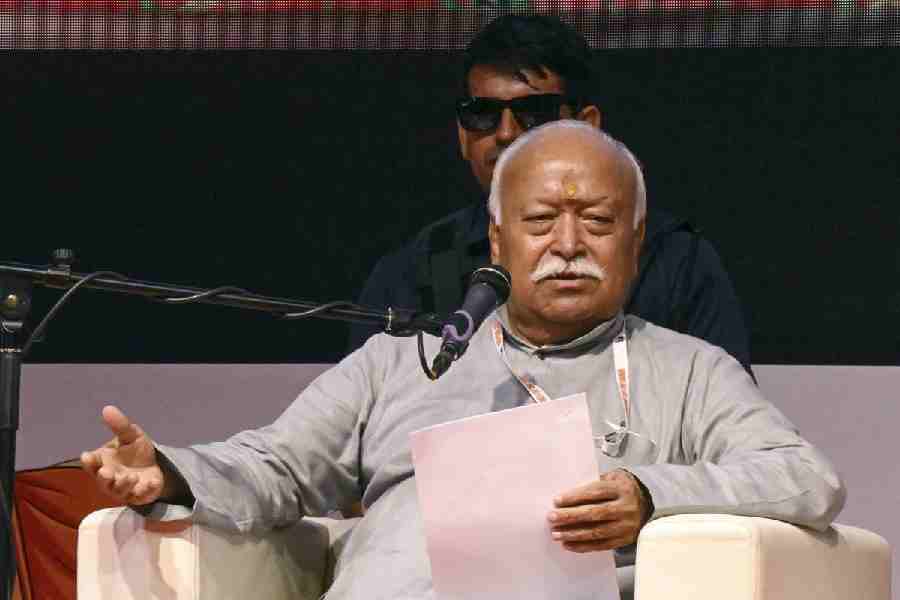

Four new galleries at the Bihar Museum - regional art, contemporary art, temporary exhibition and Bihari diaspora - will open for visitors in October, almost a year after the inauguration of the museum. Only two galleries are now open, the orientation and children galleries. However, there will not be any director to monitor the state's 23 other museums as Jai Prakash Narain Singh (director, museums division of art, culture and youth affairs department) retired on Friday. There are only four curators in the state against the requirement of 23.
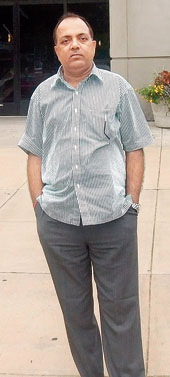
Born in 1956 in Chhapra, Singh joined the Bihar government in 1982 as the assistant curator at Patna Museum. He served the museum in various capacities, including curator, excavation officer and registration officer. He will officially retire on July 31 but his last working day was July 29.
Singh spoke to Piyush Kumar Tripathi on the eve of his retirement:
What would be on offer at the four galleries at the Bihar Museum expected to open in October?
Different art forms from Bihar, including Sikki art of Mithila region, Madhubani painting and murals, would be showcased in the regional art gallery. We have selected around 20 artists, who will contribute to this gallery. The contemporary art gallery will showcase works by renowned artists from across the country. The Bihari diaspora gallery is dedicated to renowned personalities from Bihar who have made the state proud. The temporary exhibition gallery will be used to showcase exhibits brought from other places.
What is the current status of the four galleries?
Work is in advance stages in all the four galleries. We have asked the firms involved in developing and furnishing the galleries to complete work by September-end. We intend to get the four galleries inaugurated by chief minister Nitish Kumar on October 18 on the occasion of the proposed Bihar Art Day.
Which artefacts would be kept at the Bihar Museum?
Canada-based Lord Cultural Resources, the master-planning consultant for the Bihar Museum project, has finalised the list of artefacts to be shifted from Patna Museum to Bihar Museum. Broadly, artefacts from the ancient Indian era to 1764 will be transferred and those beyond 1764 would be kept at Patna Museum. At Bihar Museum, the artefacts will be placed in the three blocks of the history gallery.
What will happen to the Patna Museum?
One of the underlying reasons for developing Bihar Museum was dearth of space at Patna Museum to display artefacts. Of 40,000 artefacts kept at Patna Museum, only 2,000 are being displayed at present. But the Patna Museum will continue to enjoy its significance along with the Bihar Museum. Apart from the artefacts dating back to post-1764, some Patna Museum galleries will be turned into art galleries, exhibition and learning centres.

Tell us about other ongoing works at the Bihar Museum.
Work is going on simultaneously on all blocks, an open-air amphitheatre, a multi-purpose hall and a cafeteria. Besides, new replicas and other furnishing material are being imported from other countries. For instance, glass-made showcases for the orientation gallery has recently arrived from Germany.
There is an apparent delay in finalisation of works on Bihar Museum; the initial deadline was March last year. Why?
Museum development is a complex work and requires expertise and precision. For instance, work on Patna Museum started in 1917 and it was officially opened for visitors in 1928. Besides, multiple agencies, including international consultants, are involved in the Bihar Museum project, who do not want to compromise with quality. However, labour related problems have created obstacles in progress of the project at times.
What is being done for other museums in the state?
The department is working on plans for development of state-run museums, including master plan for the museum at Gaya. The department has recently conducted a survey of 23 state-run museums, including those at Jamui, Munger, Begusarai, Bhagalpur, Nawada, Chhapra, Hajipur, Buxar and Madhubani and others. There is, however, an acute shortage of expert manpower in the department. For instance, I don't see any competent official, who can assume the charge of director of museums after my retirement. Besides, there are only four curators in Bihar at present. The 23 museums are being run by only nine experts. Such a situation is basically due to lack of appointments made for the respective posts in recent years.