
Bhagalpur, Dec. 16: When Mohamad Gurfan heard of demonetisation he thought it would not affect him, a daily-wage silk industry labourer. But today, he is reeling from the sledgehammer effect of the Centre's move on his industry - the same way that farmers, vendors and other daily wage-earners around the country have been affected over the last month.
"I hardly earn Rs 150-200 per day , so I had little concern with Rs 500 and Rs 1000 notes," said Gurfan, 28, a resident of the weaver-dominated Narga locality on the outskirts of Bhagalpur. "Only when my employers started handing me cheques instead of currency notes did I understand the intensity of the problem."
He does not have a bank account and the fear of being paid by cheque made it difficult for him to find daily employment.
"I last managed to find work at a power loom last Friday, and earned Rs 150. I spent all of it on my elderly father's medical needs. It is now increasingly difficult for me to manage two square meals for my family," he said.
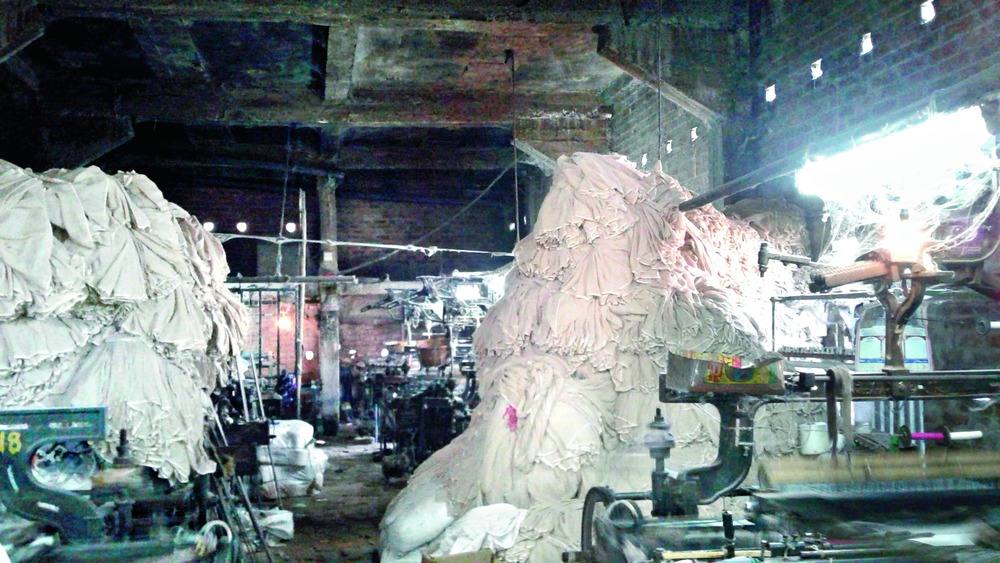
The backlash of demonestisation has brought the century-old silk industry at Bhagalpur to a standstill. From affluent exporters to weavers and labourers, everyone is suffering as both production and export have come to a halt.
"The otherwise busy and loud looms in the weaver dominated areas of Nathnagar, Champanagar, Maskand Barari and Hussainabad have gone silent," said Islam Mukhiya, 64, a weaver at Narga. "For work you need money, but when that that flow stops, how do you expect to work?"
Most labourers do not own bank accounts, Islam said.
"How do I pay daily wage labourers without bank accounts?" he asked. "Even if they do, they won't accept a cheque for Rs 200. People generally avoid cheques fearing harassment at the banks for withdrawing small amounts."
Shahbaz Ansari, 51, another labourer,said the problem was not of getting change: "If one spends the entire day at the bank, when do I work? And if I don't have money, how can I work?"
Silk exporter Jiaur Rahaman, 54, said it was foreign orders, instead of orders from other states, that helped businessmen like him survive.
"Despite foreign orders, I am not in position to deliver the items. I will receive the payment in my account, but how do I pay the labourers and others for manufacturing the ordered items?" he asked, explaining that silk manufacturing involves spending 50 per cent of the product cost on labour and another 50 per cent on inputs.
"We would purchase silk yarn with cash, but now no one is ready to continue business with hard cash. The price of silk yarn has increased despite low production. China-Korea, a variety of foreign yarn which cost around Rs 4,000 per kg in October-November, now costs Rs 5,000. The cost of indigenous tassar yarn too increased from Rs 4,500 to Rs 5,500-5,800 per kg," he added.
Wasim Ahmad, another silk exporter, said earlier he would get orders worth more than Rs 1.5 crore from other states , but after November 8 his customers have asked him to not send the consignments as they cannot pay him.
"Orders worth more than Rs 70-80 lakh from different states will likely be retracted as it is very difficult for me to prepare the items," he said.
Halim Ansari, member of Bihar Boonkar Kalyan Samity and a local exporter, echoed Jiaur and Wasim. He said the worst affected were the rural areas. "Weavers and labourers became direct victims, and this subsequently paralysed the entire system."