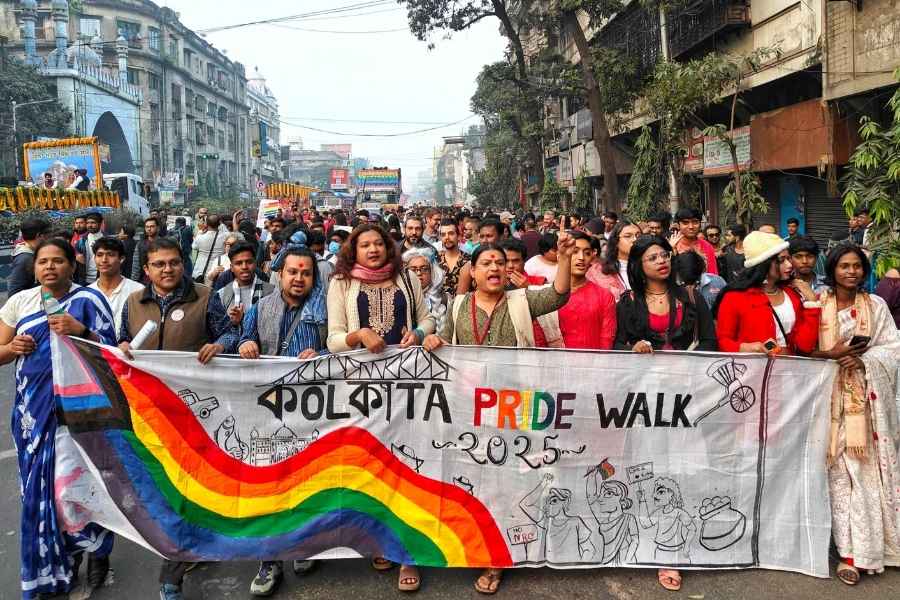
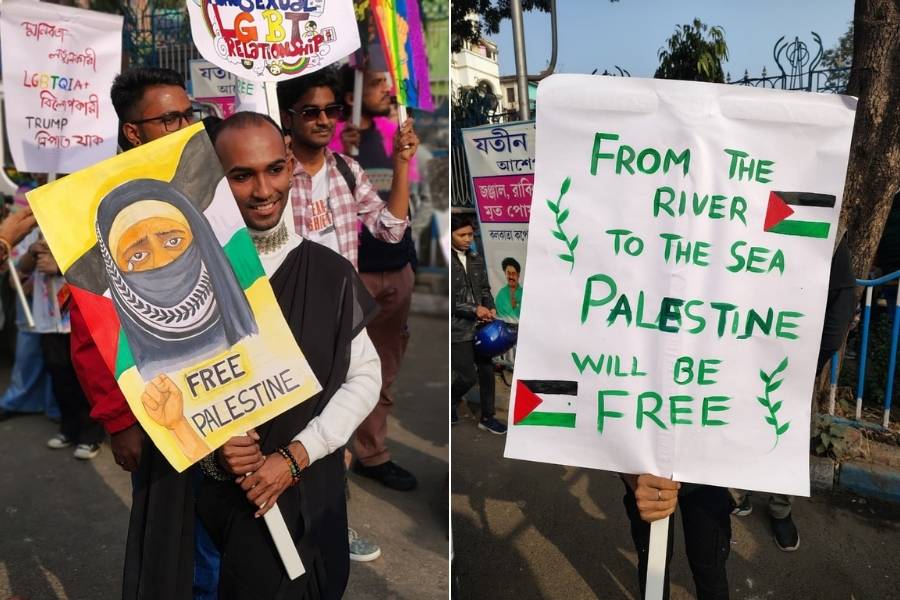
Slogans demanding ‘Free Palestine’ and opposing the Special Intensive Revision (SIR) dominated the Kolkata Rainbow Pride Walk 2025 on Sunday, as the organisers asserted that “pride is political” rather than celebration alone.
Marking 26 years of the city’s queer movement on the streets, the walk began at Jatin Maitra Park near Girish Park metro station, proceeded along Ganesh Chandra Avenue and Chittaranjan Avenue before concluding at Esplanade Y channel.
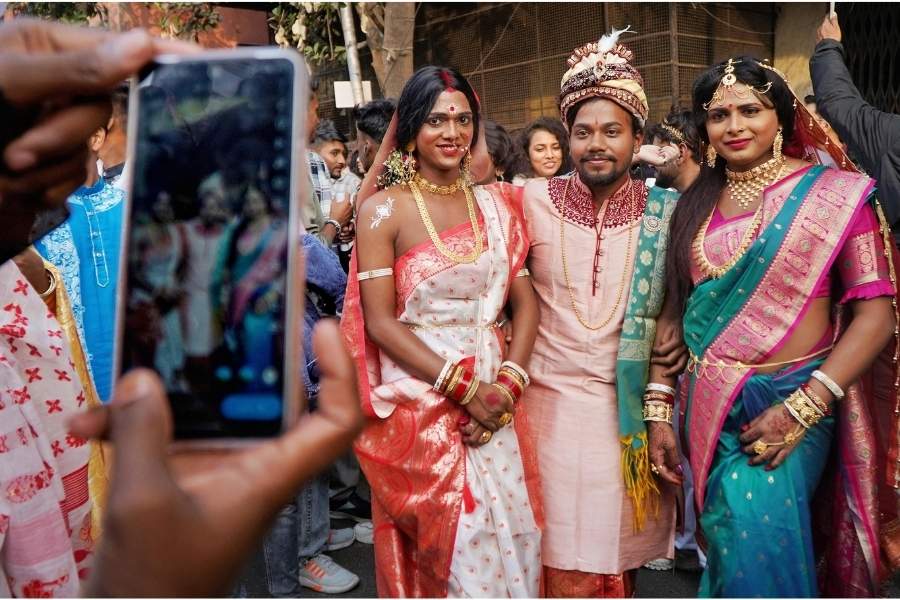
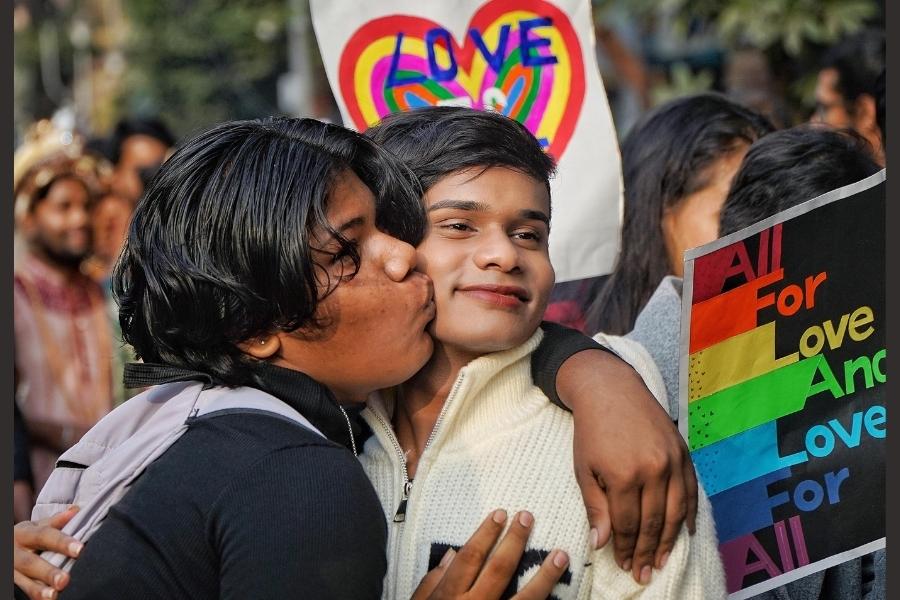
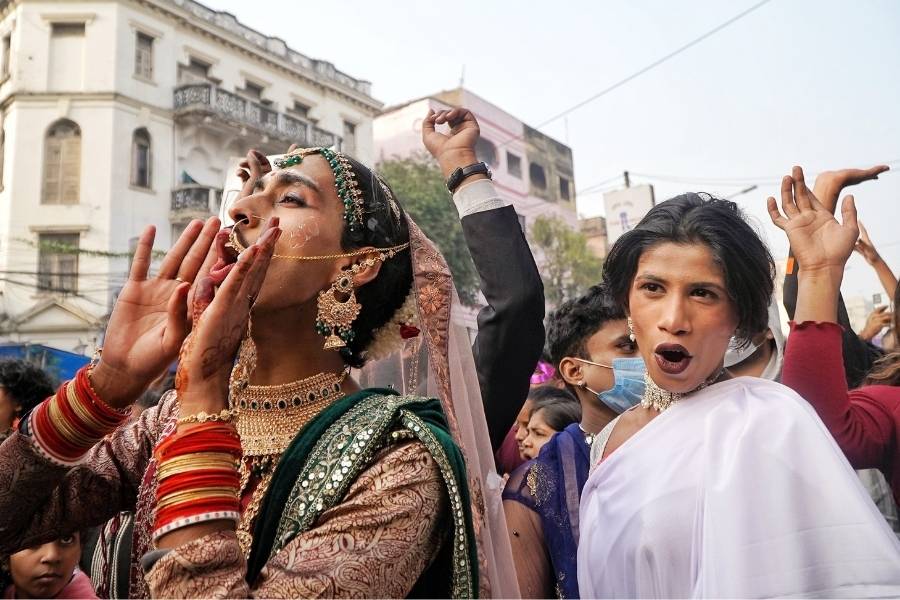
Thousands of people — from the LGBTQI+ community, straight allies, and curious bystanders — participated in the march, transforming one of Kolkata’s busiest thoroughfares into a vibrant and colourful demonstration of queer, trans and allied resistance.
While music, dance and colour remained integral to the march, the political tone of the pride walk was unmistakable. Placards and chants calling for a free Palestine, and protesting the SIR were seen in the hands of participants.
Slogans of ‘azaadi’ — against various forms of discrimination, patriarchy, caste hegemony, religious persecution — were also raised during the walk.
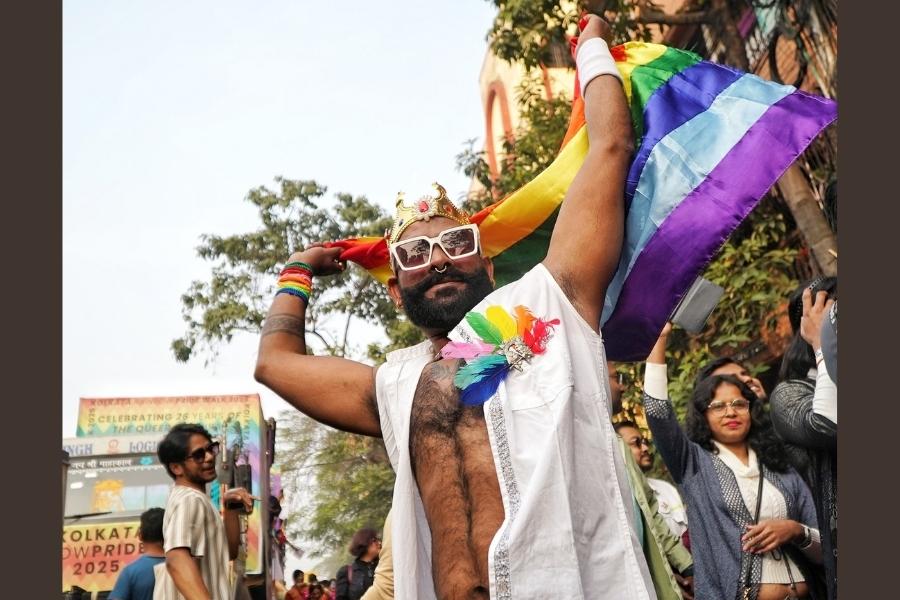
Organisers said this year’s Pride foregrounded the intersection of queer-trans rights with caste, class, religion and global politics in the current socio-political climate. The official float highlighted these themes, signalling a refusal to depoliticise Pride or reduce it to spectacle.
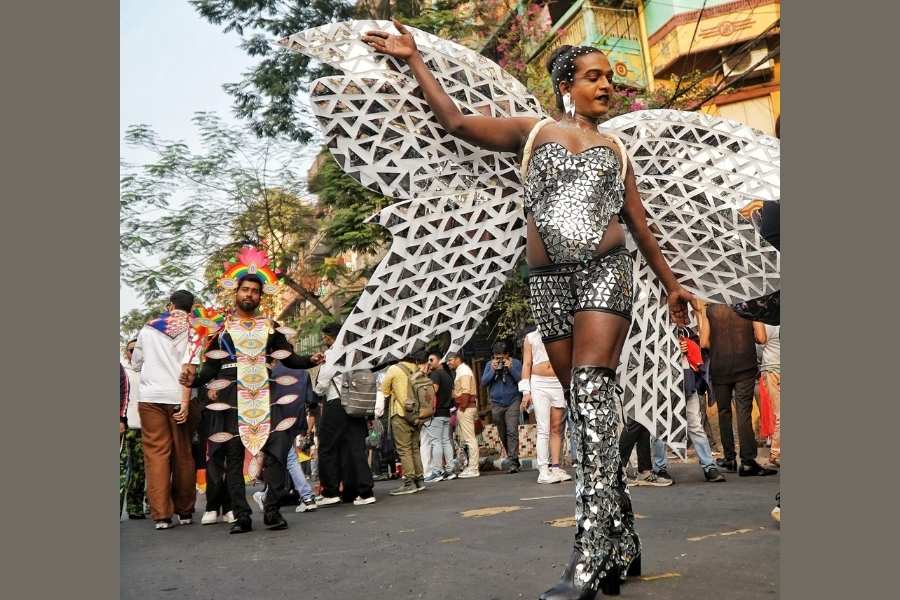
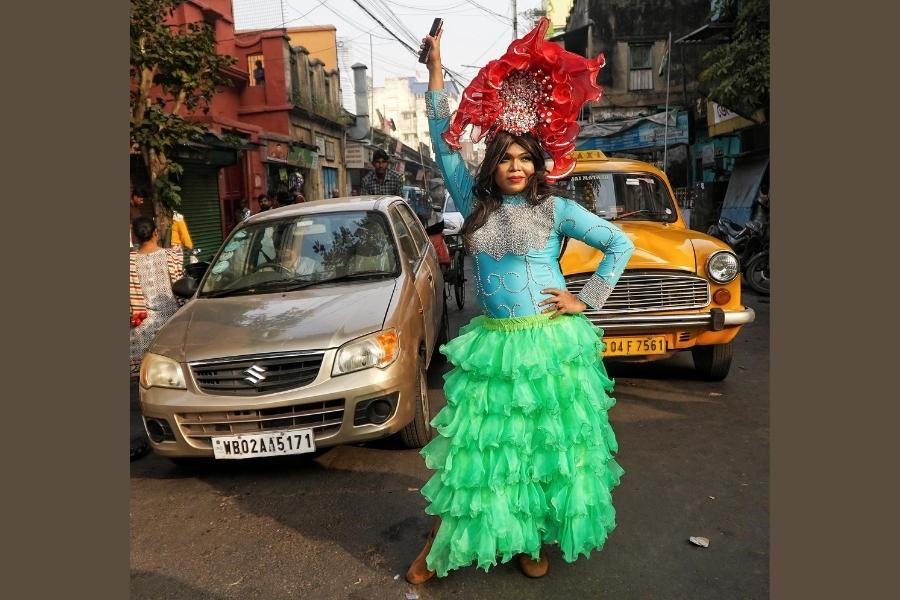
Fashion continued to be a prominent mode of expression, with participants using clothing to challenge gender binaries and assert queer visibility in public space. Outfits ranged from traditional wear to explicitly political costumes carrying messages of protest and solidarity.
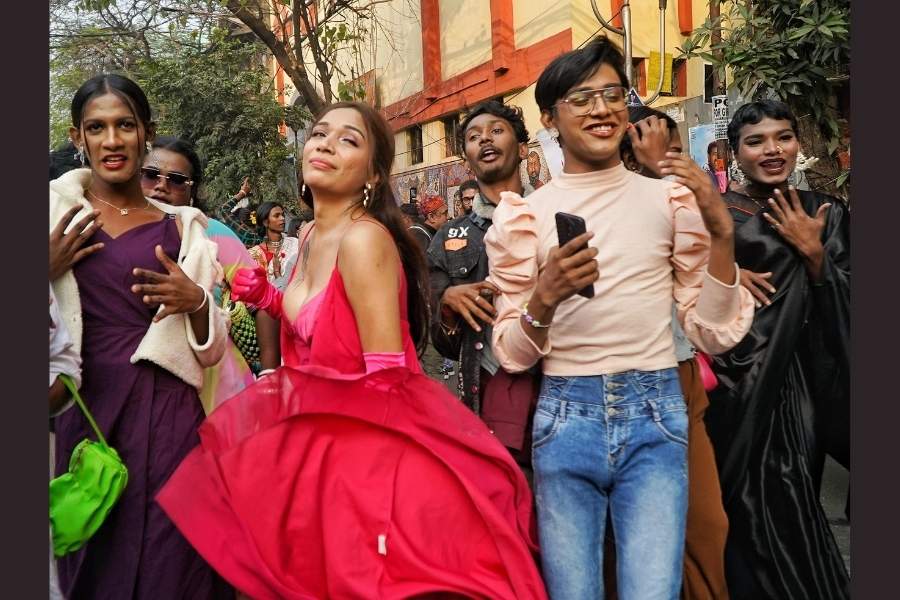
Slogans also celebrated the right to love and exist, not only for queer people but for all marginalised groups. One of the most repeated slogans was in Bengali: “Chhele-chheleder chumu kheyeche, meye-meyeder chumu kheyeche — besh koreche, besh koreche!” (A boy kissed a boy, a girl kissed a girl — so what, so what?), drawing loud responses from the crowd.
In a statement released during the march, organisers termed pride as an act of resistance rather than a festival. The statement rejected the idea that legal milestones such as the reading down of Section 377 in 2018 or the enactment of the Transgender Persons (Protection of Rights) Act, 2019, had translated into material safety or dignity for queer and trans people.
“Rights without access, visibility without safety and recognition without dignity are forms of violence,” the statement said, pointing to persistent issues including police harassment, healthcare discrimination, unemployment, homelessness and the absence of comprehensive legal protection against hate crimes.
International issues featured prominently, with the statement condemning what it described as the “pinkwashing” of violence in Palestine and rejecting attempts to project queer-friendly imagery to obscure ongoing civilian suffering.
The organisers reiterated a set of non-negotiable demands, including self-determined gender recognition, reservations in education and employment, anti-discrimination legislation, inclusive healthcare, housing security, recognition of chosen families and community-led policymaking.