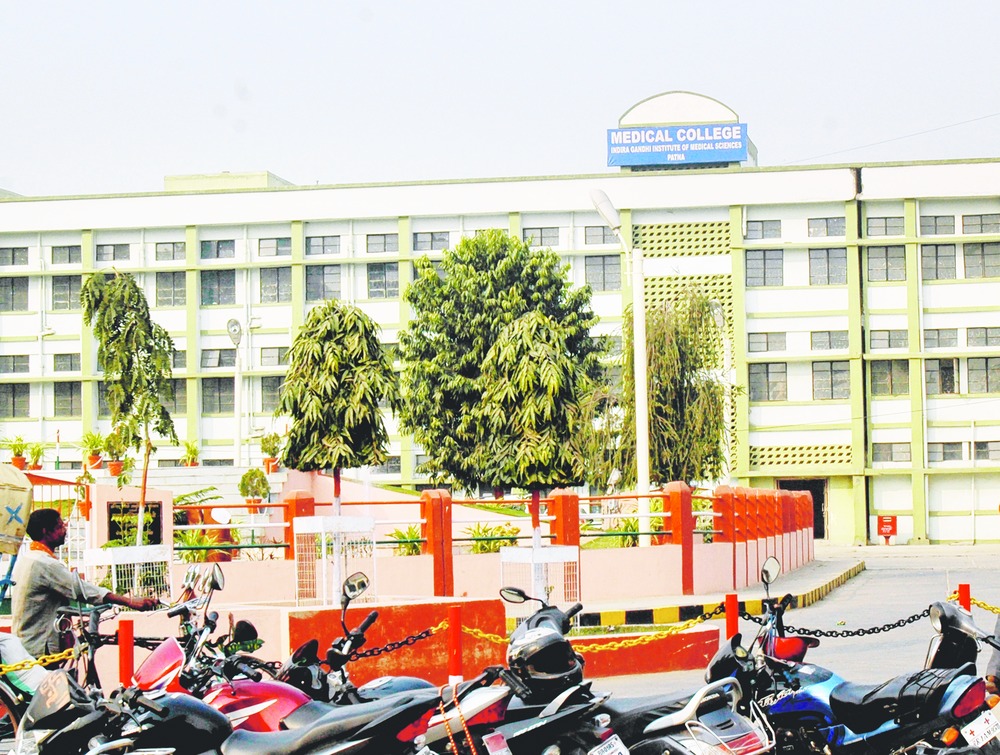

The Medical Council of India (MCI) has denied Indira Gandhi Institute of Medical Sciences (IGIMS) permission to start a postgraduate course in forensic medicine, because the hospital has probed just one rape case in four years.
The department exists since 2011. MCI norms demand regular functioning of a department for starting a postgraduate course.
The council, however, allowed IGIMS to start postgraduate courses in physiology and pharmacology.
Altogether, there are 14 postgraduate seats in physiology and another 14 in pharmacology at state-run medical colleges. With IGIMS getting the nod, the number of seats will rise to 17 each.
"The MCI team had during its visit in December raised objections to the absence of an animal house - where medicos conduct research on animals - in the pharmacology department," said a senior IGIMS administrative official who didn't want to be named.
"It's good that MCI has overlooked that and allowed us to start a postgraduate course in pharmacology. But, at the same time, it is ironical for the MCI to not allow IGIMS to start a postgraduate course in forensic medicine citing limited number of rape probes. After all, it is the police who decide which hospital probes a rape case."
Most cases are sent to Patna Medical College and Hospital (PMCH), sources said. IGIMS director N.R. Biswas said the college would try and convince the MCI to allow them to start the forensic course. "We are going to send MCI a compliance report by January 10, promising to make good the deficiencies it has pointed out. We will ensure that the forensic medicine department conducts more rape investigations."
A 2011 batch MBBS student at the college said limited number of rape investigations was not the only shortcoming. "MBBS students study forensic medicine in the second year of the course. But not a single post-mortem was carried out in the department in our second year. Our juniors, however, were lucky because they got to see at least one post-mortem investigation."
Sources said the situation is no better at other government-run health institutions. orensic medicine doctors are not to be found at Gardanibagh, Rajendra Nagar and the sub-divisional hospital at Danapur where a majority of rape victims are initially sent for medical investigation.
On the other hand, the biggest state-run hospital, PMCH, where most rape cases are referred to, has forensic doctors but they hardly conduct medical investigation of rape cases.
They only determine age of the victim with help from orthopaedics and radiology department doctors.
Forensic doctors are supposed to analyse semen samples from the victim's undergarments, results of which could be strong evidence in rape cases, but doctors at PMCH's forensic science department do not do so.
"Only the PMCH's microbiology department conducts high vaginal swab tests. More evidence could have been gathered if the forensic department, too, conducted tests," said a source.