|
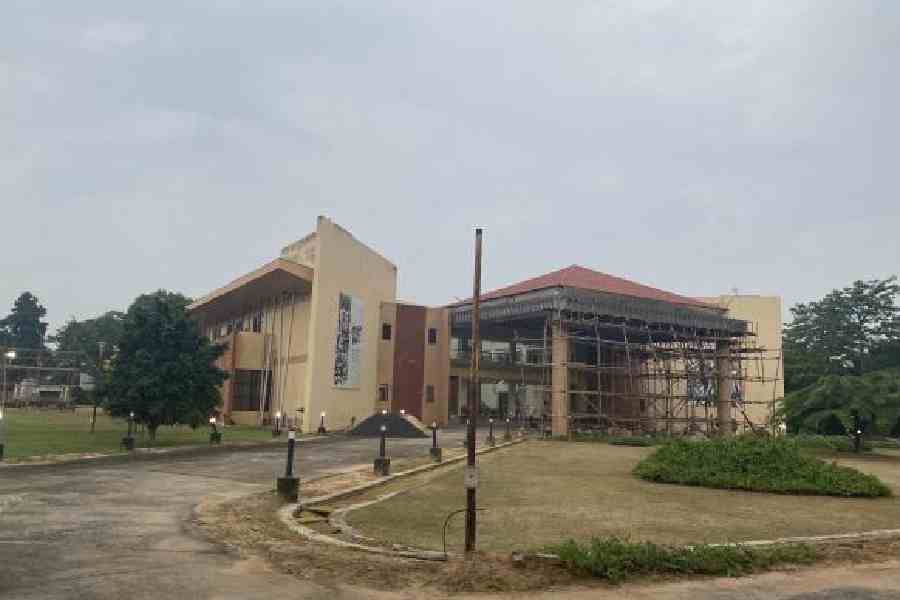
| Delegates at the workshop on dying art forms in Bihar, in Patna on Friday. Picture by Nagendra Kumar Singh |
Integrating art forms in daily life and ensuring employment opportunities can only save them in Bihar and create awareness on them. These were the views of most experts at a workshop on the dying art forms in the state on Friday.
Veteran artists, including former principal of College of Arts and Crafts, Patna, Shyam Sharma and Anil Kumar Sinha, art critic Awdhesh Amal and director-general of Indian Institute of Business Management Uttam Kumar Singh were present at the opening day of the workshop.
Sharma said such workshops should be organised regularly to help artists. “Artworks have their own importance but symposiums on different art forms should also be organised regularly as they help artists gain more knowledge. Workshops help them (artists) get better in their job. But today we hardly come across symposiums based on art. I appreciate Gyan Kiran, the organiser of this programme, for planning this workshop.”
Gyan Kiran, a non-government organisation, is conducting the two-day workshop on the dying art forms in the state to create awareness on Manjusha art and Patna Kalam. Eastern Zonal Cultural Centre, Calcutta, and the state department of art, culture and youth affairs have supported it.
Sharma added: “Manjusha art is associated with worshipping God. Today, this art form is becoming extinct because they are not linked to employment opportunities and people don’t use them (the artwork) in their daily life. Mithila painting or Mithila art has survived only because the artists can earn their livelihood through their artwork. The residents of the region are also associated with Mithila art in their daily lives.”
Talking about Sujani art, Sinha said: “It is one of the dying art forms in the state and is very much associated with the people. It was common at marriage ceremonies, where brides were given blankets full of Sujani handwork and embroidery. But today this art form is on the verge of extinction.”
Sinha expressed his unhappiness over the absence of students from the College of Arts and Crafts, barring one, at the workshop.