|
 |
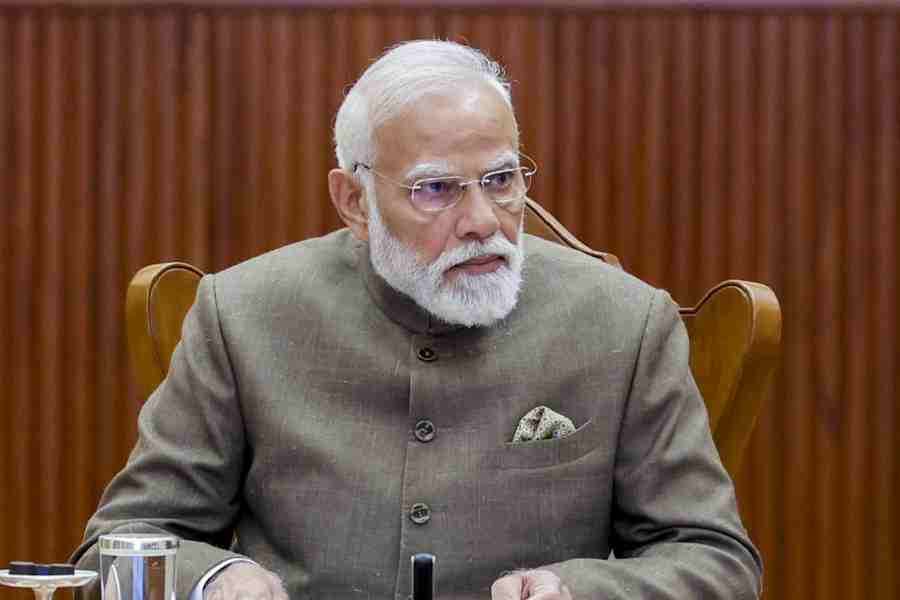
| (Top) Rohtas Fort and Rohtas SP with the tourist guides on Friday. Pictures by Sanjay Choudhary |
Patna, Feb. 4: In bid to defeat the Maoists’ strategy to win over the underprivileged youths of the villages in the hilly terrains of Kaimur plateau, the Rohtas police have devised a novel way to make the youngsters economically independent. They have employed around 350 of them as tourist guides.
“We have imparted training to about 350 youths hailing from over a dozen Maoist-hit villages of the district, who will work as tourist guides,” said Rohtas superintendent of police Vikas Vaibhav. He said the youths would be in touch with the police and help tourists in visiting the famous Rohtas Fort.
The police have provided bicycles and torches to the tourist guides under the Citizen Security Scheme of the government. “The youths are enthusiastic over the new assignments allotted to them. They will earn livelihood for them and their families by helping the tourists,” Vaibhav told The Telegraph.
The guides, according to the plan, would take tourists to the inaccessible Rohtas Fort on their bicycles. “The youngsters can help the tourists by taking them to the fort on the bicycles and earn profit,” the SP said.
Apart from Rohtas Garh, Tara Chandi, Dhurwan Kund and Gupta Dham, Bhaluni Dham, Deo Markendey, Chaurasan temple, Dharklandha and Sher Garh are other important places of attraction for the tourists in the district.
The district police have also decided to engage more youths in creative work. “We have planned to organise games and sports competitions in the areas considered to be the den of the Maoists,” Vaibhav said.
There are plans to organise drawing and painting competitions at schools in hilly and forest areas. The station house officers of the police stations in the Naxalite-affected areas have been asked to provide their mobile numbers and remain in touch with the people living on the hillocks.
The Rohtas police launched community policing on the directive of the state police headquarters. “We are linking the police with people, especially in inaccessible areas, and building rapport with them,” the SP said.
Director-general of Police Neel Mani told The Telegraph that community policing had been started in 16 Maoist-affected districts in the first phase. The remaining districts would be covered in the next phases, he said, adding free medical camps were being organised for villagers. Medicines, blankets, saris, dhotis and school bags were being distributed among them.
The villagers are also being shown motivational and educational films right at their doorsteps, he added.