
Patna, Aug. 27: Senior officials in the environment and forest department and experts in forestry have dubbed the excise department's move to confiscate around 150 palm trees in Khajurbanni as "absurd".
Forests department officials claimed that there is no legal recourse to cut the palm trees or to take them into custody. Legal experts said the trees would have to be constantly monitored after confiscation as done in case of confiscation of immovable properties.
However, senior officials in the forest department said it was not possible to deploy forest protection force or police for every palm tree. Besides, the confiscated palm trees cannot be cut by the forests department as they don't fall under the reserve forest area, which are governed under Indian Forest Act, 1972.
Forestry experts, on the other hand, claimed that by this logic the state government may one day start confiscating rice fields, which are used for manufacturing hadiya (country liquor), sugarcane in north Bihar used for producing molasses, grapes and, a variety of other plant and tree species, which can produce alcohol upon fermentation.
"This is an unprecedented case. The Indian Forest Act does not give any power to divisional forest officers to confiscate trees. We do not have any clue how to take standing trees into custody even if they have been confiscated by the district administration," said a senior official in the forests department.
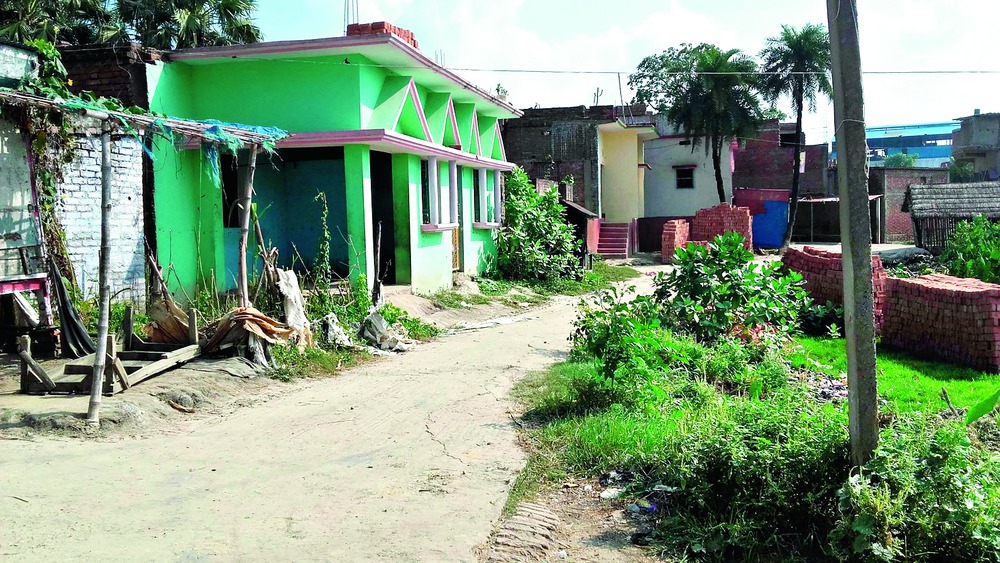
Some 150 palm trees, spread over an area of about one acre at Khajurbanni, around 180km northwest of Patna, were "confiscated" by the Gopalganj district administration on Thursday under sections 68 (A) and 68 (C) of the Bihar Excise (Amendment) Act, 2016 and subsequently handed over to the forests department for further action.
Gopalganj divisional forest officer (DFO) B. Prasad had later told The Telegraph that he would seek guidelines from senior officials of the environment and forest department before taking any action, as it was a complex issue.
Experts, however, claimed that the confiscated palm trees would be like an albatross around the forest department's neck.
"If the district administration has confiscated the palm trees by following due procedure and handed them over to forests department thereafter, it has been a mere act of passing the buck. Now I don't think the forests department has the powers to either cut trees or do anything else with them, as they are not situated inside protected forest land. Thus, the forest department would now be required to keep a close eye on the trees and ensure they are not used for making toddy," said Sudhir Kumar Jha, a retired IPS officer of the 1960 batch.
Legal experts claimed that the owner of the land (on which the palm trees are located) can file a confiscation case in the court of the DFO. Otherwise, the forests department would be required to look after the trees.
"Though certain provisions of CrPC give power to the district administration to even seize standing crops, those provisions do not apply in this case. Here, the owner can either file a confiscation case in the court of the DFO, seeking release of the trees,or the DFO would have to look after them to ensure that they are not misused again to make toddy," said Ravi Parmar, a practising advocate at Patna High Court.
Forestry experts claimed that the move to confiscate palm trees is not only absurd but also against the forestation schemes of the state government. "Going by the logic that palm trees can be used to produce toddy, the state government would soon say that they would confiscate rice fields as fermented rice is also used for making hadiya (countryside liquor)," said Rakesh Singh, a Delhi-based wildlife and environment expert.
"Then, they would say that they would either confiscate large sugarcane fields in north Bihar or ban its cultivation, as it is used in manufacturing molasses," Rakesh said.
"Thereafter, they would say that they would not allow grapes in Bihar as it is also used for making wine and other liquor."
Rakesh added: "There are numerous plant species, which produce alcohol upon fermentation. If the state starts confiscating all such plants and trees, then all efforts of the Nitish Kumar-led government to increase the green cover in Bihar would be futile."