 |
| Chief minister Nitish Kumar and building construction minister Damodar Raut at SK Memorial Hall in Patna on Friday. Picture by Nagendra Kumar Singh |
Chief minister Nitish Kumar on Friday stressed on the need to develop earthquake-resistant and state-of-the-art buildings which receive acclaim for their architectural beauty.
Speaking on “state-of-the-art building technology” at the inauguration of a midterm session and seminar organised by the Indian Building Congress in Patna, he spoke on retrofitting buildings to make them quake-proof. Retrofitting implies putting in a new piece of equipment into a structure that did not have it when it was built.
“The districts north of the Ganga lie in seismic zone V and those to its south in seismic zone IV. Both are high-risk zones. According to estimates, around 5 lakh people can get killed in the event of an earthquake striking Patna. So, it is extremely essential that new buildings are made earthquake resistant and existing buildings are retrofitted to make them quake-prone,” the chief minister said.
Nitish also highlighted the work being done by the state government to develop signature buildings.
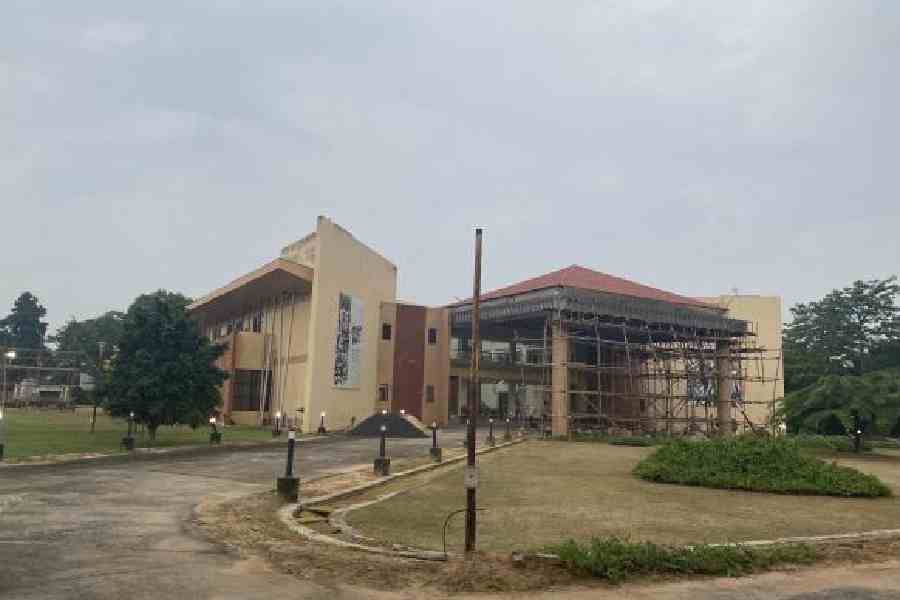
He said: “The building construction department is working on projects for the development of several buildings in Patna, such as the Bihar Museum (to come up on Bailey Road) and the International Convention Centre (in north Gandhi Maidan), which would be widely acclaimed for their architectural beauty.
The department has also been asked to develop a Buddha stupa in Vaishali. To be made of stone, it would have the only original relics of Lord Buddha kept at Patna Museum now.”
Earlier in the afternoon, delegates from across the country deliberated on the status of the drainage system in Patna and suggested measures to improve it. The seminar will end on Sunday.
Speaking on the “Drainage system in urban areas of Bihar”, National Institute of Technology, Patna, faculty Santosh Kumar said the drainage system in Patna has gone from bad to worse.
“The sewage and storm water drainage networks are separate in Patna. The storm water drainage network is mostly choked with sludge, garbage and silt, and leads to frequent waterlogging in the city. Pumping stations in the city do not work to their full capacity because of various issues, including mechanical breakdown, disruption in electric supply and garbage dumping,” said Santosh.
Deepak Baxi, executive director, Vishveshwarya Institute of Technology, Patna, emphasised the need to use the Ganga’s natural drainage system to address the Patna’s drainage woes. “Bihar once had a rich natural drainage system of Ganga. The drainage system of Patna was developed in 1968 and has become virtually defunct. It is high time that efforts should be taken to revive the natural drainage system as well as develop a new one with the help of advanced technology such as GPS/GIS, and participation of expert agencies such as the IITs and NITs.”