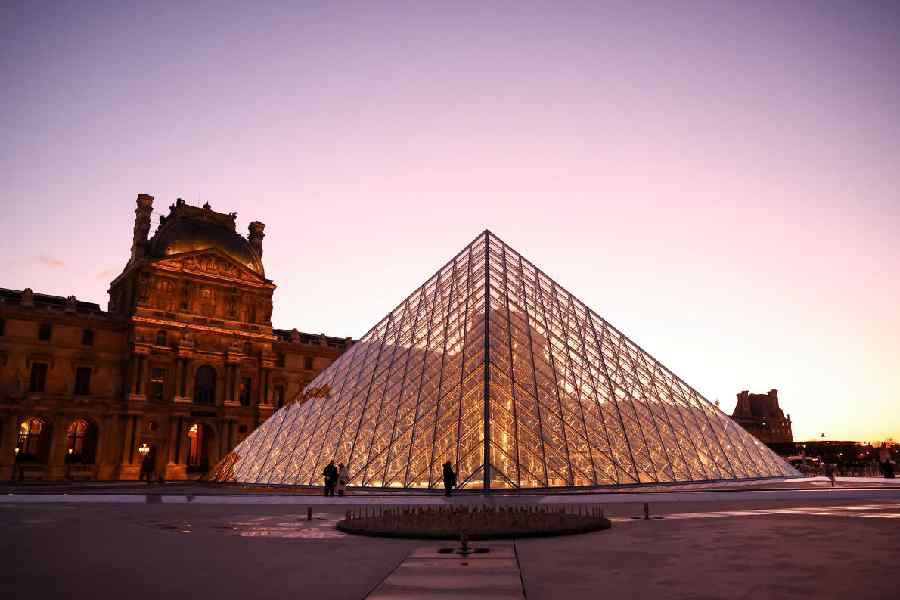
A water leak last month damaged hundreds of books in the Egyptian antiquities department at the Louvre, underscoring the deteriorating state of the world's most visited museum just weeks after a daring jewel heist exposed security flaws.
Specialist website La Tribune de l'Art reported that around 400 rare books were affected, blaming poor pipe conditions. It said the department had long sought funds to protect the collection from such risks without success.
Le Louvre's deputy administrator, Francis Steinbock, told BFM TV on Sunday the water pipe leak concerned one of the three rooms of the library of the Egyptian antiquities department.
"We have identified between 300 and 400 works, the count is ongoing," he said, adding the books lost were "those consulted by Egyptologists but no precious books."
He acknowledged the problem had been known for years and said repairs were scheduled for September 2026.
Deputy Administrator Francis Steinbock downplayed the leak, discovered on November 26, saying that "300 to 400 works" from the late 19th and early 20th centuries had been damaged. Steinbock went on to describe the historic books as "extremely useful but by no means unique."
"No heritage artefacts have been affected by this damage," said Steinbock, adding, "at this stage, we have no irreparable and definitive losses in these collections."
Steinbock said the damaged books will be "dried, sent to a bookbinder to be restored, and then returned to the shelves."
The leak is just the latest in a series of recent disastrous headlines for the world's most visited museum.
In October, the world awoke to news of a brazen Sunday morning heist in which four made off with bags of historic crown jewels worth over $102 million (€87.6 million). Arguably, the jewels' historical provenance would make them priceless and officials fear that they have most likely been destroyed and sold for their materials.
In November, the museum was forced to close a gallery exhibiting Greek vases due to structural concerns.
Now the museum says it will conduct an investigation into the November 26 water leak.
The incident was not unexpected. Steinbock said the threat was known and that the old piping system had been shut down and was scheduled for replacement in September 2026.
It appears that a valve in the old heating system was erroneously opened, leading to the soaking of carpets on the floor above the books. When the carpets could no longer absorb the leaking water, it began to drip through the ceiling and onto the historic books below.
A report published in October by France's public audit body, known as the Cour des Comptes, said the museum's inability to update its infrastructure was exacerbated by excessive spending on artwork.