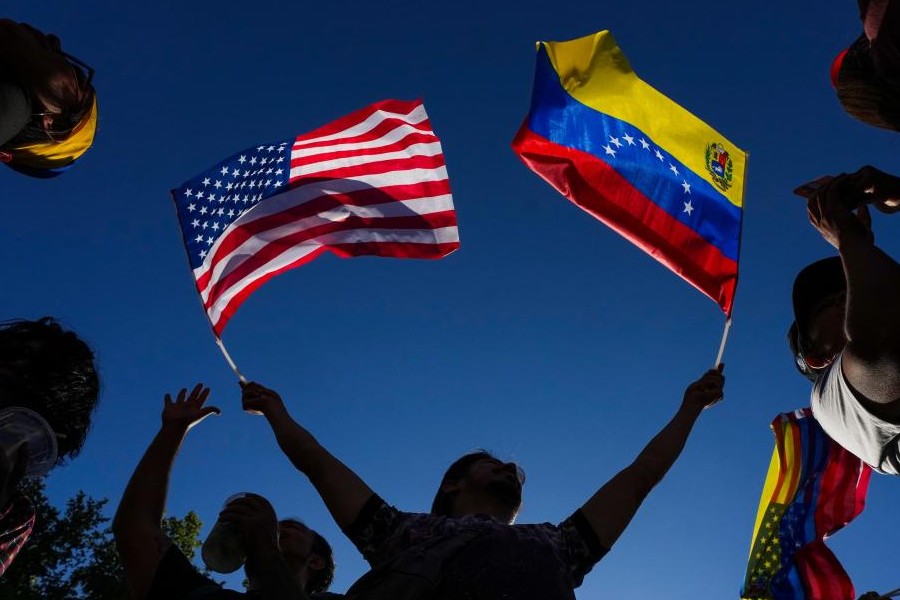
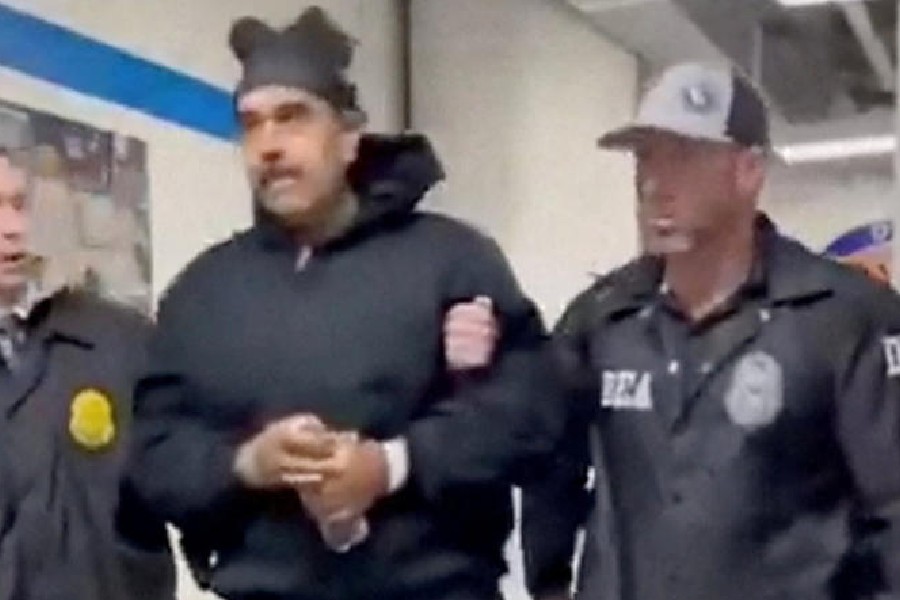
The United States’ claim of a “large-scale strike” in Venezuela and the reported removal of President Nicolás Maduro has once again drawn attention to Washington’s long record of intervening in the domestic politics of other nations.
From covert operations and economic pressure to open military action, the US has repeatedly intervened in shaping political outcomes across the continent.
Bolivia (2019)
Bolivia’s 2019 political crisis followed the general election won by President Evo Morales. The Organization of American States released a preliminary report alleging “clear manipulation” in the vote, which helped trigger widespread protests.
Subsequent independent studies questioned the fraud claims, but unrest escalated. On 10 November, the military high command urged Morales to resign amid police mutinies and street violence.
Army commander Williams Kaliman, trained at the US-run School of the Americas, was among the officers involved. Morales fled the country, and Jeanine Áñez declared herself interim president.
Her government suspended Congress and launched a crackdown in which more than 30 Morales supporters were killed.
Morales accused the United States of backing the events, pointing to Bolivia’s lithium reserves and citing Elon Musk’s tweet: “We will coup whoever we want.”
Washington denied direct involvement. In October 2020, Morales’s party returned to power through elections, and Áñez was later arrested on charges linked to the coup.
Panama (1989)
In December 1989, President George H.W. Bush ordered Operation Just Cause, sending more than 27,000 US troops into Panama. The operation aimed to remove Manuel Noriega, accused of drug trafficking and of killing a US marine.
Noriega had annulled election results that showed opposition candidate Guillermo Endara winning. US forces captured Noriega and flew him to Miami to stand trial. Endara was sworn in as president.
Washington said the invasion was necessary to protect US citizens, restore democracy, and secure the Panama Canal.
Chile (1973)
The overthrow of President Salvador Allende on September 11, 1973, followed years of pressure from Washington.
Under President Richard Nixon and Secretary of State Henry Kissinger, the US funded Opposition groups, media outlets, and strikes, while cutting economic support.
General Augusto Pinochet led the military takeover, bombing La Moneda Palace. Allende died during the assault. Pinochet ruled for 17 years, during which thousands were killed or disappeared.
Declassified records later showed US involvement through covert funding and coordination.
Dominican Republic (1965)
In April 1965, a civil war broke out in the Dominican Republic after military officers sought to restore Juan Bosch, a leftist president ousted in 1963. President Lyndon B. Johnson ordered US troops to intervene, warning of a “second Cuba.”
More than 22,000 US soldiers were deployed under Operation Power Pack. The Johnson administration cited threats to American lives, including incidents near the Hotel Embajador. Despite hesitation within the OAS, Washington moved ahead.
Conservative Joaquín Balaguer later came to power and ruled for 12 years with US backing.
Brazil (1964)
In Brazil, the United States prepared Operation Brother Sam to support a military move against President João Goulart, whose reform agenda alarmed Washington. A US naval task force stood ready with fuel and supplies.
The coup unfolded on March 31, 1964, without US troops landing. Ambassador Lincoln Gordon pushed for immediate recognition of the new government. General Humberto Castelo Branco took power, beginning a military dictatorship that lasted 21 years.
Guatemala (1954)
The 1954 coup in Guatemala was carried out through a CIA operation known as Operation PBSUCCESS. President Jacobo Árbenz had introduced land reforms that affected United Fruit Company holdings.
The US framed his policies as a communist threat. The operation relied on propaganda, radio broadcasts, leaflet drops, and a small rebel force led by Carlos Castillo Armas. The Guatemalan army refused to resist, and Árbenz resigned.
The coup was followed by decades of military rule and internal conflict.
The United Fruit Company (UFCO), a dominant US banana grower, played a pivotal role in influencing, whose Decree 900 land reforms expropriated over 400,000 acres of the company's unused holdings for redistribution to peasants, albeit with compensation.
UFCO executives, including those connected to Eisenhower officials like brothers John Foster Dulles (Secretary of State and ex-UFCO lawyer) and Allen Dulles (CIA Director and board member), amplified fears of communism, portraying Árbenz's policies as Soviet-inspired threats to US business. This pressure helped trigger the CIA's Operation, allowing UFCO to reclaim lands and dismantle unions.