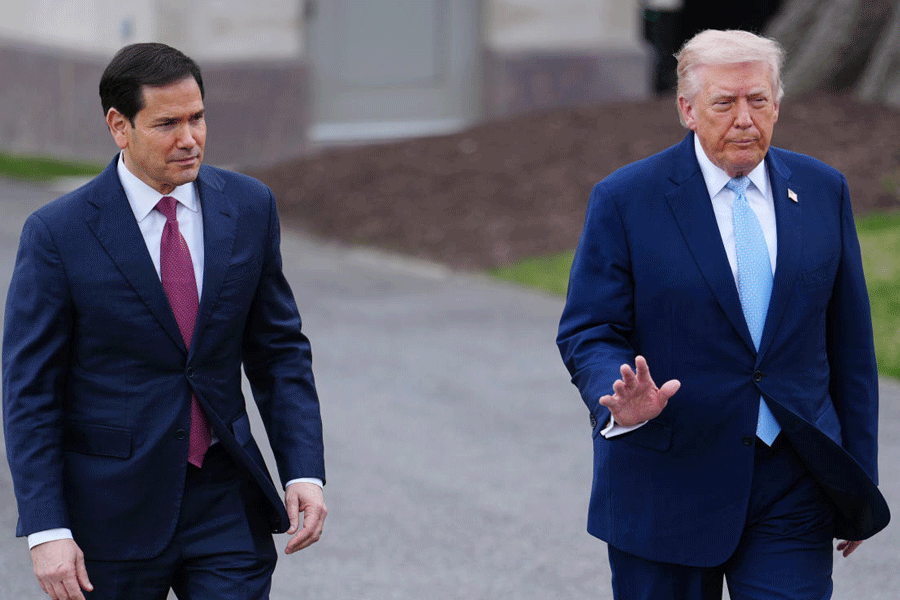
US President Donald Trump has said Washington could wind down its military campaign against Iran within two to three weeks and his secretary of state, Marco Rubio, has said that Washington could see the end of the conflict approaching
The developments happened overnight India time even as top officials signalled ongoing talks and intensifying strikes across the region in a war now entering its fifth week.
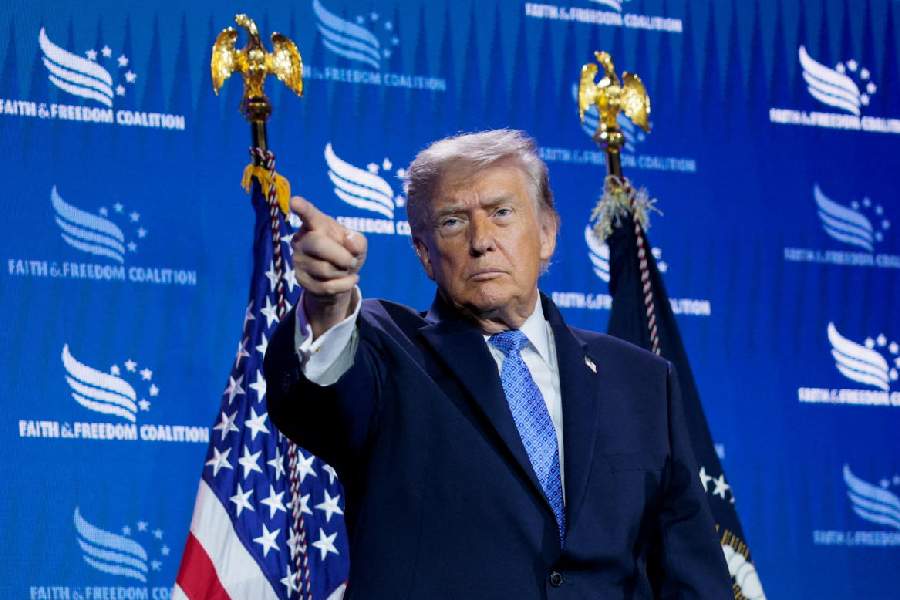
"We'll be leaving very soon," Trump told reporters at the White House on Tuesday, adding the exit could take place "within two weeks, maybe two weeks, maybe three."
He also made clear that a diplomatic agreement was not essential to ending the conflict. "Iran doesn't have to make a deal, no," he said. "No, they don't have to make a deal with me."
US Secretary of State Marco Rubio echoed cautious optimism, saying Washington could see the end of the conflict approaching. "We can see the finish line. It's not today, it's not tomorrow, but it is coming," Rubio told Fox News.
The war, which began on February 28 with US-Israeli strikes on Iran, has since expanded across the region, killing thousands, displacing millions, disrupting energy supplies and rattling global markets.
Despite Trump's remarks, US defence secretary Pete Hegseth said Washington remained open to a deal but was prepared to continue military operations if needed. "We have more and more options, and they have less ... in only one month we set the terms, the upcoming days will be decisive," Hegseth said.
Rubio confirmed diplomatic backchannels were active, noting: "There are messages being exchanged, there are talks going on. There is the potential for direct meeting at some point."
Tehran has, however, dismissed the exchanges as indirect. Iranian foreign minister Abbas Araqchi said the communications did not amount to negotiations and included threats conveyed through intermediaries.
Tensions escalated further as Iran’s Revolutionary Guards threatened retaliation against major US companies in the region, naming firms including Microsoft, Google, Apple, Intel, IBM, Tesla and Boeing as potential targets. Trump brushed off the warning, saying, "They don't have much left to threaten."
On the battlefield, US General Dan Caine said American forces had struck key Iranian sites and destroyed more than 150 naval vessels. Heavy strikes were also reported in Beirut, where Israel said it targeted senior Hezbollah figures. Explosions were reported in Damascus, while key infrastructure in Iran, including facilities in Bushehr and Isfahan, came under repeated attack.
At the same time, international pressure to de-escalate is mounting. China and Pakistan have called for an immediate ceasefire and peace talks, while divisions among Nato allies have widened. France and Italy have resisted some US-Israeli operations, and Trump criticised countries that have not supported the war effort, urging them to secure energy supplies or take stronger action.
Rubio suggested the conflict could have lasting implications for Western alliances. "Ultimately, that's a decision for the president to make, and he'll have to make it," he said. "But I do think, unfortunately, we are going to have to reexamine whether or not this alliance that has served this country well for a while is still serving that purpose, or has it now become a one-way street where America is simply in a position to defend Europe, but when we need the help of our allies, they're going to deny us basing rights, and they're going to deny us overflight."
Meanwhile, the economic impact is becoming increasingly visible. US gasoline prices have crossed $4 per gallon for the first time in over three years, adding pressure on households and posing a political challenge for Trump ahead of the November midterm elections.
A Reuters/Ipsos poll found that about two-thirds of Americans want a swift end to US involvement in the conflict, even if it falls short of the administration’s stated goals.