The Strait of Hormuz has been declared open for commercial vessels by Iran and the United States, marking a major development in the West Asia conflict that also includes a 10 day ceasefire between Israel and Lebanon.
The reopening of the strategic waterway comes amid continuing military pressure and Pakistan-mediated ceasefire negotiations aimed at ending weeks of conflict that has disrupted global energy supplies and regional stability.
Strait of Hormuz declared open for commercial vessels
Iranian Foreign Minister Abbas Araghchi said in a post on X on Froday that in line with the ceasefire in Lebanon the passage for all commercial vessels through the Strait of Hormuz is declared completely open for the remaining period of the ceasefire.
He added that ships must sail on the coordinated route as already announced by the Ports and Maritime Organisation of Iran.
Minutes later US President Donald Trump also confirmed the development on Truth Social.
“Iran has just announced that the Strait of Iran is fully open and ready for full passage. Thank you!” Trump said, referring to the Strait of Hormuz.
Trump says naval blockade on Iran will remain in force
Despite welcoming the reopening of the shipping route Trump said the US naval blockade on Iran will remain in full force until a final agreement is reached.
UK France launch maritime security initiative
Following the announcement, Britain and France chaired a virtual meeting of a new Strait of Hormuz Maritime Freedom of Navigation Initiative involving around 40 countries including India.
British Prime Minister Keir Starmer and French President Emmanuel Macron said the initiative is aimed at facilitating security cooperation, protecting critical supply chains and supporting global trade.
Starmer said the unconditional and immediate reopening of the strait was a global responsibility and said planning was underway for a multinational defensive maritime deployment once conditions allow.
Officials said the initiative will work alongside the International Maritime Organisation and will include mine clearance and naval coordination planning.
Trump signals war may be ending soon and praises Pakistan role
Trump said the war in Iran should be ending pretty soon as he expressed optimism about ongoing diplomatic efforts.
He said the United States is very close to reaching a deal with Iran and suggested he may travel to Islamabad if an agreement is signed there.
“If a deal is signed in Islamabad, I may go they want me,” Trump said while praising Pakistan’s leadership.
He credited Prime Minister Shehbaz Sharif and Army Chief Asim Munir for their role in facilitating talks.
He also said Iran has agreed to almost everything under negotiation.
Pakistan emerges as key mediator in US Iran talks
Pakistan has started preparing to host a second round of US-Iran talks after earlier negotiations ended without agreement.
Officials said intensive diplomatic activity followed the earlier round and led to renewed efforts to bring both sides back to the negotiating table.
Pakistan’s Prime Minister Shehbaz Sharif undertook regional diplomatic visits after discussions with Saudi Arabia and Qatar while Field Marshal Asim Munir travelled to Tehran.
Munir met Iranian President Masoud Pezeshkian Parliament Speaker Mohammad Bagher Ghalibaf and senior Revolutionary Guards commanders.
Officials said preparations have started in Islamabad and Rawalpindi with large deployments of police and paramilitary personnel and possible movement restrictions during the talks.
Reports also said transport arrangements may face restrictions during the period of heightened security.
Israel Lebanon ceasefire comes into effect
A 10-day ceasefire between Israel and Lebanon came into effect following US mediated talks.
The United States said the truce could be extended if Lebanon demonstrates the ability to assert sovereignty and progress towards a lasting settlement.
Israel has been authorised to act in self-defence but is barred from offensive operations against Lebanese targets under the agreement.
Trump said he had spoken with Lebanese President Joseph Aoun and Israeli Prime Minister Benjamin Netanyahu and described the agreement as an opportunity for wider peace.
He also suggested that the two leaders could meet soon and that a White House meeting could take place within days.
Celebrations and destruction in Lebanon
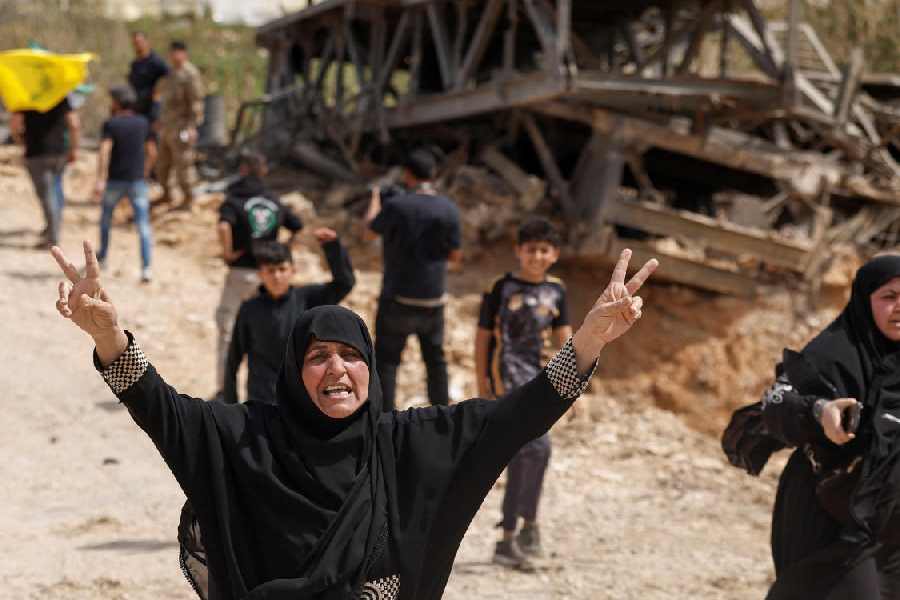
The ceasefire triggered celebrations in Beirut where residents fired gunshots into the air as the truce began.
But displaced civilians returning to southern Lebanon and Beirut suburbs found widespread destruction.
Entire neighbourhoods were reduced to rubble and infrastructure was heavily damaged.
UN peacekeepers said they observed no airstrikes since midnight but reported continued violations including airspace incursions and artillery shelling in southern Lebanon.
Israel said it would not withdraw from its security zone in southern Lebanon while Hezbollah said resistance decisions would depend on developments on the ground.
US expands pressure on Iran linked assets
US officials said military action could be extended to target Iran linked ships worldwide, broadening enforcement beyond the Strait of Hormuz blockade framework.
This marked an expansion of US pressure even as maritime passage through the strait was reopened for commercial shipping.
Trump claims progress on nuclear negotiations
Trump claimed Iran had agreed to give up enriched uranium stockpiles referring to what he called nuclear dust although no evidence was provided.
He said Tehran had accepted almost everything under negotiation and reiterated that a deal was close.
He also said earlier US Iran talks in Islamabad ended without agreement after extended negotiations.
On Friday, Trump claimed again that Iran has agreed to hand over enriched uranium
"The USA will get all Nuclear Dust,' created by our great B2 Bombers - No money will exchange hands in any way, shape, or form," Trump said in a social media post.
"Nuclear dust" is shorthand that Trump frequently uses to refer to the highly-enriched uranium believed to be buried under nuclear sites that the US bombed during last year's 12-day war between Israel and Iran.
If true, it would be a major concession from Iran and would lock in a key US demand to end the conflict. But neither Iran nor countries acting as intermediaries in the conflict have said that Tehran has made such an agreement.
The conflict began after US and Israeli strikes on Iran on February 28 which killed Iranian Supreme Leader Ayatollah Ali Khamenei and several senior commanders.
The war expanded across Iran Lebanon Israel and Gulf shipping routes disrupting global energy supplies and maritime trade.
The Strait of Hormuz had been effectively blocked during the conflict before being reopened under the current ceasefire arrangement for commercial passage.
The Israel-Lebanon 10 day ceasefire is currently in effect, while the US-Iran ceasefire is set to expire on April 21.
A possible extension remains under consideration depending on progress in negotiations.
While the reopening of the Strait of Hormuz marks a major easing of maritime tensions, broader peace remains uncertain as diplomatic talks, military posturing and regional rivalries continue simultaneously.