The problem of plenty in potato production can become a headache for the ruling Trinamool Congress ahead of the Assembly elections.
With unprecedented favourable weather, Bengal is likely to witness a bumper potato production, something that is prompting the Mamata Banerjee government to take all possible measures to balance the interests of farmers, consumers and cold storage owners during this high-voltage election season.
“I have never witnessed such favourable weather as this year for potato cultivation. So, if nothing goes wrong within a short period, Bengal will witness an unprecedented bumper production,” said state panchayat minister Pradip Mazumdar, who is also the agriculture adviser to chief minister Mamata Banerjee.
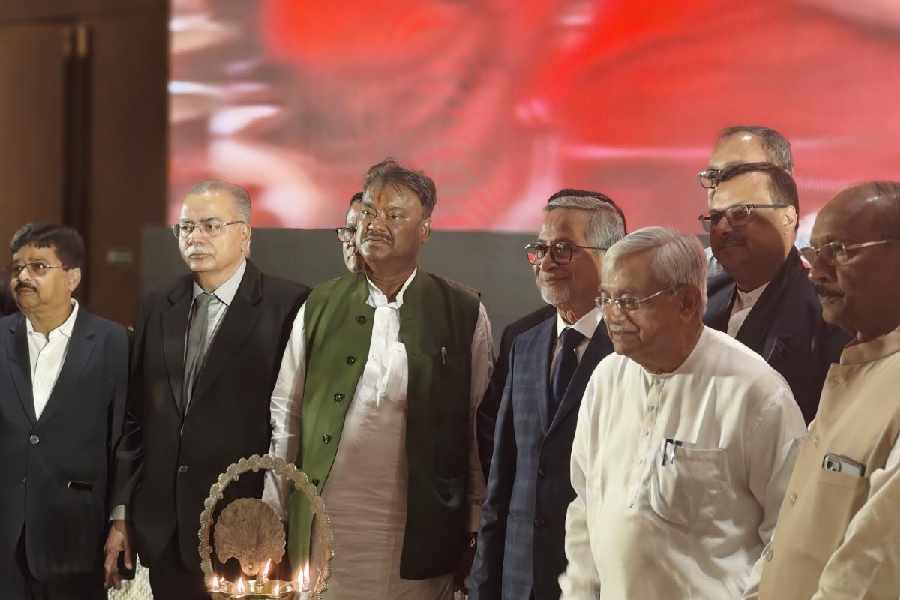
“As our policy is to protect the farmers’ interests first, we have already announced that every cold storage across Bengal has to reserve 30 per cent of its space for marginalised farmers so that they are not forced into distress sales,” Mazumdar told The Telegraph on the sidelines of the 61st annual general meeting of the West Bengal Cold Storage Association.
Multiple sources said the Mamata Banerjee government had been focusing on the potato sector, which involves around 8,00,000 farming families spread across several Bengal districts, mainly Hooghly, Bankura, East Burdwan and West Midnapore.
“There is always a fear that an abundant supply of potatoes creates a steep fall in prices. Farmers become the easiest targets as most are forced into distress sales. The main challenge is to prevent distress selling and ensure that farmers get a good price. The unprecedented 30 per cent space reservation in cold storages is part of that effort,” said a source.
Bengal usually produces 1.2 crore tonnes of potatoes cultivated on around 5,000 hectares of land. This year, the agriculture department predicts that production will be around 1.7–1.9 crore tonnes. The harvesting of potatoes began in the third week of February, with peak season from mid-March to early April. So, the flow of supply will be highest when Bengal is in full election mode, and any issue may directly impact the electoral outcome.
Multiple Trinamool sources said potato farmers and those connected with its network — including traders and cold storage owners — constitute around 40 lakh electors. Mishandling of the potato network, which is one of the most economically significant agricultural sectors, could prove costly.
That is why the government has decided to convene a high-level meeting at Nabanna on Wednesday to announce a potato procurement policy, buying directly from farmers to prevent distress sales.
Becharam Manna, the agriculture marketing minister, who was present at the cold storage association event, underlined that the government had to protect the interests of multiple issues and sections of people, including farmers and common
consumers.
A large section of potato farmers and cold storage owners has been unhappy since last year, following the government’s 2024 decision to impose a complete ban on interstate trade of potatoes to control rising prices. A source said many farmers and traders are still battling losses incurred due to the ban.
This apart, a large section of farmers and traders did not receive the government-announced minimum support price of ₹900 per quintal, as the market price had fallen to ₹600 per quintal. The cold storage association estimated that the potato sector, including farmers, faced losses worth ₹2,200 crore.
The BJP has already been reaching out to potato farmers over the interstate ban and the losses faced last year.
Traders said that as interstate trade was banned in 2024, markets in neighbouring states Odisha, Bihar and Jharkhand have already been captured by Uttar Pradesh suppliers.
“Uttar Pradesh traders have already conducted a buyer-seller meet in Odisha, asking traders not to buy potatoes from Bengal. We have urged the government to conduct similar meetings immediately to prevent another round of losses in the potato sector,” said Subhajit Saha, vice-president of the cold storage association.
Bengal consumes around 80–90 lakh tonnes of potatoes annually. The rest is sold to other states. “If production is bumper and we cannot properly sell potatoes to other states, this sector will face unprecedented losses,” Saha said.