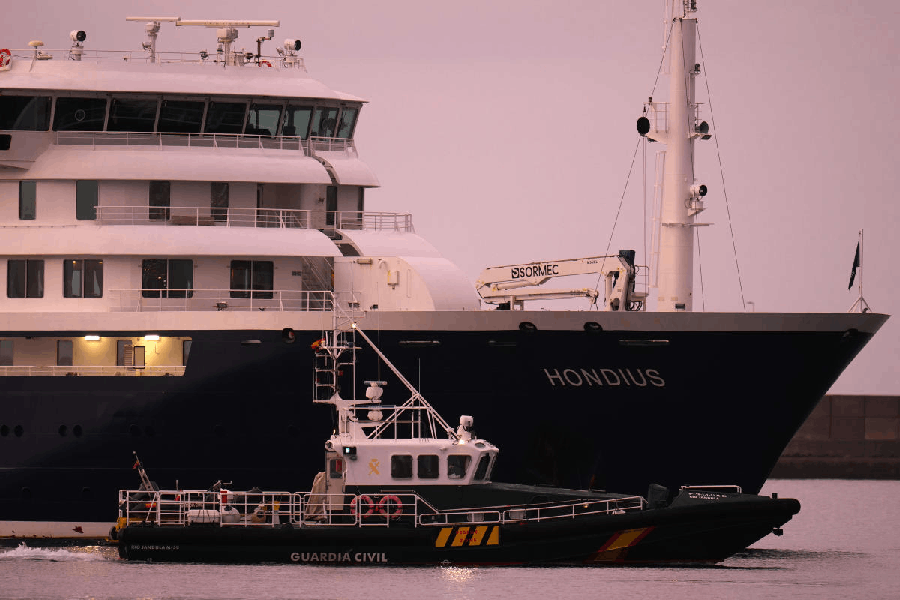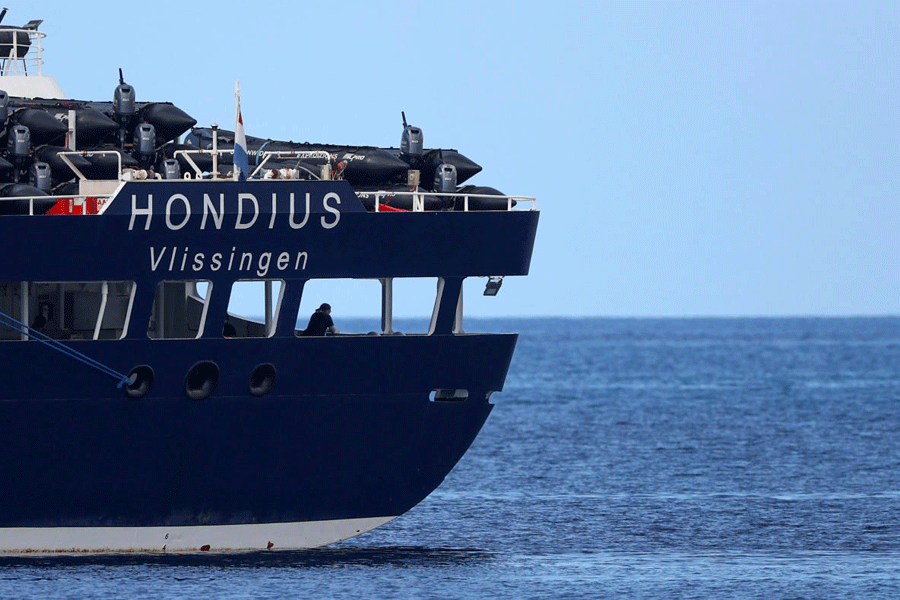
Two passengers evacuated from the hantavirus-hit luxury cruise ship MV Hondius have tested positive for the virus, including a French national whose condition is deteriorating, as Spanish authorities prepared to complete the evacuation and repatriation of the remaining passengers on Monday.
The outbreak aboard the vessel has so far claimed three lives — a Dutch couple and a German national — and prompted a large-scale international evacuation operation coordinated by Spain, the WHO and multiple governments.
Final passengers set to leave cruise ship
The last 24 passengers still aboard the MV Hondius, anchored near Spain’s Atlantic island of Tenerife, were scheduled to be evacuated on Monday afternoon, according to Spanish authorities.
The evacuation operation has already seen 94 people repatriated to their home countries, 41 days after the vessel departed southern Argentina and nine days after the first positive case of the respiratory viral infection was confirmed.
Spanish Health Minister Monica Garcia said a plane carrying 18 passengers from countries that did not arrange dedicated evacuation flights would depart for the Netherlands on Monday.
A second and final flight carrying six passengers, including one from New Zealand and others from Asian countries, was scheduled to leave for Australia later in the evening.
Following the evacuation, the ship will sail to the Netherlands, its flag state, with around 30 crew members remaining onboard. The vessel will undergo full disinfection once all passengers and the body of the deceased German national, currently kept in the ship’s morgue, are removed.
French passenger deteriorates after testing positive
French Health Minister Stephanie Rist confirmed on Monday that a French passenger evacuated from the ship had tested positive for hantavirus and that her condition was worsening.
The passenger was among five French nationals aboard the cruise ship. The remaining four tested negative but will undergo further testing. French authorities have also traced 22 contact cases linked to the passenger.
“What is key, is to act at the start and break the virus transmission chains. This is what we are doing with the Prime Minister, notably with a decree that came out today that will allow us to strengthen isolation measures for contact cases and to protect the population,” Rist told France Inter radio.
Asked whether France was adequately prepared for a wider outbreak, she said: “Yes, France is ready.”
French Prime Minister Sebastien Lecornu is expected to chair a meeting on the hantavirus situation later on Monday.
US and South Africa monitor infected passengers
The U.S. Department of Health and Human Services said one of the 17 Americans being repatriated from the cruise ship had tested mildly positive for the Andes strain of hantavirus, while another passenger had shown mild symptoms.
Acting U.S. CDC Director Jay Bhattacharya sought to calm fears of a broader public health crisis.
“This is not COVID and we don't want to treat it like COVID,” Bhattacharya told CNN on Sunday, adding that the evacuated U.S. passengers would be allowed to isolate either at home or at a facility in Nebraska.
Meanwhile, South African health authorities said a British passenger who was medically evacuated to Johannesburg after falling ill onboard was showing gradual improvement.
“The British patient is clinically improving but still ill,” health ministry spokesperson Foster Mohale told Reuters. “This means his condition is improving, gradually so.”
The British man had been airlifted to South Africa on April 27 after suffering from fever, breathing difficulties and signs of pneumonia. He had disembarked from the MV Hondius at Ascension Island in the Atlantic Ocean.
WHO recommends 42-day quarantine
The World Health Organization has recommended a 42-day quarantine period for all passengers from the ship beginning May 10, according to Maria Van Kerkhove, the WHO’s director of epidemic and pandemic management.
The outbreak was first reported to the WHO on May 3 after several passengers developed severe respiratory symptoms. Health officials later identified the virus as the Andes strain of hantavirus, which is commonly found in Argentina and Chile.
The virus is typically spread by rodents, although rare cases of human-to-human transmission through close contact have been documented.
Spanish authorities stressed that no rodents had been detected onboard the vessel and said the risk to the wider public remained low.
The MV Hondius had departed Argentina in March and travelled through Antarctica and other locations before heading north toward Cape Verde, where the ship was temporarily held after the outbreak became public. Spain later agreed, at the request of the WHO and the European Union, to oversee the evacuation and repatriation process.