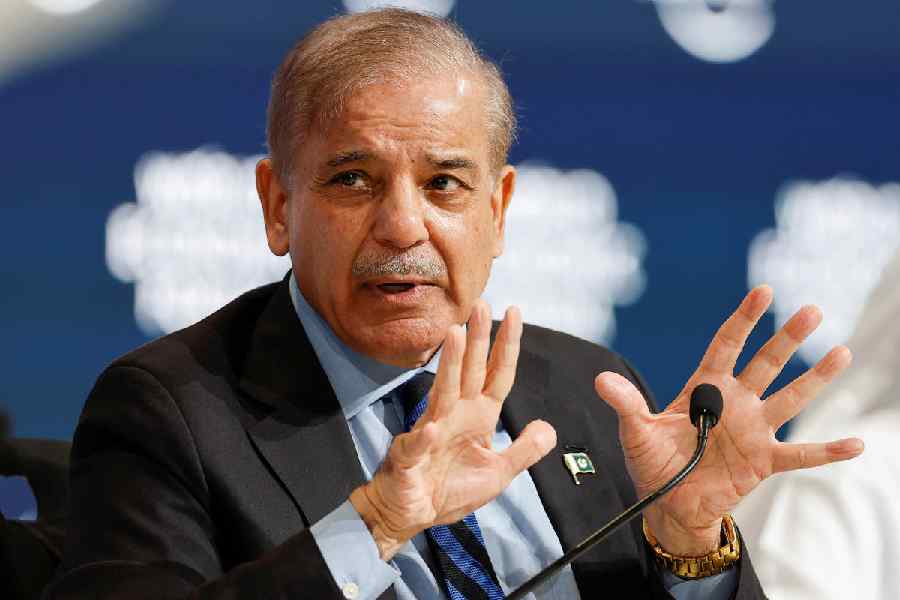
Pakistan's Prime Minister Shehbaz Sharif on Monday extended the countrywide austerity drive till June 13 in the wake of uncertainty caused by the US and Iran's failure to strike a deal to end the conflict in West Asia amid a fragile ceasefire.
The government announced several measures on March 9 following the disruption in the energy supplies after the US and Israel launched an attack against Iran on February 28.
The austerity measures were initially announced for two months.
According to a notification issued by the Cabinet Division of the government, it has been decided to extend the same for more than a month after US President Donald Trump on Sunday rejected Iran's proposal to end the months-long war, calling it "totally unacceptable."
"The prime minister, on consideration of the recommendations of the committee for monitoring and implementation of fuel conservation and additional austerity measures, has been pleased to extend the applicability of the following additional austerity measures up till 13th June, 2026, with immediate effect," it read.
Among the key measures, the government had announced a 50 per cent reduction in fuel allowance for official vehicles, with the exemption of operational vehicles such as ambulances and public buses.
Other steps included the grounding of 60 per cent of official vehicles and a complete ban on foreign visits, excluding those as specified the last time, which were deemed essential for the country's interests.
Pakistan is highly dependent on oil supplies from West Asia, and the Iran war choked the key supply line for the country, making it impossible to run the national affairs as per routine.
Despite the austerity drive in place, Pakistan had to jack up the prices of fuel, making it one of the costliest countries for petroleum products.
The ongoing conflict, triggered by the US and Israel's joint strikes on Iran and Tehran's subsequent retaliation, has remained under a ceasefire since April 8.
Islamabad hosted one round of direct talks between Iran and the US on April 11, but the two sides failed to reach an agreement.
The Strait of Hormuz and Iran's nuclear enrichment programme remain key sticking points in the negotiations.
On April 21, US President Donald Trump indefinitely extended the ceasefire beyond its two-week deadline to allow more time for negotiations with Tehran.
The latest developments come at a time when the United Arab Emirates and Kuwait have reported drone incursions into their airspace, while a drone strike caused a minor fire aboard a commercial vessel near Qatar's coast, testing the ceasefire.