Container shipping group Maersk said on Wednesday it is redistributing fuel to ensure supplies for its vessels as the Iran war disrupts the flow and storage of maritime fuel in the Middle East.
The Danish carrier, one of the world's biggest container shipping groups, has 10 ships stranded in the Gulf. U.S. and Israeli attacks on Iran have fueled hostilities that threaten one-fifth of the world's oil, which sails out of the region via the Strait of Hormuz - the globe's most important energy chokepoint.
"We are proactively redistributing fuel to ensure vessels can continue to bunker where needed and keep our ocean network running without interruptions," a Maersk spokesperson said. Bunkering is the maritime industry's term for refueling.
While much of the world's attention has been focused on the risk of attacks on oil tankers, some of the roughly 100 container ships stuck in the Gulf also have come under assault.
SALALAH OPERATIONS PAUSED
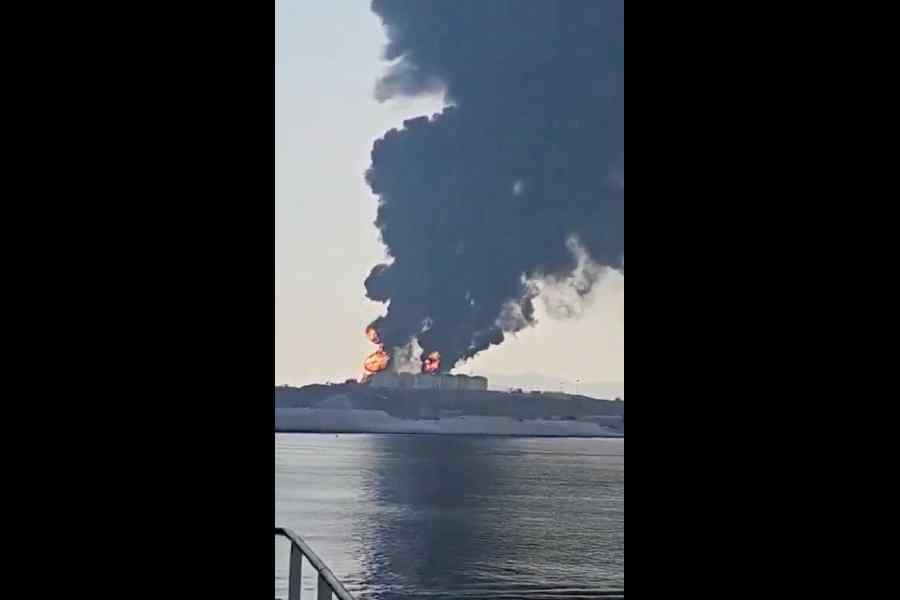
Drones struck oil storage facilities in Oman's Salalah porton Wednesday, a security firm and state TV said. Oman's state news agency, citing an energy ministry official, said there has been no disruption to the continuity of oil supplies or petroleum derivatives in the country.
Maersk separately said it paused all operations at the Port of Salalah on Wednesday until further notice in response "to an ongoing incident near the general cargo terminal." It did not provide further detail.
Earlier this week, falling debris from an intercepted drone sparked a fire that damaged storage infrastructure and disrupted operations at the vital Fujairah ship-fueling hub in the United Arab Emirates. Container ships that have come under attack include the Japan-flagged ONE Majesty, which sustained minor damage on Wednesday from an unknown projectile 25 nautical miles (46 km) northwest of Ras Al Khaimah in the UAE, two maritime security firms said.
Its Japanese owner Mitsui O.S.K. Lines and a spokesperson for Ocean Network Express (ONE), its charterer, said the vessel was struck while at anchor in the Gulf and suffered minor damage above the waterline. All crew are reportedly accounted for, the ONE spokesperson said.
Germany's Hapag-Lloyd, Maersk's alliance partner, has a "single-digit" number of vessels stuck in the Strait of Hormuz, a spokesperson said.
MSC, the world's largest container carrier, did not immediately respond to requests for comment.
Maersk, like other container carriers, has suspended bookings for most cargo to and from the UAE, Oman, Qatar and Saudi Arabia and other countries in the Middle East.
In an operational update on Wednesday, Maersk said it would try to ensure special attention is given to shipments of critical foodstuffs, medicines and perishable goods as it also helps customers reroute or store containers.
Container lines are adding surcharges to cover higher fuel costs and work required to redirect cargo.