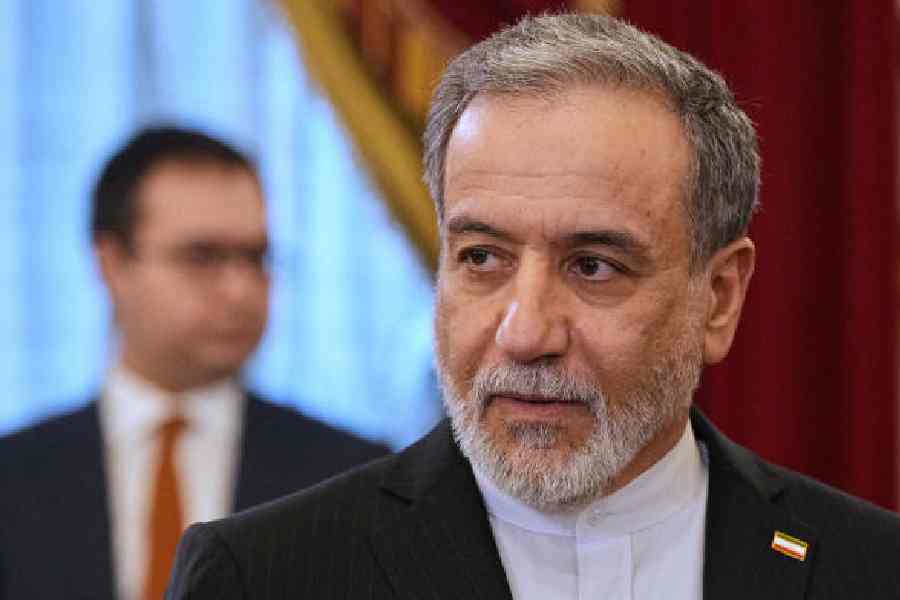
Iran’s foreign minister Abbas Araghchi telephoned external affairs minister S. Jaishankar on Wednesday and the two are said to have discussed the ceasefire in the West Asia and regional issues besides bilateral matters.
The conversation took place at a time when the Pakistan-brokered peace talks between Iran and the US have stalled, sending oil prices on an upward trajectory. Araghchi has also just concluded back-to-back visits to Pakistan, Oman and Russia.
Not much was shared by either capital on what transpired in the conversation between Jaishankar and Araghchi. According to the Iranian embassy in New Delhi, the two sides discussed and exchanged views on the latest developments related to the ceasefire, bilateral relations, as well as regional and international issues.
Jaishankar posted on X that he had received a phone call from Araghchi this evening. “Had a detailed conversation about various aspects of the current situation. We agreed to remain in close touch.” The two have spoken over the phone at least six times since the West Asia conflict began on February 28.
In a related development, India once again called for an early restoration of safe and unimpeded freedom of navigation and global commerce through the Strait of Hormuz. Addressing the United Nations Security Council Quarterly Open Debate on “The Situation in the Middle East” on Tuesday, India’s charge d’ affaires at the Permanent Mission in New York, Yojna Patel, said: “For India, Middle East is our proximate neighbourhood and we have significant stakes in the security and stability of the region. Our trade and energy supply chains are strongly linked to this geography, with implications for economy and energy security. Almost 10 million Indians live and work in the Gulf region. Their safety and well-being are a key priority for us.”
Iterating that India has been consistent in giving categorical calls to pursue dialogue and diplomacy and de-escalate tensions since the onset of this conflict, Patel underscored the need to address the underlying issues. “We have also… urged all the relevant parties to exercise restraint, avoid escalation and prioritise safety of civilians. In this context, India also underlines that sovereignty and territorial integrity of all states must be respected.”
Stating that commercial shipping through the Strait of Hormuz is of particular concern to India — given its importance to the energy and economic security of the country — New Delhi deplored the attacks on such ships. “India notes with concern that precious lives of Indian seafarers aboard ships have been lost during the course of the conflict. We underscore that the targeting of commercial shipping and endangering innocent civilian crew members, or otherwise impeding the freedom of navigation and commerce in the Strait of Hormuz are unacceptable. International law in this regard must be fully respected. It bears mention in this context that India had co-sponsored UNSC resolution 2817 that was adopted on 11 March.”
In this resolution, co-sponsored, along with 140 countries, New Delhi had condemned the “egregious attacks” by Iran on neighbouring countries.