Sunil Malhotra was looking frantically for ways to keep his mobile phone functioning when the WhatsApp message from The Telegraph finally got delivered to him on Sunday night, after a day of wait.
“We have no electricity, no Internet, and no public transport. Let me charge my phone at a supermarket and buy more data,” he wrote back.
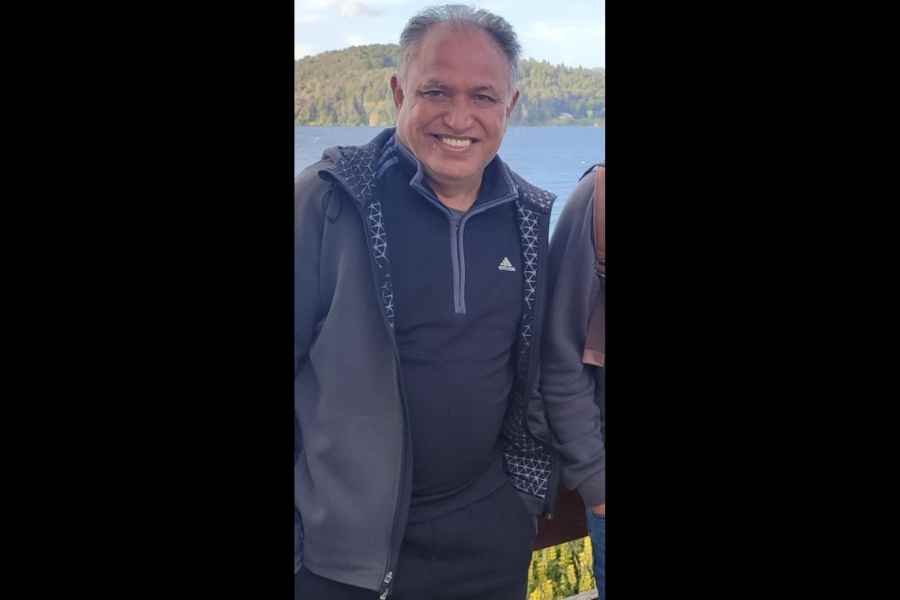
The 62-year-old president of the Indian Association of Venezuela belongs to a community of barely half-a-dozen Indian families settled in the Latin American nation, now caught in a geopolitical storm.
As an 18-year-old Delhi boy, Malhotra had visited an uncle with a handicraft business in Venezuela “as an adventure” and stayed back to help him out.
He is now married to a Venezuelan (Yelitza Salazar), has two sons and holds a local passport. “I even think in Spanish,” he confessed.
Malhotra spoke to this newspaper before the crack of dawn on Monday (Indian time), once power had become available after about 48 hours of outage and Wi-Fi connectivity had been restored at his home.
Here is his recollection — in his own words — of the lead-up to, and the aftermath of, the American abduction of President Nicolas Maduro in the early hours of Saturday:
It was past 2am. My wife and I woke up to a high-pitch whistling sound in the sky, followed by the sound of an explosion close by. That must have hit the local transformers. Instantly, our neighbourhood in central Caracas (the Venezuelan capital) plunged into darkness.
“Something big is bound to happen tonight,” my wife told me.
We had been on tenterhooks ever since US warships and aircraft carriers started getting deployed in the Caribbean Sea in early September. The sea is close by. Caribbean island nations like Trinidad and Tobago, Aruba and Curacao are barely an hour away by air.
Although there was an air of expectation, when the strike happened it still took us by surprise. The initial blast, within 4-5km of our home in El Paraiso, was followed by a series of explosions further away.
In the silence of the night, we could hear the noise from even Fort Tiuna, our largest military base, which had been targeted. At that point, of course, we had no idea what was happening.
Even after the sound stopped 30-35 minutes later, I stayed up the rest of the night, worried at what would follow, switching off our mobiles to save battery. There seemed to be a stunned silence all around.
It was only in the morning (on Saturday), when I switched the phone on, that news trickled in — that too on Instagram — that the President had been captured.
Till now, there has been no official confirmation of the casualties. Only a semi-official source is claiming about 80 deaths. Those must have been the guards on duty at the military bases, port, airport and the President’s shelter.
As it is, all local channels have been under government control for years. We get all our news from CNN and some Colombian channels.
Our elder son, who works in Argentina, had tried calling us on the mobile at night. Finally, he got through on the landline.
The next challenge for us was the lack of electricity. A search began for ways to charge our mobiles. The hotdog sellers on the pavements are known to hook power from the lampposts. They were not around but some enterprising souls remembered them and found the power sources at the spots where they do business. Soon, queues formed there.
Our challenge was bigger than that of most others as our building isn’t served by a gas line. The loss of power meant the kitchen was shut and our meals became bread
and butter.
The day after the strike, most supermarkets stayed shut and there were long queues in front of the local mom-and-pop stores. Today (Sunday in Venezuela), some opened and the cops were regulating entry. They were also getting people off the streets once their shopping was done.
We hope public transport will resume on Monday. I have not got my car out ever since that night.
There is a petrol pump opposite my house. Gasoline costs 50 cents a litre. The government gives us 120 litres free per month. But only a few pumps are designated to dispense the free fuel and the queues were long.
In recent months, the pump dealers have been filling up the first 10 or 15 cars and then claiming their stock is over while, in reality, the rest has been reaching the black market. So I have stopped trying for the free quota. My wife urges me to go at least once so that my quota card does not get cancelled.
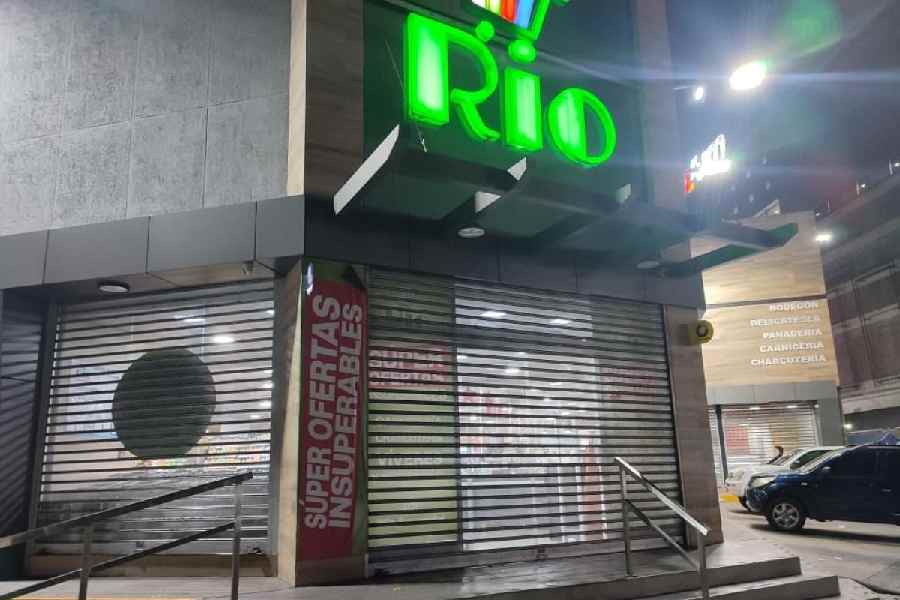
A closed supermarket in Venezuela Pictures taken by Sunil Malhotra
The exchange rate of our currency, Bolivar, to the dollar has skyrocketed amid this chaos. While the Banco Central de Venezuela-approved rate, which changes daily, is about 305 Bolivars to a US dollar, it has crossed 600 Bolivars in the black market.
Supermarkets and petrol pumps show the rate in dollars but accept Bolivars too. So, though it makes sense for us to pay in the local currency, the plummeting exchange rate is hitting us hard.
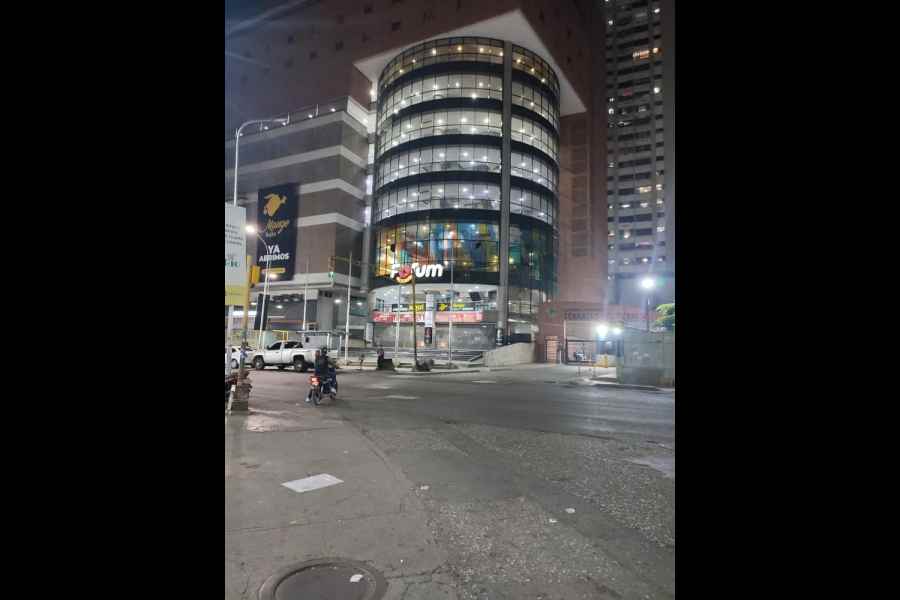
A deserted curb in Caracas
Earlier, the exchange rate used to be more even. So we would pay the change in dollars if we fell short in Bolivars. In January 2025, a dollar equalled 52 Bolivars. Since then, the value has fallen disastrously because of inflation.
There has been dictatorship here for 25 years, first under Hugo Chávez and then Maduro. In this period, the Bolivar lost 14 zeroes in value, requiring devaluations in three steps.
There have been multiple currency re-denominations, removing 3 zeros in 2008 under Chávez, then 5 zeros in 2018 and another 6 zeros in 2021 under Maduro to make the Bolivar usable, resulting in a near-total loss of our purchasing power and making the US dollar the de facto currency for daily transactions.
This government took over acres of farmland from rich farmers on the pretext of redistribution, but the tracts are now lying fallow. There is rampant corruption and interference.
Venezuela was the richest country on the continent when the Americans started producing oil here. Chinese, Italian, Spanish, Malaysian and Russian oil companies all came here and started joint production firms with Venezuelan companies.
Once Chávez came, production reduced to a fraction as the proceeds were not ploughed back into the maintenance and upgrade of the drilling facilities.
India’s ONGC had 40-50 employees posted here; now they are down to a handful while Indian Oil has folded up. The Indian community numbered about 300-400 families at one time; now only five families remain.
I had my own high-fashion garments import trade and travelled frequently across the US. The high inflation has made it unviable to continue in business.
Some 7.7 million Venezuelans have left the country since 2014. Over one lakh companies have shut down. Even I am contemplating shifting to Argentina for the sake of my younger son’s career. There is no future here.
The medical set-up is useless as hospitals do not accept local insurance. They ask for either insurance with a multinational bank or seek a deposit of some $5,000 to touch a patient. I went to my twin sister’s place in India for my cataract surgery.
The current atmosphere is one of uncertainty, but people are calm. The streets are empty as residents want to stay out of harm’s way. We remain watchful and in hope of better times. There is neither protest nor celebration.