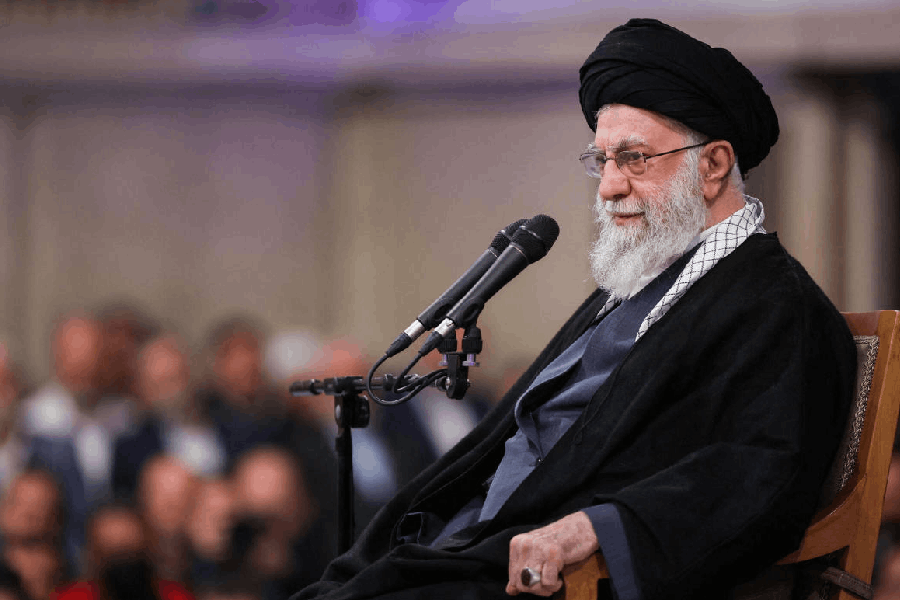
Iran’s Supreme Leader Ayatollah Ali Khamenei on Friday called US President Donald Trump “arrogant” and accused him of having “hands stained with the blood” of Iranians, even as nationwide protests escalated into the most serious challenge to Iran’s clerical establishment in several years.
In a nationally televised address, the 86-year-old leader alleged that Trump would be “overthrown” and urged the US President to focus on problems inside his own country.
“If he knew how to run a country, he would run his own,” Khamenei said, adding that the United States itself was plagued by deep internal issues.
“Last night in Tehran, a bunch of vandals and rioters came and destroyed a building that belonged to the state, to the people themselves, just to please the heart of the president of the United States,” he said, urging Trump to “manage your own country”.
He warned that Iran would not tolerate what he described as mercenaries serving foreign powers.
“Everyone should know that the Islamic Republic came to power with the blood of hundreds of thousands of honourable people, and it will not back down in the face of saboteurs,” Khamenei said.
The crowd responded with chants of “death to America.”
Last week, Trump had warned Iran that it would “pay hell” if protesters were killed, and said the US was “locked and loaded and ready to go” if security forces violently suppressed demonstrations.
Protests wrack Iran
Thursday marked the biggest surge in protests so far, with mass demonstrations continuing into Friday across major cities and rural towns.
Markets and bazaars shut in support of the protesters, while clashes with security forces led to widespread violence.
At least 42 people have been killed so far, according to AP. The US-based Human Rights Activists News Agency reported more than 2,270 detentions.
Iranian authorities imposed a near-total internet shutdown and cut international phone calls, a move internet monitoring group NetBlocks said began on Thursday and extended into Friday.
The blackout made it difficult to assess the full scale of the demonstrations and also appeared to knock Iran’s state-run and semi-official news agencies offline for hours.
Iranian state television broke its silence on Friday morning, alleging that “terrorist agents” linked to the United States and Israel were behind the violence.
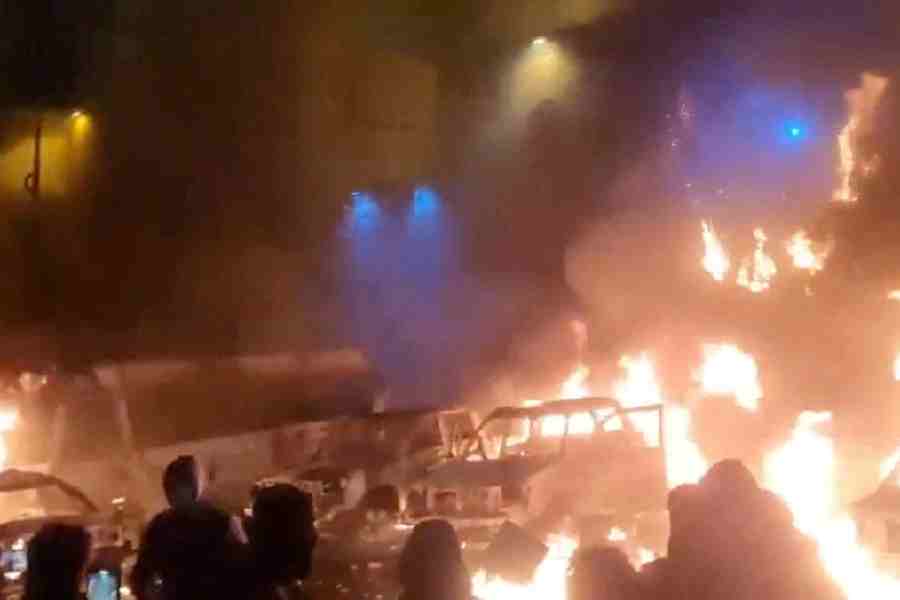
The broadcaster said private cars, motorcycles, metro stations, fire trucks and buses had been set on fire and acknowledged casualties without giving details.
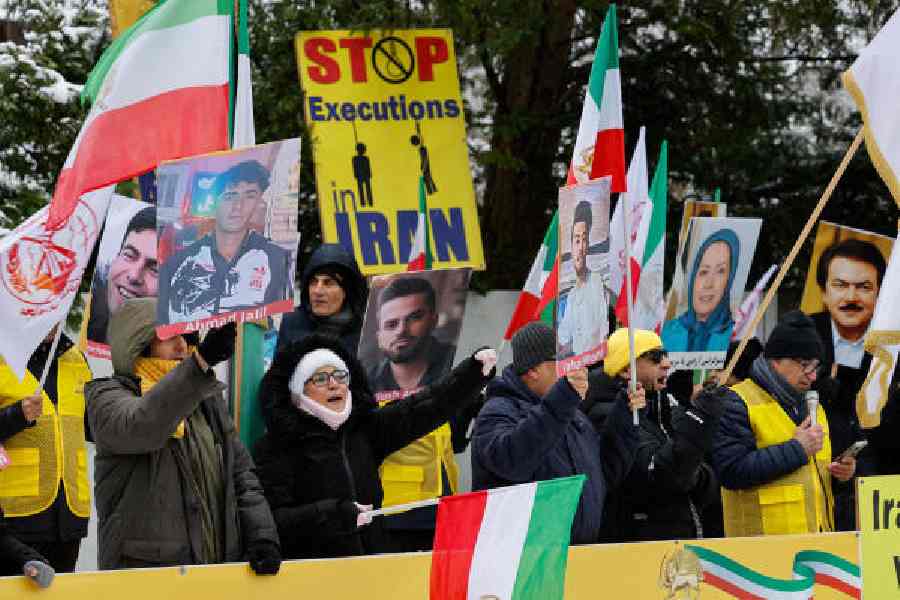
State media also accused the People’s Mujahedin Organisation, also known as the MKO, of instigating the unrest.
The protests have been galvanised by calls from Iran’s exiled former crown prince Reza Pahlavi, the son of the shah who was overthrown in the 1979 Islamic Revolution.
Holly Dagres, a senior fellow at the Washington Institute for Near East Policy, told AP that Pahlavi’s call for Iranians to take to the streets at 8 pm on Thursday and Friday “turned the tide” of the protests.
Former crown prince Pahlavi said he was “proud of each and every one” of those who responded.
“I know that despite the internet and communications being cut off, you will not leave the streets,” he said in a post on X.
A former senior official from Iran’s reformist camp said the Islamic Republic’s ideological pillars, including enforced dress codes and confrontational foreign policy, no longer resonated with those under 30, who make up nearly half the population.
Many Iranian women now openly refuse to wear the hijab in public, which had long been a defining feature of the state.
A young woman named Mina, speaking to Reuters from Lorestan province, said she wanted “a peaceful, normal life” but accused the leadership of prioritising nuclear ambitions and regional conflicts over people’s needs.
“Those policies may have made sense in 1979, but not today. The world has changed,” she said.
Alex Vatanka of the Middle East Institute said the Iranian clerical system had survived previous protest cycles through repression and tactical concessions, but that strategy was nearing its limits.
“Change now looks inevitable; regime collapse is possible but not guaranteed,” he said.
Inside Iran, views on foreign intervention remain divided. A 31-year-old man in Isfahan said he opposed outside military action despite his anger at the regime, saying Iranians wanted peace and normal relations with the world without the Islamic Republic.
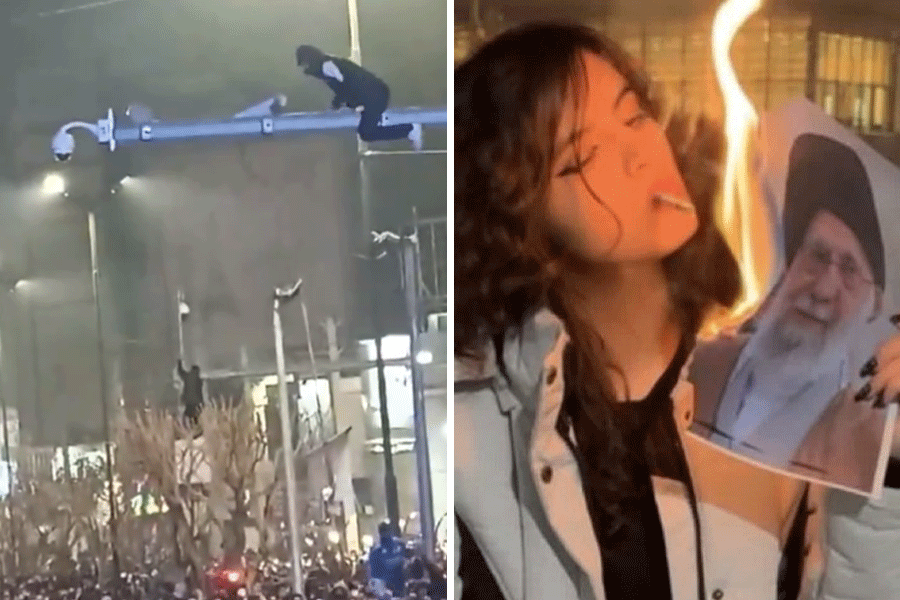
Amid the unrest, a new symbol of defiance has spread online, with videos showing Iranian women using burning photographs of Supreme Leader Khamenei to light cigarettes.
The Iranian rial slid sharply in December, at one point reaching 1.4 million to the US dollar, fuelling public anger over inflation, unemployment and falling living standards.