 |
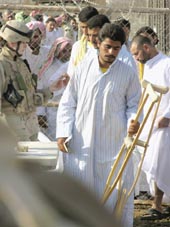
| Sergeant Cindy Barrois (left) checks the identity cards of prisoners before their release from the Abu Ghraib prison near Baghdad. (AFP) |
Baghdad, Aug. 27 (Reuters): The US military said today it had freed 1,000 detainees from Iraq’s notorious Abu Ghraib prison at the Baghdad government’s request, in the largest release to date.
It was not clear if the decision was linked to a demand by Arab Sunnis opposed to a draft constitution that authorities release Sunni prisoners so they can participate in a referendum on the text and elections later this year.
“I know this is a big one, but I can’t say if it is related to anything that is going on,” said US military spokesman Lieutenant Colonel Steven Boylan. Whether or not it was part of negotiations on the charter, the release is likely to ease concerns over the estimated 10,000 Iraqi prisoners held in US detention centres in the country.
“This is a good move that we definitely welcome,” said Hussein al-Falluji, one of 15 Sunnis on the panel drafting the constitution.
Parliament Speaker Hajem al-Hassani confirmed that a draft constitution with new proposals on disputed points such as federalism would be reviewed by Arab Sunnis and the chamber would receive a response tomorrow.
Sunnis are fiercely opposed to federalism, fearing it would give Shia and Kurdish leaders dominating the government control over oil resources in northern and southern Iraq.
The plight of prisoners in the US-run Abu Ghraib, once one of Saddam Hussein’s most feared prisons, has been one the most emotional issues for Iraqis since a US-led invasion toppled the former Iraqi President in 2003.
A scandal broke in the facility west of Baghdad last year when leaked photographs of US military guards abusing prisoners and forcing them to simulate sexual acts provoked an international outcry.
“This major release, the largest to date, marks a significant event in Iraq’s progress toward democratic governance and the rule of law,” said a US military statement.
US military officials say detainees sent to Abu Ghraib typically spend six months to a year in custody before a decision is made in Iraqi courts on whether to prosecute them.
US military lawyers in Baghdad estimate that 80 to 85 per cent of those arrested by US forces are released without being convicted.
Leaders of the Sunni community, the seat of the insurgency, have complained that lengthy detentions without charge, during which prisoners have no access to lawyers or family, are unfair. The military said the released prisoners were not guilty of serious crimes such as bombings, murder, torture or kidnapping and had renounced violence.
Shia and Kurdish leaders dominating the government, are hoping to get Sunni leaders on board for the constitution in a bid to neutralise the insurgency.
But negotiations over the charter, described as a blueprint for democracy by Shias and Kurds, and a possible trigger for civil war by the Sunnis, have been deadlocked for weeks.