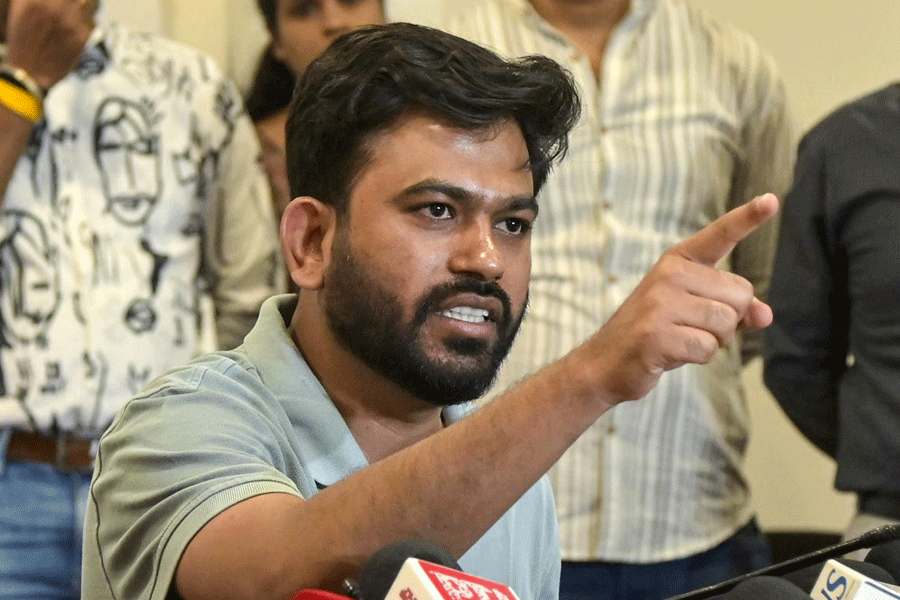
BJP state president Samik Bhattacharya on Saturday said the Uniform Civil Code (UCC) has long been a part of the party's agenda, but also clarified it would not apply to tribal communities in Bengal.
"BJP's position on the Uniform Civil Code (UCC) in India has long been clear and consistent. It has been a part of the BJP's election manifesto and political commitment — there is no secrecy or hidden agenda behind it," Samik, also a Rajya Sabha member, wrote on his social media handle on Saturday.
"At the same time, it is important to clarify one significant point: 'Nothing contained in this Code shall apply to the members of any Scheduled Tribes within the meaning of clause 25 of Article 366 read with Article 342 of the Constitution of India'," he added.
Besides clarifying the party's stand on tribal communities, he said the UCC had nothing to do with the number of children a person might have.
"However, regulating the number of children a person may have is neither the objective nor a provision of the Uniform Civil Code," he said.
Samik's clarification came amid speculation that the BJP might introduce the UCC in the Assembly on Monday.
On Friday, chief minister Suvendu Adhikari said the UCC would be implemented in Bengal following the due legal process and he would speak in detail about it in the Assembly on Monday. He clarified that the UCC would be implemented in Bengal on the lines of Uttarakhand, Gujarat and Assam.
He said the procedure under which a committee headed by a sitting judge is to be formed. The BJP is also set to introduce the West Bengal Public Safety and Control of Anti-social Activities Bill, 2026, in the Assembly on Monday, along with another Bill.
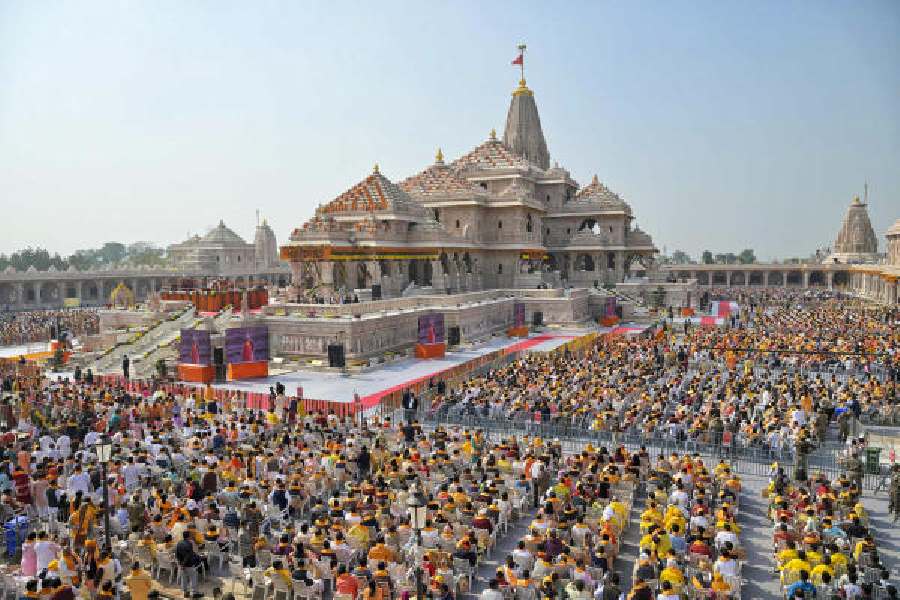
The UCC has been on the BJP's agenda after the construction of the Ram Temple in Ayodhya and the abrogation of Article 370 in Jammu and Kashmir.
Samik's clarifications are significant amid fears that Opposition parties and various groups might use the UCC issue to create fear among people.
Before the UCC was implemented in the three states, several tribal groups had expressed concern that their rights could be affected. In Bengal, the tribal community is believed to have played a significant role in the party's rise. A source said Samik's clarification was intended to reassure tribal communities that their customs, traditions and rights would not be affected by the UCC.
Samik, in his long post in Bengali, also said why they believed that the UCC was needed in Bengal. "We believe that the Uniform Civil Code is necessary in West Bengal because every citizen should have equal rights and equal responsibilities before the law. In matters such as marriage, divorce, inheritance and adoption, replacing religion-based personal laws with a common civil framework can further strengthen the ideals of national unity, justice and constitutional equality," he said.
"If this law is implemented, a common set of civil provisions will apply to all citizens. It could also serve as a significant step towards eliminating disparities such as the practice of polygamy, which is permitted under certain personal laws," he said, adding that there was no reason to spread misinformation about the UCC.
In May, Union home minister Amit Shah announced that all tribal communities would remain outside the purview of the UCC and their constitutional and cultural rights would be fully protected.