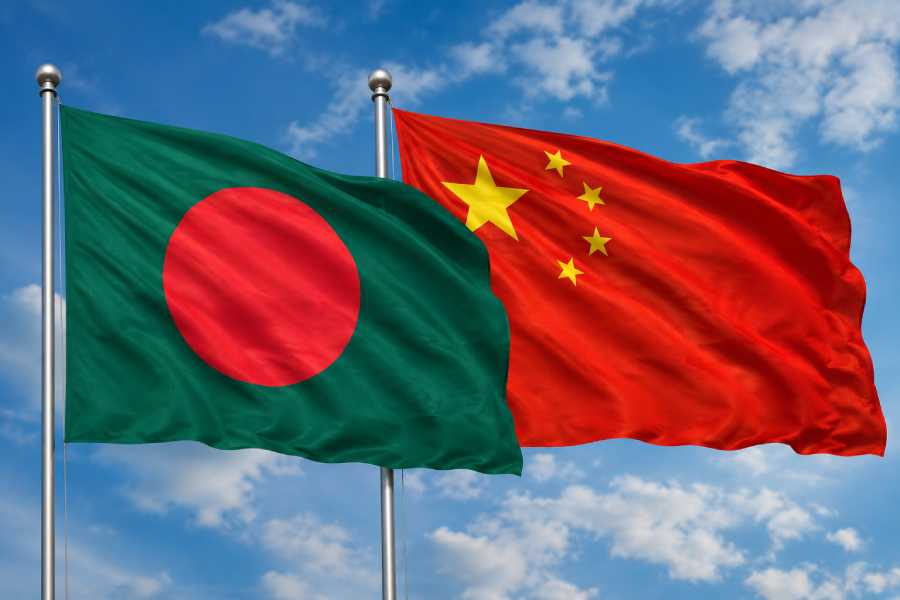
The relations between Dhaka and Beijing have reached their "highest level" after Prime Minister Tarique Rahman's visit to China, Bangladesh Foreign Minister Khalilur Rahman said on Saturday.
Addressing a press conference a day after PM Rahman returned from Beijing, he said, "This is the highest step in terms of China's bilateral engagement."
The foreign minister said the visit yielded a "landmark upgrade" in bilateral ties reflecting Bangladesh's "growing strategic importance" in China's regional diplomacy.
The Bangladesh prime minister chose to visit Malaysia on June 21 for his first trip abroad after assuming office. From Kuala Lumpur, he went to China on June 22.
The minister, who was the national security adviser in the previous Muhammad Yunus-led interim regime, said Bangladesh and China agreed to institutionalise a "strategic dialogue" at the foreign minister-level and introduce a "2+2" dialogue mechanism covering diplomacy and defence.
He said both sides reaffirmed their commitment to deepen cooperation under the Belt and Road Initiative (BRI), covering both large-scale infrastructure projects and people-centric development initiatives.
According to Rahman, "significant progress" was made on the Teesta River Comprehensive Management and Restoration Project (TRCMRP), with China pledging its support and both sides agreeing to expedite the project's feasibility study.
China's involvement in the Teesta river management can potentially complicate Dhaka-New Delhi ties for its strategic significance.
The Teesta river flows from the eastern Himalayas through Sikkim and West Bengal before entering Bangladesh, where it is a key source of irrigation and livelihoods for millions of people.
The Teesta river basin is located near India's sensitive Siliguri Corridor, a 22-km narrow strip of land that connects the mainland with the northeastern states.
The two countries also agreed to expedite the implementation of the Mongla Port Modernisation and Expansion Project and the Chinese Economic and Industrial Zone Development Project in Chattogram, the minister said.
During his five-day visit, the Bangladesh prime minister met with Chinese President Xi Jinping and held bilateral talks with Premier Li Qiang.
Bangladesh and China signed eight memorandums of understanding (MoUs), three agreements, one protocol and one Joint Action Plan covering development cooperation, human resource development, agriculture, education, trade, investment and media cooperation.
Xi on Friday expressed Beijing's backing for Bangladesh in upholding its sovereignty and rejecting foreign interference.