 |  |
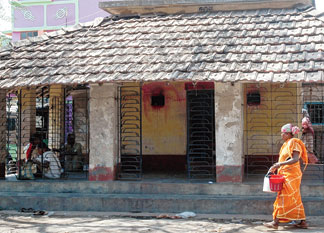
| The mound of Olabibi and (left) the the temple near Bechpukur math. Pictures by Anup Bhattacharya | |
Inside the quiet dark temple at one corner of Bechpukur math resides the deity after whom Olabibitala has been named. Olabibi is the goddess, who is believed to have powers to ward off illnesses like cholera and chicken pox. The temple is over 250 years old.
People come from far-off places to pray to the goddess for cure of their loved ones. Although Olabibi is believed to belong to the Muslims, people from all castes and religion pray to her in times of illness. In contrast to common Muslim beliefs, Olabibi is said to be one of the seven sisters of Sitala, Manasa, Bonobibi and three others, all of whom have powers to cure illness.
Olabibi was a myth that was popularised by local zamindars. Over 250 years ago, this part of Shibpur was dense forest full of criminals and dacoits. A shrine of a Muslim pir was located at one place surrounding which, a small settlement began to grow. As more people cleared the forest and started living here, the myth of Olabibi became popular.
“In order to gain control over the people of this settlement, the zamindars popularised the myth of Olabibi. It was said that Olabibi had once come out of the temple and committed suicide in the pond next to it,” said a local resident who did not want to be named. Earlier, there was a mound with a makeshift temple made of bamboo cane that served as the shrine of Olabibi.
The present structure came up about 40 years ago. Taimur Ahmed is the main sevait of the temple who has been serving the goddess since his childhood. Even today, at 85, he or his family members visit the temple twice a week to clean and offer prayers. “It has become a family tradition. Our grandfather was also the sevait of the temple and we would often get to hear stories of the deity from our grandmother, Fatema Bibi,” said Seikh Hajre Ahmed, Taimur’s son.
A huge fair was held every Tuesday and Friday near the shrine as those were the days when devotees came to seek blessings. Since Olabibi is worshipped by people of all religions, the gathering at the temple would be huge. But with time, the fair has stopped. Clay horses and chadars are spread over Olabibi’s mound by devotees, whose wishes have been granted. Some also offer sweets, fruits and other offerings that are later distributed among devotees. “As sevaits we are not allowed to take any offering home,” said Ajmira Khatun, Taimur’s daughter, who also cleans the temple.
The temple stands on debuttor property registered in Olabibi’s name. All expenses of the temple are born by the sevait. Local residents often donate to the temple.
Dalia Mukherjee