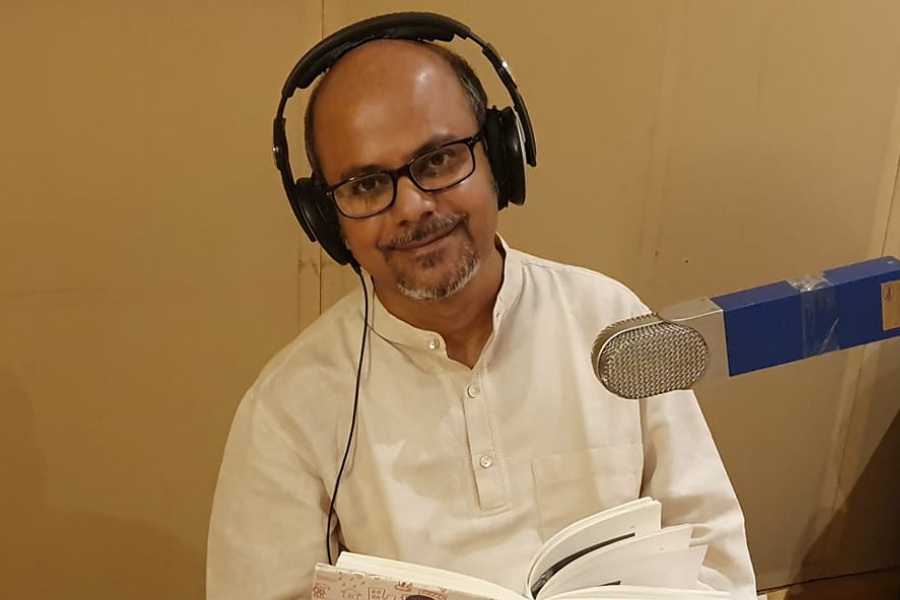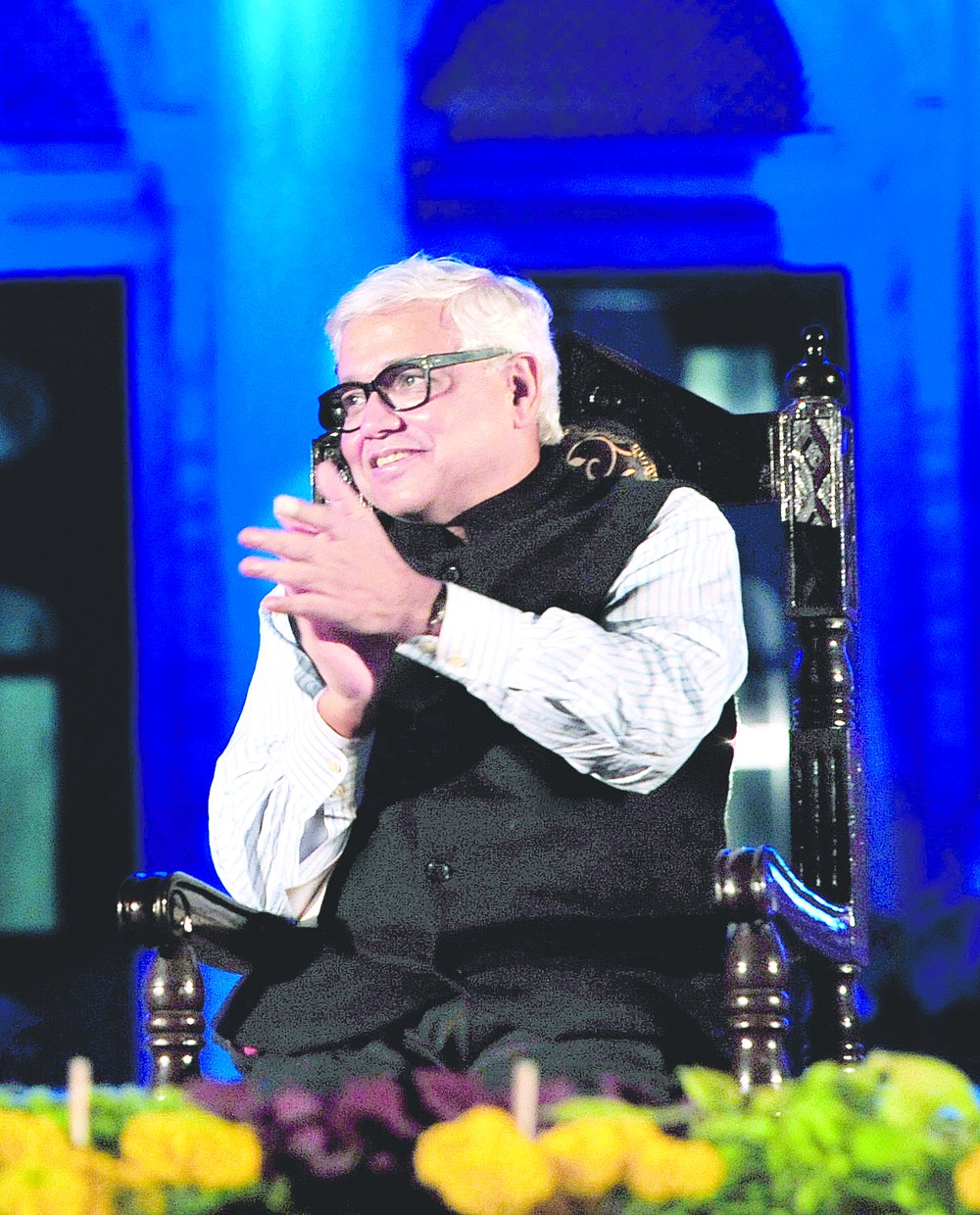

Amitav Ghosh comes out of the 'deep well' where he writes only when he is in the compelling company of a new book. His latest title is a few months away but the countdown started when he outlined the themes of Flood of Fireon the steps of the Victoria Memorial, a monument that according to Ghosh has its foundations in the fumes of opium, fumes that have played a large, if undocumented, role in our history.
What can we expect from the crew of the Ibis in the concluding segment of his trilogy? Ghosh sips his cup of Castleton Muscatel and recalls: 'Last year, when I was finishing this book I thought I would go mad. This was the most difficult of the three books to write, there was just so much happening and to stay on top of it all was incredibly challenging. But eventually it all fell together.'
Flood of Fireis the final instalment of the Ibis trilogy after The River of Smokeand concludes an enterprise that one might not have connected to Ghosh in his early years as a writer. Before that, Ghosh had been genre-jumping from science fiction to social anthropology to the historical novel to translations. Steadfast faithfulness to one story and set of characters was not something even Ghosh had thought through.
'When I started thinking of a certain kind of historical novel with certain characters, I embarked on A Sea of Poppies. However, six months into the novel, I realised that I wanted to spend a really long time with these characters.' It was only then that a voyage that would have lasted the length of a novel grew into a 10-year cycle of books - a story set in the high seas that meandered like a river from one set of characters to another. 'It was scary, committing a decade of one's life to one set of characters is not easy,' claims Ghosh, though something in his tone suggests he enjoys the scare of a difficult and ambitious challenge.

Flood of Fire hits
bookstores this May
Flood of Fireis about the First Opium War and how the now-familiar characters are enmeshed in it. 'One of the main characters is Kesri Singh, Deeti's brother. Neel Halder, who has been a strong character in both the preceding books, is also a major character here,' says Ghosh, who admits to a fondness for the Rascally Raja. 'Parts of the book go back in time to before the first book. A sort of prequel,' he adds.
The novel required Ghosh to comb through mountains of material and he reckons that the fact that he often does his own research does influence his style. 'Hilary Mantel does not need to really dig deep to know about Tudor life. It's all there. But I have to delve deep into material to recreate parts of history that have barely been documented.' Perhaps that's why the research is an intrinsic part of a Ghosh novel. Not that criticism of over-researching worries him: 'I don't read reviews or secondary material like research papers on my books. It's a policy that has served me well.'
What does worry him is the complete ignorance of the history of this war, the enormous gap in research and India's reluctance to look East. Not one to complain about getting his hands dirty with research, Ghosh is puzzled that no young scholar has ever worked on the military history of a war that was essentially fought by men from Bihar and Uttar Pradesh. 'The Opium Wars were not Chinese wars, they were Indian wars. I want to connect histories and break these compartments that prevent us from breaking our Eurocentric vision of the world.'
If connecting history is a major theme that resonates through his earlier novels as well, Ghosh also points to how the way we learn it is responsible for where we are as a nation. 'We have paid a terrible price for our inability to understand our place in the world. Our gaze is always to the West and we missed the first Asian economic boom because of this, and we still have a grave misconception of our place in the world.'
The other resonance is about Calcutta, the city from where Ibis had embarked on its charmed voyage. 'Calcutta is not a Bengali city, and it was one of the first globalised cities of the world,' says Ghosh. 'The Armenians, and other trading communities have been visiting it for centuries, and it has always been a city where Maithili and Bhojpuri are spoken in large belts.'
Ghosh likes roaming the streets of Calcutta ('nobody ever recognises me,' he says with some glee) and discovers gems that hardcore Calcuttans don't even know about. 'There are parts of the city that are in catastrophic decay, but exceptions are still there. Just last weekend I was at the Bhukailash Rajbari in Kidderpore which is a beautiful structure with a baithak where one could hear Bhojpuri being spoken everywhere. The wilful neglect of these aspects of the city has made us view it as a Bengali city when it has always been more than that.'
Calcutta has been a city Ghosh has visited all through his life, and yes, he does worry about it. 'It's hard not to worry about Calcutta. Wherever I go I meet bright young boys and girls and most of them have just left Calcutta in quest of jobs,' says Ghosh. 'It's as though all the talent the city miraculously and consistently produces simply leaves Calcutta. We are all guilty,' he adds.
With writing desks aka deep wells in Goa, Calcutta and Brooklyn, Ghosh is happiest when speaking about his books. 'It takes me a great effort to name a character. It's only when I name a character that he really comes alive in my mind's eye,' admits Ghosh. And often the names he conjures do have resonances in real life. 'Benjamin Burnham was a character I named after a lot of thought. A few years ago I got a mail from someone who had a trader ancestor who lived in that era with the same name,' Ghosh recalls. 'There was also a Neel Halder who lived in Chinsurah around the time his fictitious namesake did.'
Does Chrestomather (Ghosh's virtual persona on his website) often enquire about the fate of various crew members? 'All the time,' admits Ghosh, agreeing that this is possibly the fate of all those who write sequels. However, no suggestions about how to tie up things have ever made their way to his inbox. 'It wasn't all heavy going. This is also the most fun I have had in the books.' There is fun and even Bhojpuri humour along the voyage, Ghosh promises as he finishes his second cup of tea. Flood of Firesails into bookstores this May.