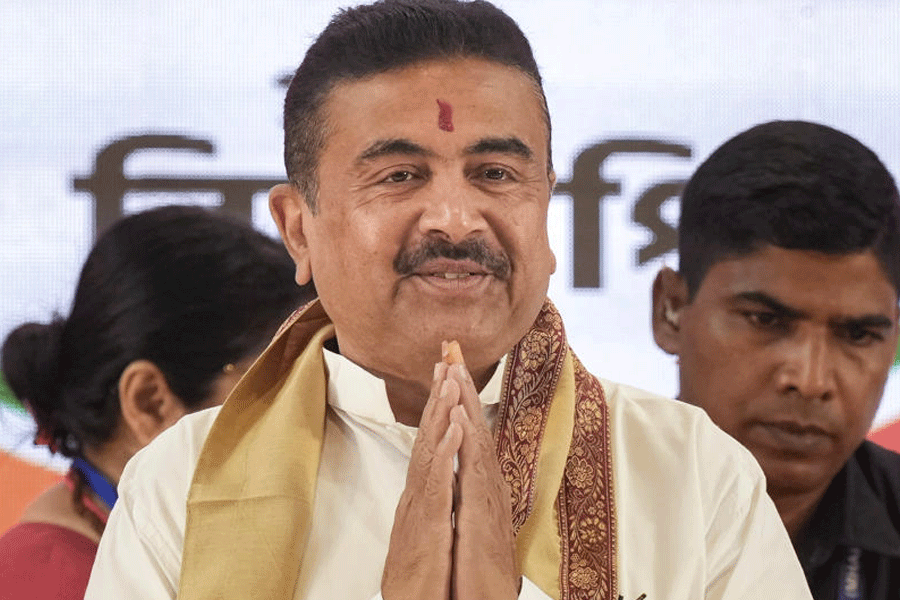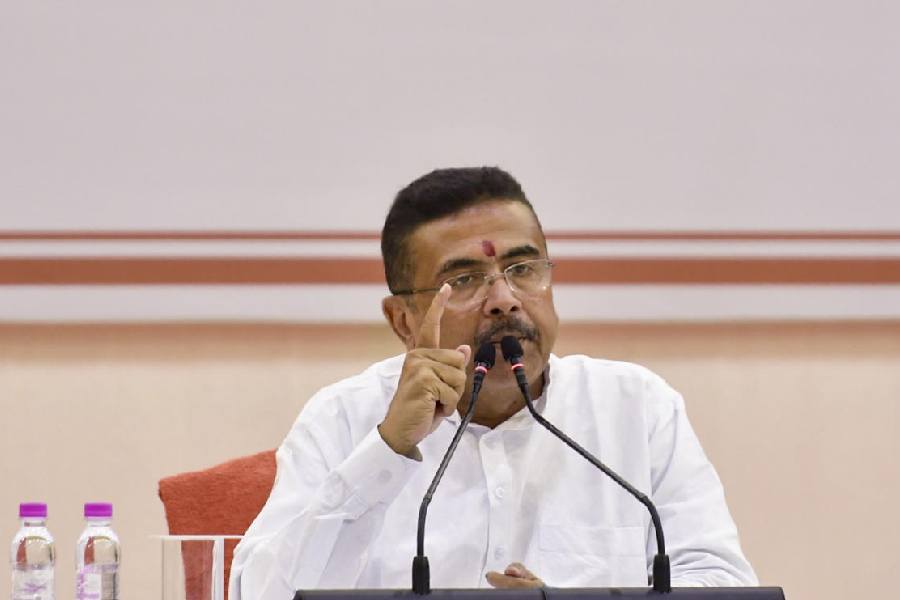
The new Bengal government on Monday announced it would from next month discontinue financial aid schemes based on religion, with officials clarifying this referred to the monthly assistance to imams, muezzins and Hindu priests.
The BJP government will also re-examine all the OBC certificates issued in the state after 2011 — a sizeable proportion of them to Muslims — as directed by Calcutta High Court in May 2024.
“Our government’s second cabinet meeting approved a proposal to discontinue assistance schemes based on religion, (and) run by the information & cultural affairs and the minority affairs & madrasah education departments, from next month,” social welfare minister Agnimitra Paul said.
“The beneficiaries of the schemes will get the benefits this month. A detailed notification will be issued soon,” she added, without identifying the schemes to
be discontinued.
“The minority affairs & madrasah education department provides financial assistance to 41,205 imams and 39,028 muezzins, while the information & cultural affairs department gives funds to nearly 5,000 (Hindu) priests,” a bureaucrat explained.
“The minister perhaps alluded to these two schemes as they are based entirely on
the beneficiaries’ religious identity.”
The previous Mamata Banerjee government had introduced the financial assistance to imams and muezzins soon after coming to power in 2011. But Calcutta High Court struck the scheme down as unconstitutional in September 2013, ruling it was discriminatory on the grounds of religion.
But the then state government continued the scheme through the backdoor, transferring the funds to the waqf board as a monthly donation, to be disbursed among imams and muezzins.
The assistance to Hindu priests started just before the 2021 Assembly polls. It was never challenged in court.
Sources in the administration said the financial assistance given to clubs for Durga Puja could also be seen as based on religious lines. “The government will later take a call on this scheme,” an official said.
“The cabinet approved a proposal to work on the list of OBC sub-castes as directed by Calcutta High Court in May 2024,” Paul said.
On May 22 that year, the high court had scrapped all the OBC certificates issued in Bengal after 2010 and asked the state government to frame fresh rules in keeping with national norms before issuing new certificates.
“The erstwhile Left Front government had in 2010 included 53 Muslim sub-castes, accounting for 87.1 per cent of the state’s more than 2 crore Muslim population, in the OBC category ahead of the 2011 Assembly polls,” an official said.
“At the time, OBC reservation in government jobs was increased from 7 per cent to 17 per cent.”
The Trinamool government subsequently included a few more Muslim sub-castes in the OBC category and began issuing certificates. It later appealed against the May 2024 high court order before the apex court.
The Suvendu Adhikari government is likely to seek the Supreme Court’s permission to withdraw the appeal, a senior official said.
Recently, the new government’s backward classes welfare department issued an order asking district magistrates to re-verify all caste certificates issued after 2011.
It said nearly 48 lakh OBC certificates were issued after 2011, of which 8.64 lakh were based on applications received via Duare Sarkarcamps.
“All these OBC certificates will now be considered invalid. The new government will verify all the documents submitted by people from the sub-castes since 2010 and take a fresh call on their inclusion in the OBC category,” a source said.
Paul on Monday clarified that the benefits of the Annapurna Bhandar would be available to those excluded from the voter list, too, if they have applied for citizenship under the CAA or challenged their deletion from the rolls before the tribunals.