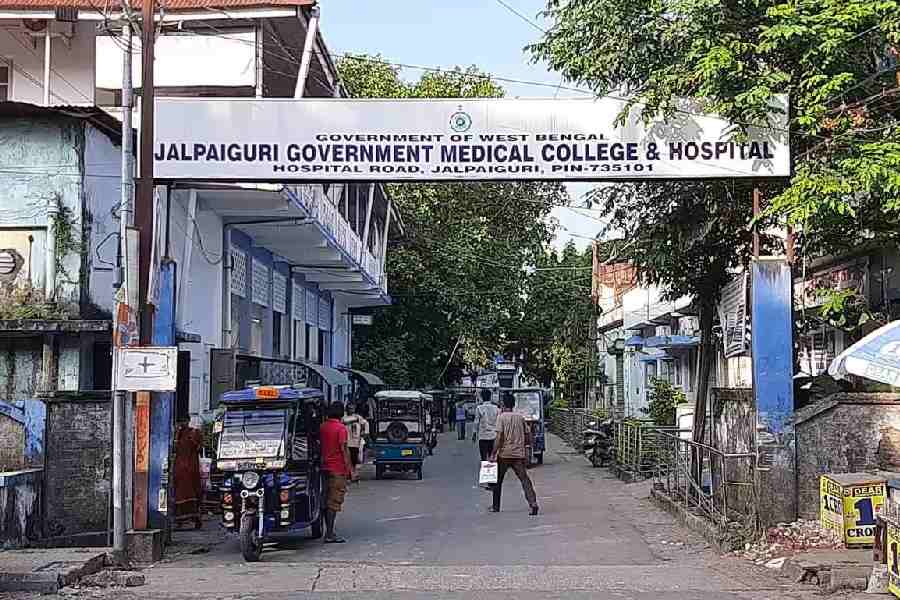
Jalpaiguri Government Medical College & Hospital (JGMCH) has introduced intra-articular platelet-rich plasma (PRP) therapy for osteoarthritis at its pain clinic, becoming the first hospital in north Bengal to offer the service.
The treatment was earlier introduced at the RG Kar Medical College & Hospital in Calcutta.
Doctors at JGMCH said osteoarthritis is one of the most common chronic joint disorders among patients visiting the outpatient department with persistent pain.
“The condition gradually damages the cartilage in joints, leading to pain, swelling and restricted movement, particularly in the knees, shoulders and other joints,” said a senior doctor.
“As the disease often requires long-term treatment and complete recovery is not always possible, there was a need for advanced and alternative treatment options,” a source said.
Shankar Roy, who heads the pain clinic, said the therapy works by harnessing the body’s own healing mechanism to repair damaged joint tissues.
“Platelet-rich plasma contains growth factors that may help regenerate damaged cartilage in knee or shoulder joints. Patients are expected to experience reduced pain and improved mobility after the procedure,” Roy said.
Doctors collect a specified amount of blood from the patient and process it through a specialised machine to separate the platelet-rich plasma. The plasma is then injected directly into the affected joint.
“The growth factors present in the plasma help to accelerate the repair and regeneration of damaged cartilage. Patients gradually experience reduced pain and better joint movement,” a source said.
The doctors believe that the therapy could emerge as an effective alternative for patients seeking to avoid surgery or for those whose condition does not require surgical intervention. The procedure is also expected to benefit elderly patients.
Kalyan Khan, the medical superintendent-cum-vice-principal of JGMCH, said the service was introduced through a coordinated effort involving multiple departments, including the blood bank, anesthesiology, radiology, physiotherapy and acupuncture units, to create an integrated treatment framework for patients.
“The therapy will continue under the supervision of specialists attached to the pain clinic and allied departments,” he added.