Bengal’s Plus II-curriculum was divided into four semesters in an attempt to boost scores and help students compete with peers from other boards, often perceived to award marks more liberally.
However, the first higher secondary (HS) results under the new system saw fewer students securing the highest grade compared with 2025.
In the results published on Thursday, 6,434 candidates secured the top “O” grade — awarded for scores between 90 and 100 — out of the 5,71,355 students who passed the examination.
Last year, 7,307 candidates secured the “O” grade out of the 4,30,286 students who passed the examination.
Even 2024 was better in terms of “O” graders. The number of students with the highest grade was 8,331.
Principals of several undergraduate colleges said HS students could face difficulties securing admission to top institutions if admissions were based entirely on board marks.
“Most colleges admit students based on marks. The number of students securing the highest grades in the CBSE and ISC boards is far higher than what has been recorded in the HS results. This could inconvenience some state board students, considering that we do not have the practice of screening candidates through admission tests in government and aided colleges,” said Siuli Sarkar, the principal of Lady Brabourne College.
The principal of a government-aided college said that when the higher secondary council introduced the semesterised system in 2024 — with the first and second semesters for Class XI and the third and fourth for Class XII — there were expectations that it would improve performance in the upper tiers.
When only 1.23% (8,331) of the 6,79,784 successful candidates in the state higher secondary examinations scored 90 or above in aggregate in 2024, then council president Chiranjib Bhattacharjee had expressed hope that the situation would improve with the introduction of the semester system in the 2024–25 academic year. But that has not happened.
A semesterised system may look relatively easier to manage from afar, but it demands far greater rigour in classroom teaching and academic management.
Many academics expressed concern about whether the schools were doing enough to prepare students for the new system. There are also concerns about the teaching resources in many institutions.
In HS 2026, the largest number of students — 1,79,358 — secured the “B” grade (50–59) in the seven-grade scale.
“We have to analyse the reasons. If there are deficiencies, those have to be addressed,” said council president Partha Karmakar.
The headmaster of Mitra Institution, Bhowanipore, Raja Dey, said the council needs to probe what is ailing the system.
“This performance is not what we desired. Schools are reeling under a shortfall of teachers at the higher secondary level because no recruitment has happened at the secondary and higher secondary levels in the past decade,” the headmaster said.
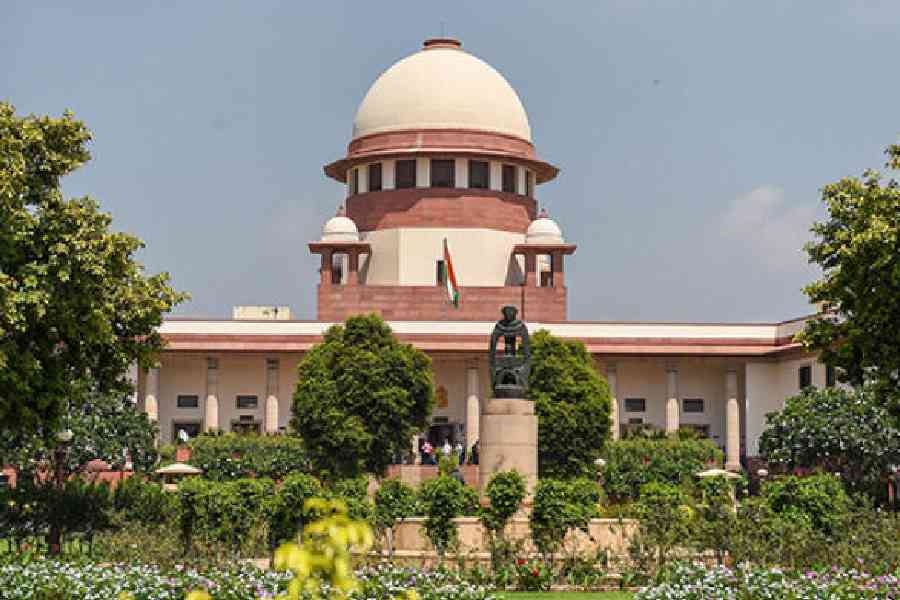
As many as 17,209 teachers at the secondary and higher secondary levels who had been appointed based on selection tests held in 2016 were sacked by the Supreme Court last year due to irregularities in the recruitment process.
The Mamata Banerjee government held tests in 2025 to shortlist candidates for teacher jobs after a gap of nine years. But fresh recruitment has not happened as the counselling and interviews are pending.