The Barbie doll, still a cherished aspiration for many children, now has a new version. Mattel introduced its first autistic Barbie in India recently, describing the doll as a testament to inclusive play and the belief that “every child deserves to be seen”.
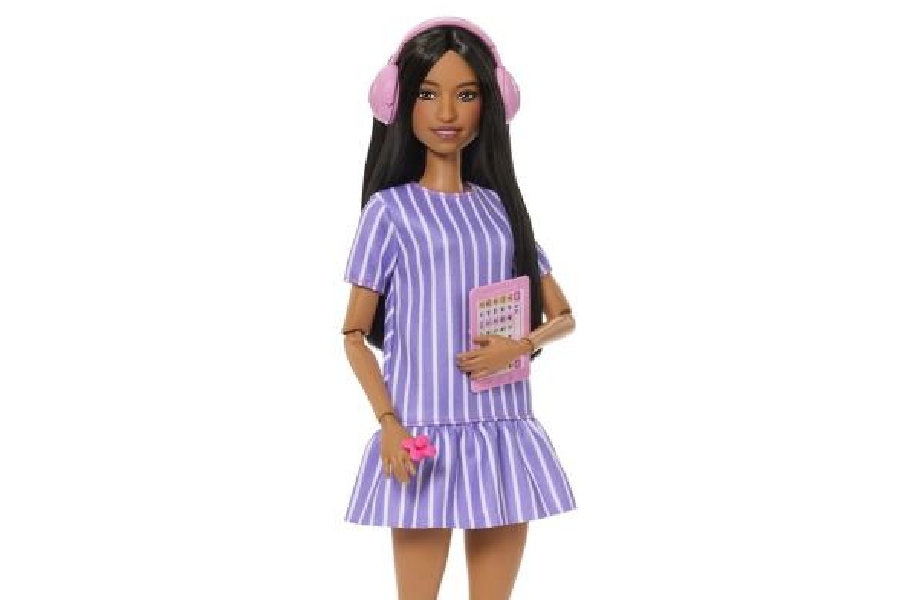
The Barbie comes with accessories such as a fidget spinner, noise-cancelling headphones and a tablet equipped with an augmentative and alternative communication (AAC) app. People working in the autism space said these additions help normalise the condition and its associated needs for those unfamiliar with it.
“Barbie has always strived to reflect the world kids see and the possibilities they imagine, and we’re proud to introduce our first autistic Barbie as part of the ongoing work,” said Jamie Cygielman, global head of dolls at Mattel, at the launch.
Cygielman added that the doll was designed with guidance from the Autistic Self Advocacy Network, a non-profit disability rights organisation. “(It) helps to expand what inclusion looks like in the toy aisle and beyond because every child deserves to see themselves in Barbie,” she said.
The new doll joins Barbie’s broader inclusive range, which features dolls with Type 1 diabetes, blindness and Down syndrome. In an email to Metro, Mattel India said: “The doll reinforces Barbie brand’s core belief that every child deserves to be seen.”
Beyond its accessories, the doll’s physical design reflects experiences that some individuals on the autism spectrum may relate to. Barbie’s gaze is slightly averted rather than direct, acknowledging that sustained eye contact can be challenging for some. The doll also includes elbow and wrist articulation, allowing for movements such as stimming and hand flapping, common among some individuals with autism.
The doll represents visibility for an invisible disability, said many in the city working with individuals on the spectrum.
“This Barbie is a start to something much bigger — recognising an invisible disability,” said Sakhi Singh, head of partnerships and communication at the India Autism Center. “It acknowledges assistive devices such as noise-cancelling headphones and communication tools. The subtle details, like the doll not looking straight ahead, send out a message that eye contact is not mandatory.”
As part of the India launch, Mattel will contribute a portion of the proceeds from the doll’s sales to the India Autism Center.
“Toys are powerful in shaping a child’s sense of self. When children see themselves reflected in everyday objects, it reinforces that they belong. This collaboration helps spark necessary conversations around acceptance and understanding in a way that feels natural and inclusive,” Singh said.
The initiative may also foster empathy among neurotypical children. Singh said that some autistic children prefer wearing headphones at birthday parties to cope with sensory overload, a choice that is not always understood by others.
“In a mainstream school, if a student with autism uses an AAC device, peers will now recognise that this is a child who needs support.”
Indrani Basu of the Autism Society West Bengal believes the doll helps convey that “autism is normal”.
“It will sow acceptance,” Basu said. “But having autism should not mean a child plays only with a doll that has autism.”