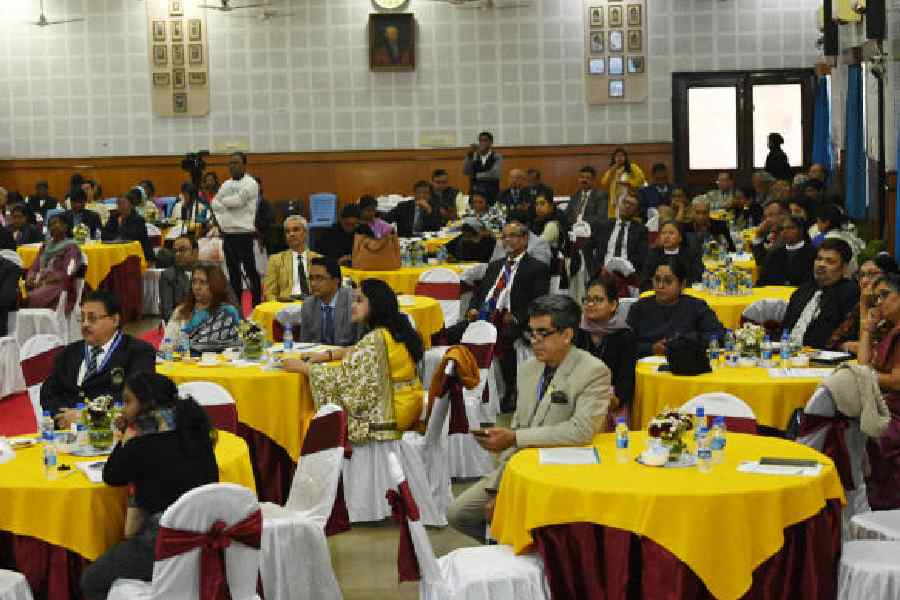
Children have to be empowered to report abuse right from the pre-primary level, and schools should sensitise and educate parents about how they should respond when a child reports an instance of abuse, a psychotherapist told a session on the Pocso (Protection of Children from Sexual Offences) Act.
If parents shoot down a child’s report of abuse, then they might never report again, warned Farishta Dastur Mukerji.
“Educating and empowering parents on how to respond to a child’s reporting is critical because if a child is reporting, he or she has to be listened to and understood,” said Dastur Mukerji, also a school counsellor.
Culturally speaking, reporting abuse is still taboo. “Many forms of touch violate a child’s boundaries. Parents need to be spoken to so they understand the impact of these violations on a child’s mind,” she told a school principals’ conclave last week.
Children need to be trained about boundaries and consent, acceptable and unacceptable touch, who can touch them, and who cannot.
The conversation with children should change as they grow older and be age-appropriate.
A continuation of this conversation is when to report and how to identify responsible adults who can be approached for help.
Dastur Mukerji was part of a panel that comprised Rachel Elias, principal of St Thomas’ Girls’ School, Kidderpore; Ian Myers, principal of Frank Anthony Public School; and advocate Kaushik Gupta. The session at the three-day annual conference of the Association of Heads of Anglo-Indian Schools in India was moderated by Amrita Dasgupta, director of Swayam, an organisation that champions the rights of women.
The challenge for many schools is that though they are trying to empower children and parents and encourage reporting, many families see it as “overstepping”.
One school head quoted an incident in which a girl reported that her sister was being abused at home by a family member. The school approached the mother, followed the steps and reported the matter to police.
“The mother was angry and upset with the school because they were financially dependent on the family member. The school and the police could not convince the mother to take the matter further, and ultimately the girl who reported the abuse and was on a bursary was pulled out of school and lost her opportunity for education,” said the principal. He was not part of the Pocso discussion panel.
Principal Elias, who was part of the panel, said there was a “slender line” that schools must negotiate.
“Sometimes, mothers are unable to take the step because they have serious, genuine concerns about the family’s welfare,” said Elias.
Dasgupta of Swayam said that, as a society, there was a need to focus on awareness and prevention and to have a safe space for reporting.
“Every individual, especially a young person, has to be aware of abuse, safety concerns, and know about their rights. However, it is not easy for a young person to speak about their grandfather or uncle or a loved person. It is a difficult decision,” she said.
Family members have to be encouraged to provide the right solutions and create the right environment for reporting.
“The only onus for reporting cannot be on a young person who is being abused because it is a lot of burden,” said Dasgupta.