The Election Commission seized cash, liquor, narcotics, precious metals and assorted freebies collectively valued at ₹181.36 crore within just six days since the announcement of the Assembly polls on March 16 as the EC launched an aggressive crackdown on the use of money power and inducements ahead of the elections.
The seizures signall an intensified enforcement drive to ensure compliance with the Model Code of Conduct.
According to official figures given by the office of the chief electoral officer, Bengal, the seizures include ₹2.82 crore in cash, 10,35,141 litres of liquor worth ₹26.20 crore, drugs and narcotics valued at ₹27.95 crore, 114.30 kilograms of precious metals worth ₹13.21 crore, and freebies and other inducements amounting to ₹111.10 crore.
The scale of the recovery — already accounting for nearly 53 per cent of the total seizures recorded during the 2021 Assembly elections — points to both heightened surveillance and the persistent challenge of curbing illicit electoral practices in the state.
The polls, announced on March 16, will be conducted in two phases on April 23 and April 29, with counting scheduled for May 4. With nearly a month still to go before voting begins, officials indicate that the cumulative seizure value could surpass previous records, reflecting both the intensity of enforcement and the entrenched role of inducements in electoral contests.
The EC’s latest action continues a trend observed in recent elections, particularly in Bengal, where the role of money, liquor and other inducements has come under increasing scrutiny amid fiercely contested political battles.
In the 2021 Assembly elections, which were conducted in eight phases and marked by high political stakes and widespread allegations of electoral malpractice, the commission reported seizures worth ₹339.45 crore, an unprecedented 766 per cent increase from the ₹44.33 crore recorded during the 2016 Assembly polls.
A detailed breakdown of the 2021 figures underscores the changing nature of electoral inducements.
Of the total ₹339.45 crore seized, illegal cash accounted for ₹55.59 crore, while 33,14,970 litres of liquor valued at ₹39.53 crore were confiscated.
Narcotics and drugs formed the largest share, with seizures worth ₹129.99 crore, indicating a shift towards more covert and high-value channels of influence. Additionally, precious metals worth ₹13.52 crore and freebies worth ₹100.82 crore were recovered, indicating a diversified strategy of voter inducements.
The commission’s ability to achieve these figures was underpinned by an extensive enforcement apparatus, including 1,137 flying squads and 1,012 static surveillance teams deployed across the state during the 2021 polls.
The current election cycle has witnessed an even larger deployment, reflecting a calibrated escalation in monitoring mechanisms.
The broader national trend further reinforces the scale of the issue. During the 2024 Lok Sabha polls, election-time seizures across the country exceeded the unprecedented ₹9,000-crore mark, highlighting the growing influence of illicit financial flows in electoral processes and the need for robust regulatory oversight.
Opposition parties have frequently accused ruling formations of leveraging state machinery and financial networks to influence voters, while the ruling establishment has countered with allegations of external funding and organised inducement campaigns by rival groups.
Against this backdrop, the EC’s enforcement drive assumes added significance as a test of institutional neutrality and administrative control. An EC official in the state indicated that the upward trend in seizures was likely to continue as polling dates draw closer.
A senior EC functionary said: “The scale of these recoveries underscores the growing challenge of inducement-free elections, even as enforcement strategies become more technologically advanced and widespread.”
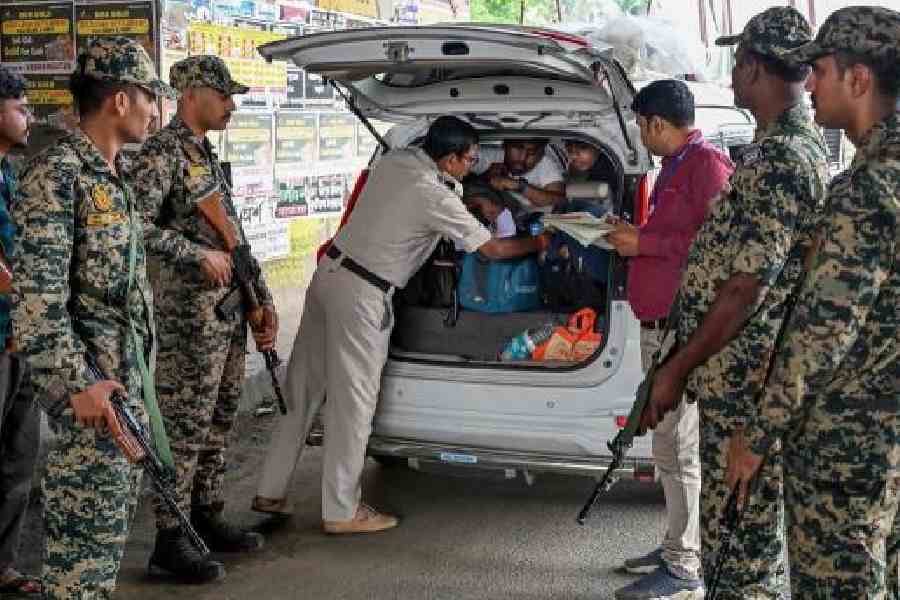
As part of its intensified surveillance strategy, the commission has deployed 1,879 flying squad teams (FSTs) and 2,235 static surveillance teams (SSTs) across Bengal, CEO's communication said.
While the FSTs are tasked with responding rapidly to complaints received through the cVigil mobile application and other intelligence inputs, the SSTs conduct systematic vehicle checks and interception operations to prevent the illegal movement of cash and inducements.
The additional chief electoral officer of Bengal, Arindam Niyogi, said the coordinated deployment of field teams, combined with digital monitoring tools, was aimed at ensuring strict enforcement of electoral norms during the pre-poll period.