|
 |
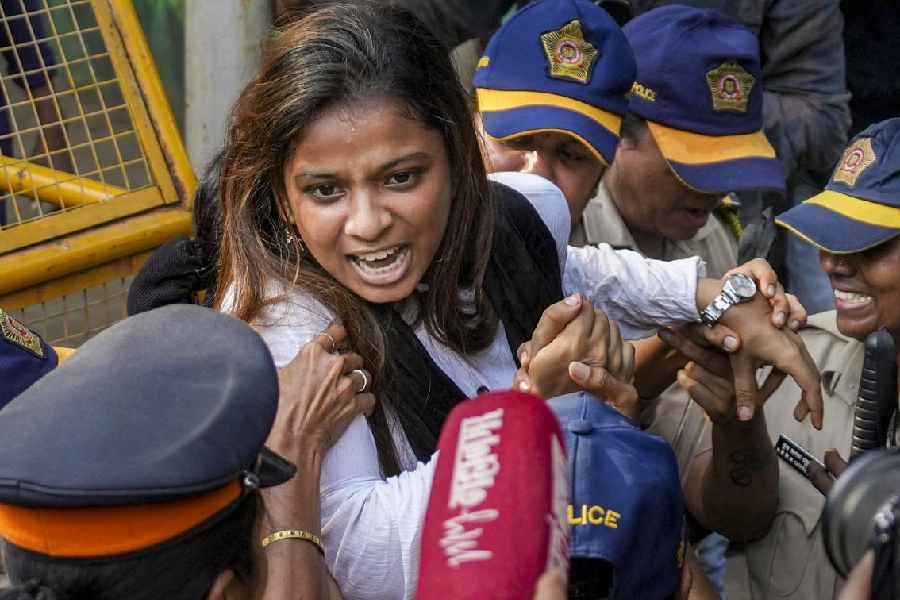
| Golay (top) and Chamling: Tables turned? |
Gangtok, Jan. 4: After a gap of almost two decades, a replay of sorts is unfolding in the political firmament of the Himalayan state of Sikkim.
On September 9, 1992, Pawan Chamling, then a rebel Sikkim Sangram Parishad MLA, had famously lit a candle during the zero hour of the Assembly and “searched for democracy” before a stunned House to generate a tide against his party leader and then chief minister, Nar Bahadur Bhandari.
Prem Singh Golay, a three-time minister in Chamling’s Sikkim Democratic Front (SDF) government and currently the MLA from Upper Burtuk constituency, along with Bhojraj Rai, an adviser to Chamling’s party, are in the forefront of a movement against their leader. “I have come to search for democracy, not with a candle, but a torch,” said Golay. The similarity of the movement does not end here.
Chamling, too, had been a minister in Bhandari’s cabinet much like Golay. The chief minister in his biography, Pawan Chamling – Daring to be Different, talks of his initial days of struggle after his expulsion from the Sikkim Sangram Parishad following the candle incident. “My position after my removal was not easy. Bhandari, after removing me from his party, was not satiated yet. Threats and intimidation like amputation of my limbs, burning of my house were hurled at me. Not just my political life, Bhandari seemed in a hurry to stop my very lifeblood,” he wrote.
The SDF rebels have not yet been expelled from the party, but Golay is no longer visible in Sikkim. After taking oath as MLA on May 22, Golay has virtually gone underground — only making a rare public appearance near Jorethang on December 21 — and skipping all sessions in the Assembly since then. On the other hand, Bhojraj, who is seen as a spokesperson for the rebel MLA, has alleged that Chamling is baying for both their bloods.
“They tried to burn my house in Namchi. A youth was caught with a German-made revolver in Namchi recently. They want to eliminate us,” claimed Bhojraj.
The charges that the rebels are talking about are same as those Chamling had brought against Bhandari. “Where is democracy in Sikkim? The entire system is now corrupt. The poor have become poorer. The people are fed up with the communal politics of Sikkim. The entire show in Sikkim is being orchestrated by Chamling’s wife,” said Bhojraj, who is a Rai, the same community as Chamling’s.
The SDF has, however, denied the allegations levelled by the “vested interests”.
“His Namchi house must be worth Rs 5 crore to Rs 7 crore. How can you even imagine that it can be burnt down by a few bottles of petrol filled beer bottles? It defies logic and smells of an inside job,” said Bhim Dahal, spokesperson for the SDF and a former MP from Sikkim, referring to Bhojraj’s charge of burning his house.
Golay has always been seen as a youth leader. Many believe that Chamling did not deny him a ticket during the last Assembly election, when 21 sitting MLAs, including eight ministers, were dropped, largely because of his popularity. Chamling, however, changed Golay’s constituency from Chakung-Soreng (in West district) to Upper Burtuk (in East) and this perhaps sparked the rebellion. “All I can say is that some people with vested interests have come together but for how long can politics based on allegations, without an ideology or principle, last,” said Dahal.
However, despite, Dahal’s confidence that the rebellion will be a non-starter, the party is not taking things lightly. On December 30, Cheli Morcha, the women’s front of the SDF, brought out massive rallies across the state to protest the alleged circulation of “sleaze pamphlets” against party leaders.
The rallies followed after a rebel group within the Cheli Morcha came out openly against Chamling. Dahal, however, denied that the SDF had pressed the panic button.
“We have 10 frontal organisations within the SDF. It was the Cheli Morcha who decided to protest on its own. There is no question of pressing the panic button,” said Dahal.
Golay and Bhojraj might have generated a wave but its ripple effect has not come out in the open yet. Chamling, an astute politician, has kept his cards close to his chest but everyone, including the rebels, know that they face more challenges than the chief minister does.