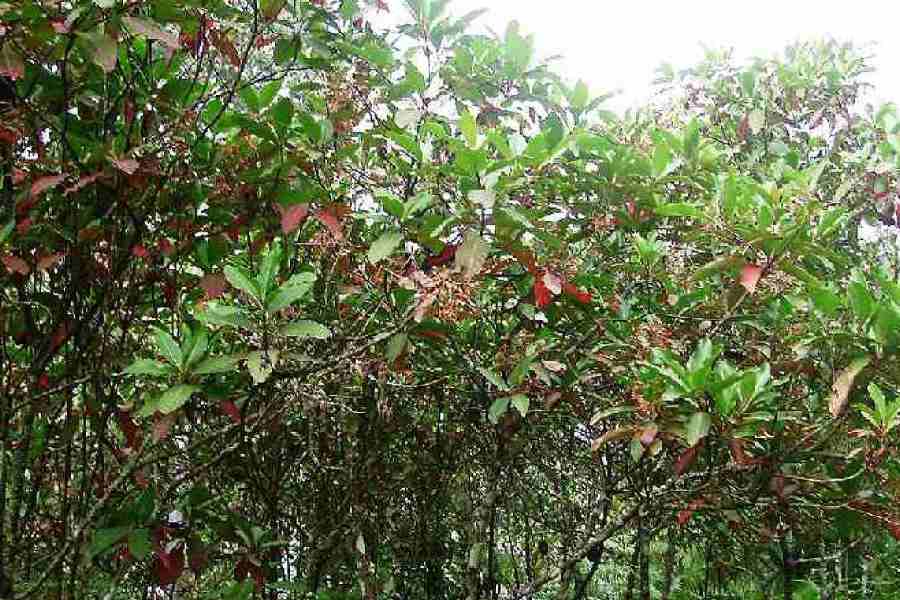
BJP MP Raju Bista on Monday promised land rights to workers living on the plantations of the Directorate of Cinchona and Other Medicinal Plants in the Darjeeling hills.
Around 6,000 workers are employed by the directorate, which also provides indirect sustenance to around 40,000 workers in the hills.
After attending the BJP’s victory rally in Kalimpong, Darjeeling MP Bista said: “Parja patta (land rights) will be given to cinchona garden workers.”
He also promised to abolish the “outdated Darjeeling Improvement Fund (that governs local markets (haat) in several locations of the Darjeeling hills) and development area system and issue raiyate patta (land documents)”.
“We will also implement the Forest Rights Act 2006 in letter and spirit,” said Bista.
Many hill residents do not have land rights. Efforts to provide land rights to tea garden workers didn’t take off in the hills because of various technical issues. However, the promise of land rights to cinchona plantation workers is likely to benefit hundreds of families in the hills.
The first plantation was set up at Mungpoo, about 30km from Darjeeling, in 1862. It was soon expanded to Munsong (1900), Rongo (1938) and Latpancher in 1943 and is currently spread over 26,000 acres.
Cinchona is grown on about 6,900 acres, while the rest is used for other medicinal plants like dioscorea and ipecac, as well as crops like rubber and cardamom.
“Although we have been staying on this land for generations, we, too, do not have land rights,” said a worker, who added that there was a furore in 2019 when the directorate tried to dismantle a house built under a central scheme.
However, unlike tea gardens, the cinchona plantation is run by its own directorate, which is under the state government.
“If we go back to history, we find that the forest department leased out land to the directorate for cinchona plantation,” said an official of the plantation.
Many plantation workers argue it would be easier for the state government to grant land rights to cinchona workers, as the entire land is under its possession.
Apart from housing, a cinchona worker has also been given a kitchen garden.
Bista also said he was pursuing a proposal to set up an Agricultural & Horticultural University in Kalimpong. “Further, Kalimpong will be developed as a major hub for floriculture and coffee,” he said.