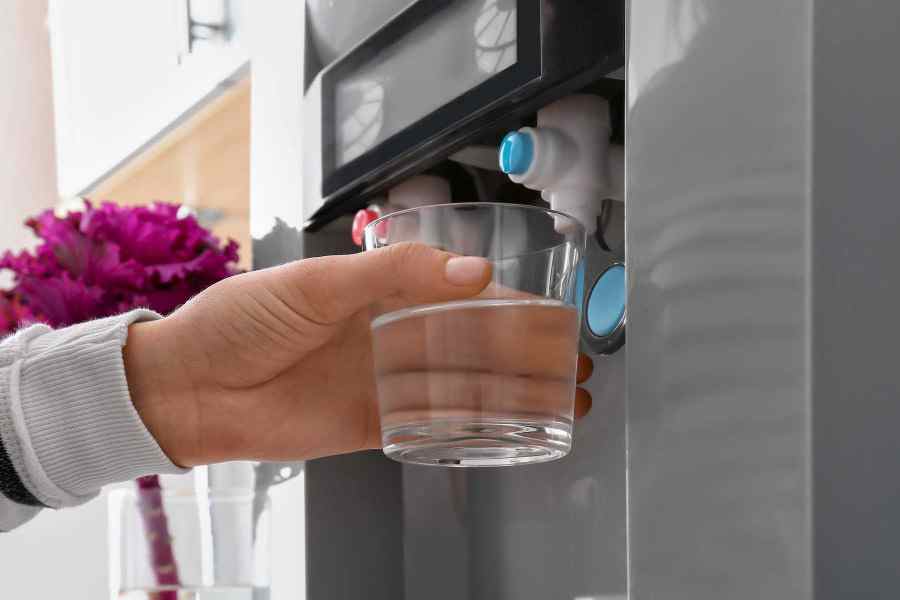
One in three drinking water samples collected from households using reverse osmosis (RO) filters contained E coli bacteria, researchers have found, highlighting how storage and handling practices can undermine the safety of treated water.
Scientists at the Indian Institute of Technology (IIT), Madras, and collaborators who analysed water samples from 216 households in Chennai equipped with RO filtration systems, detected E coli in 81 of 262 post-filtration drinking water samples.
While all sampled households were in Chennai, the researchers say the findings could have implications for urban households across India, where millions of families rely on RO filters but continue to store filtered water before consumption. The study suggests that contamination risks may persist even when purification systems function effectively if treated water is improperly handled after filtration.
The study, published this week in the Journal of Exposure Science and Environmental Epidemiology, indicates that contamination often occurs not during filtration but afterwards when treated water is transferred, stored, or handled inside homes.
“The RO filters are doing what they are designed to do,” Thalappil Pradeep, a professor of chemistry at IIT Madras who led the research, told The Telegraph. “But the filtration process alone cannot guarantee safe drinking water if the water is later stored or handled improperly.”
Pradeep conducted the research with environmental engineer Hadas Mamane, a professor at Tel Aviv University, and collaborators in Chennai and Exeter in the UK.
The contamination could have occurred after filtration, when the treated water came into contact with unclean storage containers or with untreated tap water. In many homes, filtered water may be stored in steel or plastic vessels that may remain uncovered or may not be cleaned thoroughly between uses.
Even small handling lapses can allow bacteria to re-enter the treated water. A storage container rinsed with untreated tap water before being filled with filtered water, for instance, could quickly compromise the benefits of purification.
E coli, a microbe commonly found in the intestines of humans and animals, is widely used as an indicator of faecal contamination in water. Some E coli strains can cause diarrhoea, vomiting, stomach cramps and, in severe cases, kidney complications. Children and the elderly are particularly vulnerable.
Most previous assessments of RO systems have focused on laboratory performance rather than on how filtered water is actually stored and consumed inside homes. The researchers said the results reveal a gap between the technical capabilities of purification systems and the realities of daily household use.
RO systems are common across Indian cities, where concerns over unreliable municipal supply, ageing pipelines and contaminated groundwater have fuelled demand for domestic filtration systems. In many urban households, water that passes through an RO filter is widely assumed to be safe for consumption.
The findings suggest that the assumption may not always hold.
The analysis also found a link between education levels and water quality,
indicating that awareness and maintenance practices may influence contamination risks.
E coli persisted in 36 per cent of post-RO samples from households where respondents had postgraduate education, compared with 83 per cent among respondents with lower levels of education.
The difference may reflect variations in hygiene practices, servicing frequency, and understanding of safe storage methods.
The study found that RO systems remained effective in improving other measures of water quality, including dissolved solids, turbidity, and hardness. The average water hardness after filtration, for example, declined from 0.69 parts per million to 0.08 parts
per million.