There are some afternoons on Park Street that feel less like a weekday and more like a film scene. The kind where sunlight slips through old glass windows, waiters glide between tables balancing sizzlers, someone orders another round “just because”, and suddenly a trumpet cuts through the chatter. At Trincas, that scene is no longer nostalgia. It is routine again.
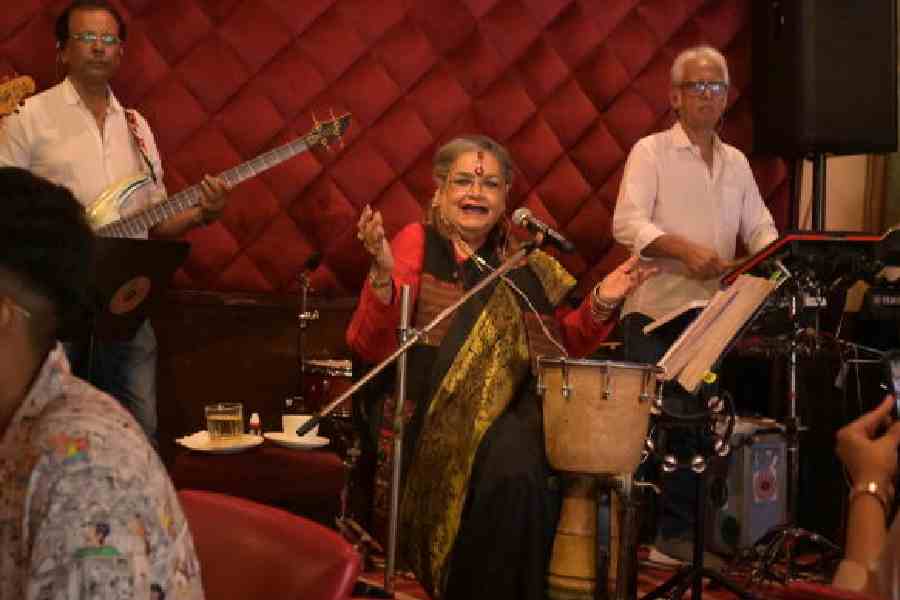
This week, we walked into the 99-year-old institution for the launch of Island Breeze, Trincas’s new weekday lunch band, and somewhere between the first notes of Sway and Usha Uthup belting out Ramba ho, it became impossible not to romanticise Calcutta a little.
The new lunch-hour format marks something bigger than just another live set. Trincas has officially restored a style of music programming that disappeared from Indian dining culture decades ago: four live music sessions a day, every day of the week, across four genres. In a time when most restaurants are busy curating playlists through Bluetooth speakers and algorithm-approved jazz loops, Trincas has decided to go gloriously analogue again. And honestly, the room feels alive because of it.
The launch afternoon had the sort of energy old Calcutta stories are made of. Glasses clinked, diners swayed in their seats, an old couple broke into a jive, familiar retro numbers floated through the room, and the crowd — a mix of loyal regulars, musicians and curious younger guests — seemed increasingly unwilling to leave after lunch hours were technically over.
Island Breeze, made up of emerging Calcutta musicians Arya Mukherjee, Aneesha Seth, Aditya Servaiia, Srinjoy Ghatak, Amir Rizvi and Surojit Basumallick, brought a breezy, holiday-esque sound to the room. Their set moved effortlessly between Latin rhythms, swing, reggae and bossa nova reinterpretations of familiar favourites. Valerie arrived dipped in Latin percussion, Hey Jude transformed into a bossa nova groove, while I’m Yours floated by with reggae ease.
The trumpet-heavy arrangements gave the performance a rich, brassy warmth — the sort of sound that makes you unconsciously tap the table with your fingers while pretending you are absolutely not dancing before dessert.
And then came the icon — Usha Uthup.
If Trincas is sacred ground for Calcutta’s live music culture, Usha is one of its most enduring legends. This is, after all, the very room where she made her live debut in 1969. Watching her return to that stage still feels oddly emotional, even for people born decades after her first performance there.
Draped in her signature glamour and carrying the kind of effortless charisma only she can summon, Usha transformed the launch into a proper Park Street party. She belted out crowd favourites like Ramba Ho and Darling, with diners enthusiastically singing along between bites and cocktails.
At one point during her set, she warmly brought the lead woman vocalist of Island Breeze on stage to sing alongside her — a gesture she later explained came from personal memory. “Nobody gave me a platform like this when I started. I didn’t have a godfather. I learnt by singing, by standing on stage every night. So whenever I see young talent, I want to give them space. Music grows only when you pass the mic,” Usha said.
The room erupted into applause.
Between songs, Usha also slipped into stories about the golden years of Park Street and the many legends who once passed through Trincas’s doors. “You have no idea what this place used to be. Sharmila Tagore would come here, Amitabh Bachchan would hang out here in his younger days, Jyoti Basu came here… everybody came to Park Street. Trincas was where Calcutta celebrated life,” she said, smiling at the memories.
She herself has performed here countless times across decades, watching generations of Calcutta audiences change while somehow remaining exactly the same in spirit: eager to sing along, eager to stay out a little longer than planned. That, perhaps, was the spirit of the afternoon more than anything else. Not nostalgia trapped in amber, but nostalgia being reworked, remixed and handed forward.
Trincas’s expanded music schedule now stretches from weekday lunch performances by Island Breeze to Hindi retro evenings, Western pop nights and Bengali rock and folk sessions at Tavern-Behind-Trincas. It is ambitious, almost stubbornly so, in the best possible way. Because restoring live music culture in 2026 is not exactly the easiest business decision. But Trincas has never really behaved like a place interested only in convenience. Usha Uthup will also perform at Trincas on May 29 alongside Island Breeze.
The return of all-day live music here feels significant. It is not merely about entertainment. It is about reclaiming the social theatre of dining out — where lunch stretches lazily into conversation, strangers clap for the same song, and musicians are not background noise but the reason the room breathes differently.
For a few hours that afternoon, Park Street felt gloriously like itself again.