Unconditional romantic love, if truth be told, is something of a non sequitur. Easier in fantasy than in real life.
That’s why unconditional romantic love works so well in fiction — think Sydney Carton from A Tale of Two Cities and his countless cousins in literature and cinema. You can also flex the emotion in love songs. Tum apna ranj-o-gham from the 1964 film Shagoon is one of the finest examples.
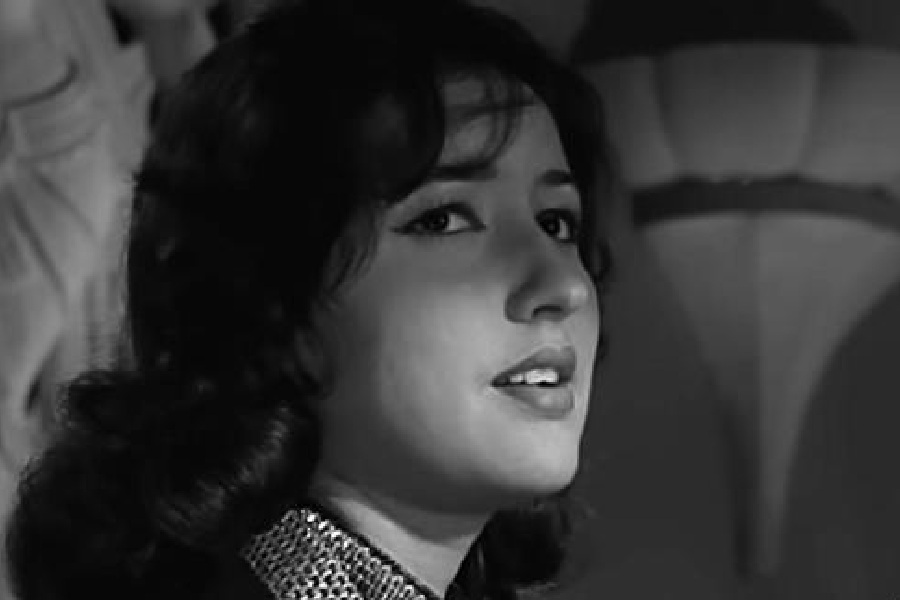
Shagoon, starring Waheeda Rehman, Kamaljeet, and Nivedita, and directed by Nazar, tanked at the box office. But its music, composed by Khayyam with lyrics by Sahir Ludhianvi, remains unforgettable.
And arguably, Tum apnaranj-o-gham, sung by Jagjit Kaur (1930-2021), Khayyam’s wife, is the jewel in the crown. Music lovers will know why. Khayyam marries the piano with Raga Pahadi and Kaur’s unconventional voice to create a ghazal of bruising beauty.
Sahir’s lyrics glow in Khayyam’s unfussy yet haunting melody:
Tum apna ranj-o-gham, apni pareshani mujhe de do;
Tumhe gham ki kasam, is dil ki veerani mujhe de do;
Yeh mana main kisi kaabil nahin hoon in nighahon mein;
Bura kya hai agar yeh dukh yeh hairani mujhe de do
(Give your pain and grief to me, Swear on grief and give your heart’s barrenness to me. I agree I am nothing in your eyes, but what’s the harm in giving your sorrows and worries to me?)
Lovers usually demand the beloved’s heart. Here, the lover desires her beloved’s barrenness, desolation and grief, knowing she is “nothing” in his eyes.
There’s a certain recklessness associated with a woman voicing such feelings, which are also infused with gravitas and a sad dignity. That’s perhaps why Khayyam picked Kaur to sing the song.
Kaur, Khayyam’s musical partner in the truest sense in their 65-year-old interfaith marriage, has sung too few songs in her long career, but her resume is immortal.
Tum apna ranj-o-gham apart, feel her magic in Ladi re ladi tujhse aankh jo ladi (Shola aur Shabnam, 1961), Kaahe ko byahe bides (Umrao Jaan, 1981), Dekhlo aaj hum ko jee bhar ke (Bazaar, 1982). She also helped Khayyam compose some of his finest music, such as for Kabhi Kabhie (1976).
Hers is a voice that defies stereotypes: warm with the aroma of Punjab’s soil, rain-drenched, and classically perfect. And yet, film heroines of her time were expected to conform to strict feminine stereotypes and lip-sync to crystal-clear, high-pitched playback voices. Bollywood, and perhaps even her husband Khayyam, didn’t know how to fully utilise Kaur’s voice.
Not just Kaur, in the decades that followed, singers like Usha Uthup, Alisha Chinai, Rekha Bharadwaj, Shilpa Rao and Sona Mohapatra remained underutilised. Stereotypes come with a long shelf life.
And yet, if you listen to Kaur, you remain hooked long after her song is over. Sometimes, the outlier is invincible.