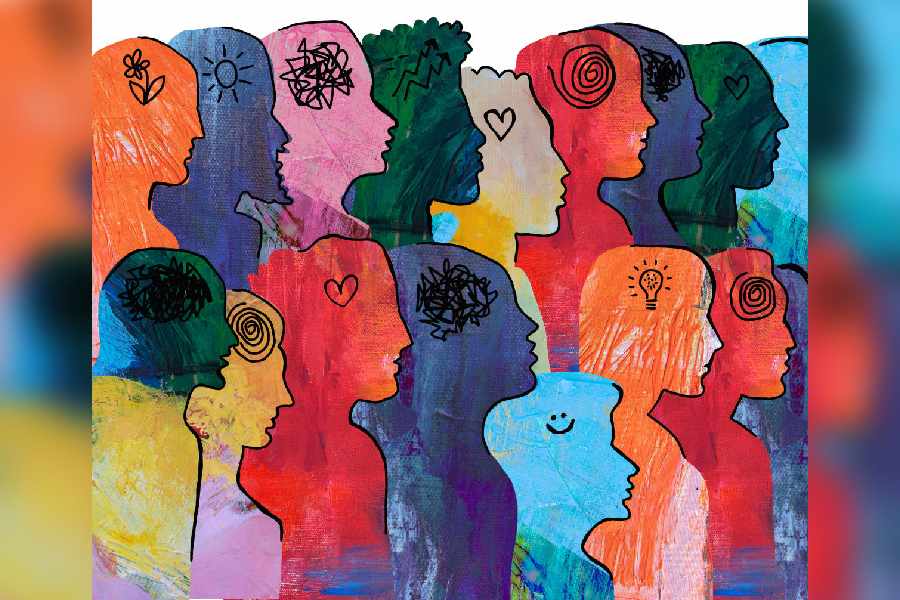
YOU MATTER. YOUR MENTAL HEALTH MATTERS.
At a recent interview, someone introduced me as a “physiotherapist”.
Did I feel offended? Honestly, no.
It was not the moderator’s fault. Mental health is still a subject that many people do not fully understand. Twenty years ago, when I chose this field, conversations around emotional well-being, therapy, psychiatry, or counselling were far less common than they are today. We have certainly come a long way, but we still have miles to go before mental health becomes truly understood, accepted, and normalised.
Sanjay (husband) was laughing heartily afterwards and said: “What are all these — physiotherapist, psychiatrist, psychologist? We don’t understand. There is so much confusion even inside your own home!”
That moment stayed with me. Not because it was embarrassing, but because it reflected something I encounter almost every day. People genuinely want help. Families want to support their loved ones. Friends want to guide one another. Yet there remains deep confusion about whom to approach, what different professionals actually do, and when one should seek help.
And honestly, I do not blame them. Mental health terminology can feel overwhelming. The words sound similar. The professions overlap at times. Social stigma and misinformation continue to cloud understanding. As a result, many people delay seeking help simply because they do not know where to begin.
But awareness begins with conversation. The more openly we talk about mental health, the easier it becomes to seek support without fear, shame, or hesitation.
What Is Mental Health?
Mental health is our emotional, psychological, and social well-being. It influences how we think, feel, behave, relate to others, handle stress, make decisions, and navigate everyday life. Mental health is not merely the absence of mental illness. It is a state of emotional balance and well-being.
Just like physical health, mental health exists on a spectrum. There are days when we feel emotionally strong and resilient, and there are times when stress, grief, uncertainty, or life experiences may overwhelm us.
Good mental health allows us to cope with the normal stresses of life, build healthy relationships, work productively, regulate emotions, adapt to change, and feel connected and purposeful. Yet, many people still view mental health only through the lens of severe psychiatric illness. That misunderstanding prevents countless individuals from seeking timely support.
Mental Health Is for Everyone
One of the biggest assumptions people make is that you have to be “seriously ill” before approaching a psychologist, psychiatrist, counsellor, or mental health clinic. This is completely untrue. You do not need to “break down” before asking for help.
You can seek support when you are mildly stressed, you are emotionally exhausted, you are struggling with relationships, you feel overwhelmed, you cannot focus, you are experiencing burnout, you feel emotionally confused, or you simply want clarity and self-understanding. Many people believe they need a diagnosis before seeking help. Others feel they should “manage on their own” unless things become unbearable.
But think about physical health. We do not wait for severe dehydration before drinking water. We do not wait for a fracture before caring for our bones. We do not wait for complete exhaustion before resting our bodies. Then why do we wait until emotional suffering becomes unbearable before caring for our minds? Mental well-being deserves preventive care too.
Mental health support can benefit students facing examination pressure, professionals experiencing burnout, homemakers carrying emotional overload, parents struggling with stress, couples navigating relationship difficulties, adolescents dealing with identity and emotional confusion, elderly individuals coping with loneliness, caregivers experiencing compassion fatigue, and individuals simply seeking personal growth and emotional insight. Seeking help is not a weakness. It is an emotional responsibility.
Why Is Mental Health Still Misunderstood?
Despite growing awareness, mental health remains surrounded by myths, fear, stigma, and misinformation. For generations, emotional struggles were often dismissed as “overthinking”, “attention-seeking”, “weakness”, “lack of willpower”, “bad upbringing”, and “mood swings”.
People were told “be strong”, “don’t cry”, “everyone has problems”, and “just stay positive”. While resilience is important, suppressing emotional pain does not heal it. Many people learn to survive emotionally rather than truly process what they feel. Over time, unaddressed stress may affect sleep, appetite, relationships, work performance, confidence, physical health, and overall quality of life.
The reality is simple. Mental health problems are human experiences, not character flaws.
Who Is a Psychiatrist?
Psychiatrists are medical doctors specialising in mental health. They usually complete an MBBS followed by MD or DNB in psychiatry. A psychiatrist can diagnose mental health conditions, prescribe medications, monitor medical and biological aspects of mental health, and help manage severe emotional or psychiatric symptoms.
They often support individuals experiencing severe depression, bipolar disorder, psychosis, panic disorders, suicidal thoughts, severe anxiety, sleep disorders, and emotional dysregulation. Contrary to popular belief, psychiatrists are not simply “medicine doctors”. Many also provide counselling, psychoeducation, and emotional guidance alongside medical treatment.
Who Is a Psychologist?
Psychologists are recognised mental health professionals trained in understanding human behaviour, emotions, cognition, and psychological functioning. They usually complete MA / MSc in psychology and often further specialised training such as MPhil, clinical training, and psychotherapy certifications.
Psychologists cannot prescribe medication, but use talk therapy and behavioural interventions, conduct psychometric assessments, and help individuals understand emotions, thoughts, and behavioural patterns.
They work with concerns such as stress, anxiety, depression, trauma, relationship issues, behavioural concerns, learning difficulties, emotional regulation, and self-esteem and identity concerns. Psychologists help people not only “cope” but also understand themselves more deeply.
What Are Psychometric Assessments?
Psychometric assessments are scientifically designed tools used to better understand a person’s emotional, behavioural, cognitive, and personality functioning. These are structured paper-and-pencil or digital assessments that help professionals gather objective psychological information. Importantly, psychometric assessments are not meant to judge, label, or criticise anyone. Their purpose is understanding, not labelling.
They may help evaluate personality patterns, anxiety levels, depression symptoms, emotional functioning, stress and coping styles, attention and concentration, learning abilities, behavioural concerns, and cognitive strengths and challenges.
These assessments often provide clarity for children facing academic struggles, adolescents with behavioural concerns, adults dealing with emotional confusion, families seeking guidance, and individuals unsure about their emotional difficulties.
Sometimes the assessment may indicate that therapy could help, psychiatric consultation may be beneficial, additional support services are needed, emotional reassurance and self-awareness are sufficient. Often, clarity itself becomes healing.
Pause. Breathe. Reflect.
Do we truly allow ourselves the time to pause and understand what we are feeling? Or have we become so consumed by routines, responsibilities, deadlines, expectations and survival that we continue moving through life without ever sitting quietly with ourselves? In today’s world, productivity is celebrated more than emotional well-being. People proudly say “I haven’t slept”, “I’m constantly busy”, “I don’t have time for myself”, and so on.
But somewhere amidst this endless rush, emotional exhaustion quietly accumulates. A homemaker may spend her entire day caring for everyone else while silently neglecting her own emotional needs. A professional may meet every deadline while internally struggling with anxiety and burnout. A student may appear successful outwardly while privately battling self-doubt and overwhelming pressure. An elderly parent may silently carry loneliness despite being surrounded by family. Many individuals become so accustomed to emotional burden that they no longer recognise they are struggling.
Stress and Unhealthy Coping
Stress today has become one of the greatest silent burdens of modern life. Many individuals seek temporary escape through smoking, alcohol or substance use, emotional withdrawal, overworking, excessive screen time, social isolation, and unhealthy eating habits. What initially appears to be “stress relief” slowly becomes an unhealthy coping mechanism.
According to the World Health Organization (WHO), tobacco-related illnesses continue to claim millions of lives globally each year. But emotional suffering itself also silently impacts lives in countless ways. Avoiding emotional pain does not heal it. Distraction is not the same as recovery. Temporary relief can never replace true emotional healing. This is where mental health professionals play an important role. With the right guidance, therapy, emotional support, and treatment, individuals gradually learn healthier coping strategies, emotional regulation, and self-awareness. People begin feeling emotionally lighter instead of emotionally burdened.
Mental Health Is Not “One Size Fits All”
Another major misconception is that therapy and medication are opposites. In reality, they often complement one another beautifully. Mental healthcare is highly individualised. Some individuals may benefit from therapy alone. Others may require medication support. And many may benefit from both therapy and psychiatric treatment together.
For example, a person experiencing severe anxiety, panic attacks, depression, or emotional dysregulation may initially require medical stabilisation through psychiatric care while simultaneously working with a psychologist or therapist to address emotional triggers, behavioural patterns, trauma, and coping skills. Healing is not about choosing one side. It is about receiving the right support at the right time.
The Importance of Early Intervention
Just as untreated physical illnesses may worsen over time, emotional pain also deepens when continuously ignored. Many people silently carry anxiety, fear, loneliness, shame, emotional exhaustion, trauma, grief, and hopelessness. For years, they have continued functioning externally while internally struggling. But suppressed emotions eventually affect physical health, sleep, appetite, productivity, relationships, confidence, parenting, decision-making and overall well-being.
Early intervention can prevent emotional struggles from becoming more severe. Seeking help early often means faster recovery, better coping, stronger emotional resilience, and improved quality of life.
How Will I Know If I Need Professional Help?
You may consider seeking professional support if your emotions feel overwhelming, you are unable to function healthily in daily life, stress is affecting your relationships or work, you feel persistently low or anxious, you are emotionally exhausted for prolonged periods, your sleep or appetite has changed significantly, you feel disconnected from life, and your distress continues for several weeks.
There is no “perfect threshold” for asking for help. If something feels emotionally difficult and is affecting your well-being, your feelings deserve attention.
Should I Consult a Psychologist or Psychiatrist First?
This is one of the most common questions people ask. The answer is simple. Start wherever you feel comfortable. For common emotional concerns such as stress, anxiety, confusion, relationship difficulties, or coping challenges, many people begin with a psychologist or counsellor. If symptoms appear more severe or require medical evaluation, a psychiatrist may become important. In reality, good professionals often work together and refer patients appropriately when needed. The most important step is not choosing “perfectly”. It is reaching out.
Who Is a Physiotherapist?
Physiotherapists are healthcare professionals trained in movement sciences, rehabilitation, and physical functioning. They usually complete Bachelor of Physiotherapy (BPT) and, often, Master of Physiotherapy (MPT) with specialisations in neurological rehabilitation, musculoskeletal rehabilitation, paediatric physiotherapy, sports rehabilitation and cardiopulmonary rehabilitation.
Physiotherapists treat conditions related to the muscles, bones, joints, nerves, movement, posture and physical functioning. They help individuals with pain, injuries, arthritis, post-surgical recovery, balance difficulties, walking problems, muscle weakness, and mobility challenges.
What Does a Paediatric Physiotherapist Do?
Paediatric physiotherapists work with children who may experience developmental delays, autism spectrum conditions, cerebral palsy, stroke, muscular dystrophy, Down syndrome, hypotonia and brain injuries. Their goal is to improve movement, mobility, balance, coordination, strength, and functional independence.
Physiotherapy is therefore not limited to “special needs”. It supports physical functioning and rehabilitation across many conditions and age groups. Sometimes physical conditions may also originate from neurological or brain-related causes, which is why physiotherapists may work alongside doctors, psychologists, occupational therapists, speech therapists, and other healthcare professionals as part of a multidisciplinary team.
Breaking the Silence Around Mental Health
Perhaps the biggest barrier in mental healthcare is silence. Many people continue suffering quietly because they fear judgement, rejection, shame, labels, and misunderstanding. But emotional pain does not disappear simply because we hide it. Conversations save lives, compassion heals and awareness empowers.
The more openly we speak about mental health, the more normal seeking help becomes for future generations. Mental health should never be treated as a taboo subject hidden behind closed doors. It is part of human life. Just as we care for the body, we must also learn to care for the mind.
Final Thoughts
Mental health is not about being “weak” or “strong”. It is about being human. Every individual experiences stress, emotional struggles, uncertainty, fear, disappointment, and vulnerability at different points in life. Seeking help does not mean you are failing. It means you are choosing healing.
The mind deserves the same compassion, attention, and care that we naturally offer the body. So pause occasionally. Breathe deeply. Reflect honestly. Listen to yourself gently.
And remember, you matter, your emotions matter, your healing matters and your mental health matters.
Dr Minu Budhia is a psychotherapist, founder of Carring Minds International, TEDx speaker, and author