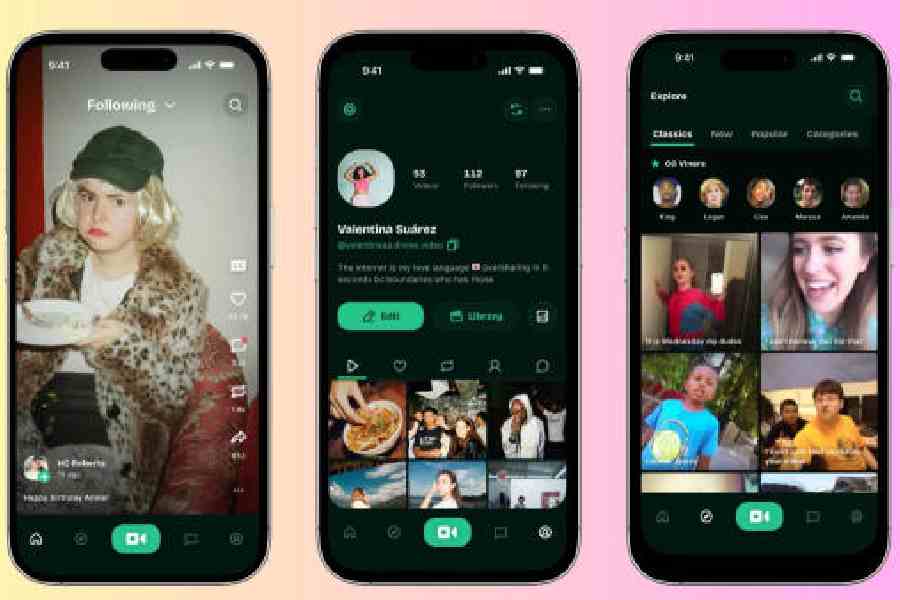
A crowning glory of the Twitter era was Vine, the short-form video app that challenged users to say something meaningful in just six seconds. Now, it is back — in a new form.
A new project called Divine is available on the App Store and Google Play. It offers access to an archive of around 500,000 Vine videos restored from a backup of the original service, and allows creators to post new Vines.
Former Twitter co-founder Jack Dorsey has offered grant funding for Divine through And Other Stuff, the collective he founded to “steward freedom tech” through open tools, protocols, and applications that strengthen human liberty.
“By bringing back Vine on a decentralised network, they are finally correcting every mistake,” said Dorsey. “It is no secret that we didn’t find a business model for Vine. A founding principle for Divine is that creators will always be in full control of their content and followers, enabling them to create and grow their own revenue streams. I anticipate that Divine will provide a host of tools and services to support the growth of the creator economy.”
Access is invite-only for now, with creators gradually bringing in friends and followers ahead of a broader rollout.
Vine boomed in popularity after its launch in 2013, quickly reaching 100 million monthly active users and helping launch the careers of influencers such as Logan Paul. Acquired by Twitter shortly after its creation, it was shut down in 2017 after the platform failed to find a sustainable business model.
Divine arrives at a moment when AI-generated content is flooding social media feeds. Video-editing company Kapwing surveyed 15,000 of the world’s most popular channels last year and found that 278 contained nothing but AI-generated content. More than 20 per cent of videos served by YouTube’s algorithm to new users were found to be AI slop.
The app is spearheaded by Evan Henshaw-Plath — known online as Rabble — a former Twitter employee who is keeping AI firmly out of Divine. It is being promoted as “a place for authentic, non-AI-generated media.”
“Divine began as a personal project to reconnect with a time when the internet felt creative, open, and unquestionably human,” said Rabble, the app’s founder. “The overwhelming response to our initial announcement has turned my side project into something of a movement. The app launch is less about nostalgia, and more an antidote to what social media has become.”
To enforce that ethos, Divine requires users to either record videos directly within the app or verify them as human-made using a dedicated verification tool.