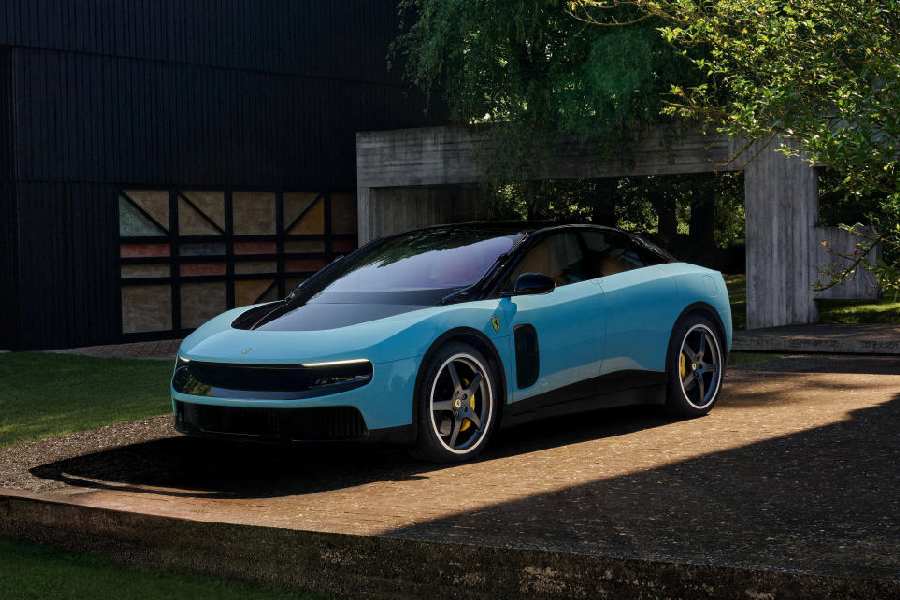
Former Apple design chief Jony Ive spent years conceptualising the iPhone. He also helped shape what a car from that same company might look like — a fully autonomous vehicle built around vast displays and an interior designed for relaxation rather than driving. Though that project was ultimately scrapped, many of its ideas live on. You can see them clearly in Ferrari’s new Luce (pronounced loo-chay) electric vehicle, designed, naturally, by Ive himself.
Ferrari says LoveFrom — the studio run by Ive and Marc Newson — was given the freedom to “define the design direction of the project from the outset,” inside and out. Given Ferrari’s near-mythical status among Formula One devotees, this is one of the most hotly anticipated unveilings of the year.
Named after the Italian word for light, the Luce arrives at a curious moment: electric vehicles have fallen out of favour in the US, yet Ferrari is pressing ahead, testing the appetite of the super-rich for battery power. It is a singular departure for a brand built over decades around the sound, sensation and raw theatre of the combustion engine. The starting price is roughly $640,000.
“We wanted to do what we hadn’t been able to do before,” said Ferrari chairman John Elkann.
The car leans heavily into tactile switches and physical controls, while featuring the milled aluminium components and leatherwork that have become hallmarks of Ive’s design language. He is dismissive of the assumption that electric must mean digital.
“For some reason, just because the power source is electric, there is some assumption that the interface should be digital. That’s a huge leap, and I think presumptuous,” Ive said. “When you are used to getting into a Ferrari and turning the key, you know that it’s the beginning of something significant — by what you hear and what you feel. It’s very clear. That was one of the things I had to be very honest about: the challenge is significant. We are, of course, trying to figure out ways of viscerally and physically connecting us to the car. Just as we did with the phone, my fascination is about how humanity connects with technology.”
Not mimicking the combustion engine was, for Ive, part of the appeal. “The easy, lazy thing to do is what people are familiar with. But I think consumers are really smart. They value what is authentic. They know when it’s fake.”
Ferrari believes luxury manufacturers previously struggled with EVs because they sold to collectors who wanted every model in their stable — but preferred driving a petrol car. Electric models would be quickly resold, eroding residual values. The Luce is aimed squarely at someone who already owns and enjoys an electric car.
For those who will miss the roar of a revving engine, Ferrari has an answer: a vibrating sound drawn from the electric motors, with components inspired by an electric guitar. It is an engineered sensation rather than incidental noise — and all the more deliberate for it.
The Luce is Ferrari’s first five-seater sports car, with a range of 530km. Despite its spaciousness and the considerable weight of its battery pack, the EV sprints from zero to 60 miles per hour in under 2.5 seconds, with a top speed exceeding 190mph. Power comes from four motors, one per wheel. The design, meanwhile, makes the car feel light and responsive — no small feat given the physics at play.
Ive’s love of glass is well documented, and Luce wears it proudly. The car’s upper half and many of its fittings are made from glass, much of it supplied by American glassmaker Corning. LoveFrom also worked on the interfaces that bridge digital and physical: a traditional steering wheel, knobs and levers sit alongside screens made from organic light-emitting diodes — which require no backlighting — lending the interior an unusually analogue quality.
Ferrari, whose clients have an average age of 52, says it is not targeting any specific demographic. But a sizeable share of Luce buyers are expected to be first-timers, potentially including a younger generation drawn to the brand on new terms.
In 2024, Ferrari opened a roughly $230 million factory at its Maranello headquarters, built to produce EVs alongside hybrids and traditional petrol models. By 2030, the company aims for a lineup comprising 40 per cent combustion engines, 40 per cent hybrids and 20 per cent fully electric. Ferrari is doing something it has rarely had to do: convince the world it can reinvent itself without losing its soul.
A FEW JONY IVE DESIGNS
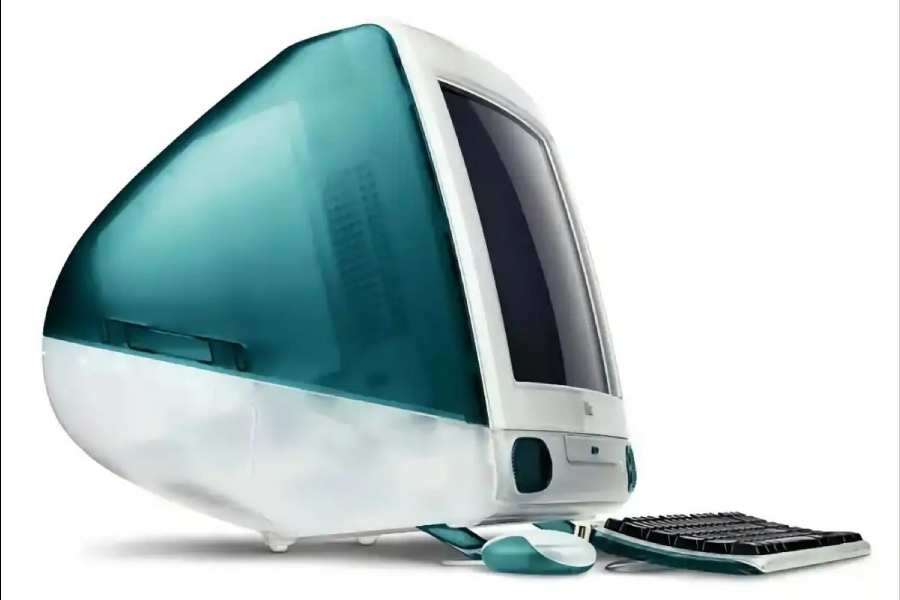
iMac G3: In a dull world where almost all computers looked the same, he decided that colour was the answer.
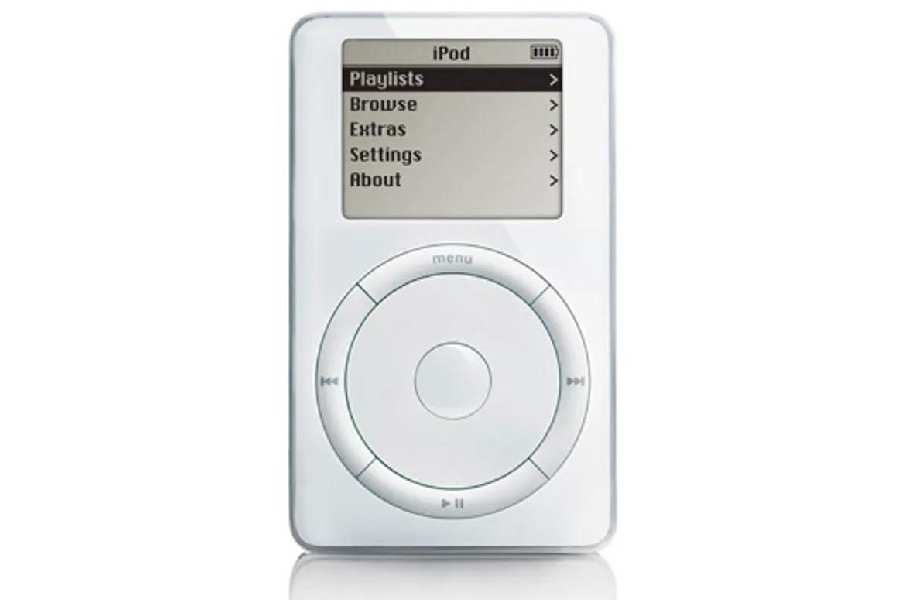
iPod: It wasn’t the first MP3 player, but the simple design and user interface made it fun to use
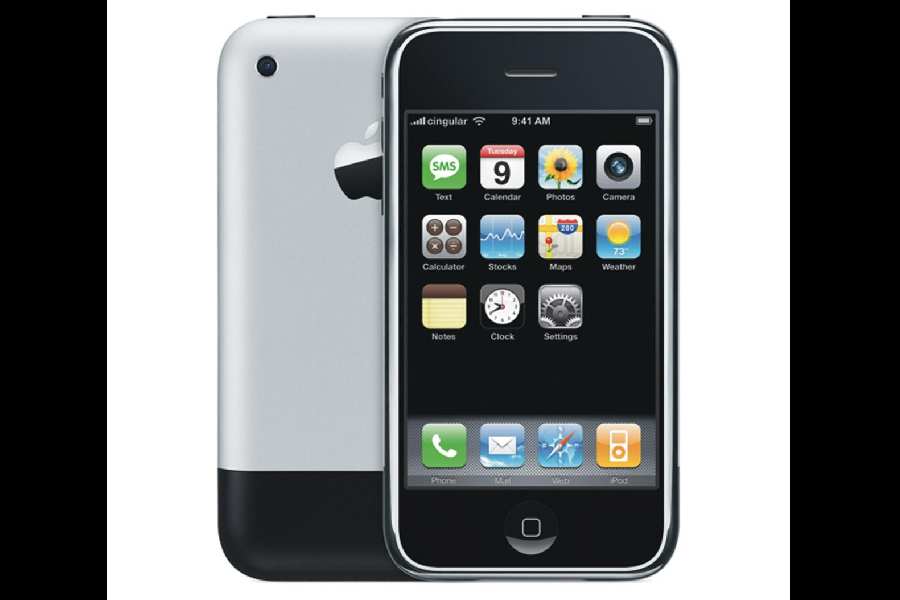
iPhone: Perhaps no other tech device has had more of an impact than the iPhone
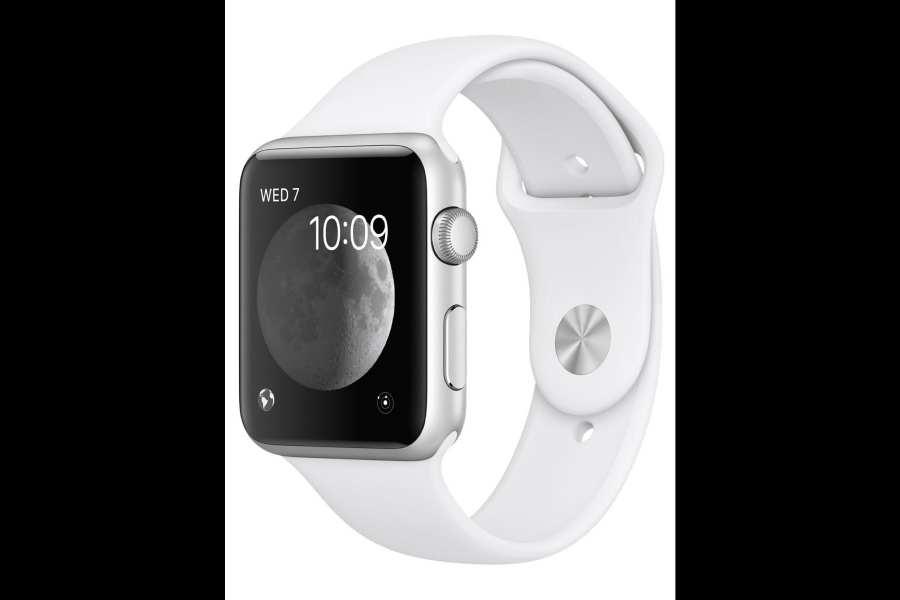
Apple Watch: Making its debut in 2014, it featured a stainless steel body, a rectangular display, a digital crown and swappable bands.
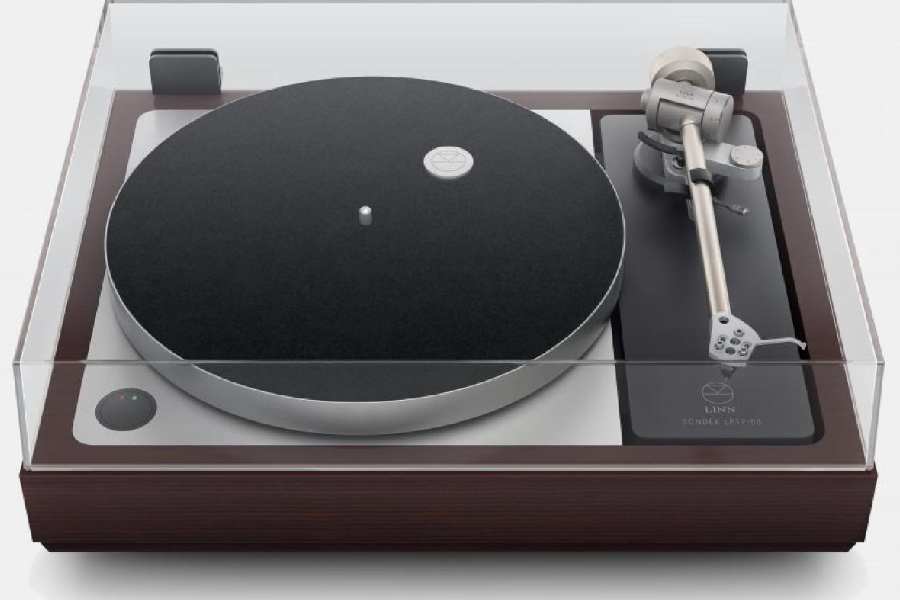
Linn Sondek LP12 turntable: LoveFrom updated the Linn Sondek LP12 for the turntable’s 50th anniversary, making a series of subtle interventions described by Ive as “respectful and gentle”.

King Charles III’s coronation emblem: The design depicted a crown formed of the national flowers of the UK’s four nations — an English rose, a Scottish thistle, a Welsh daffodil and a Northern Irish shamrock.
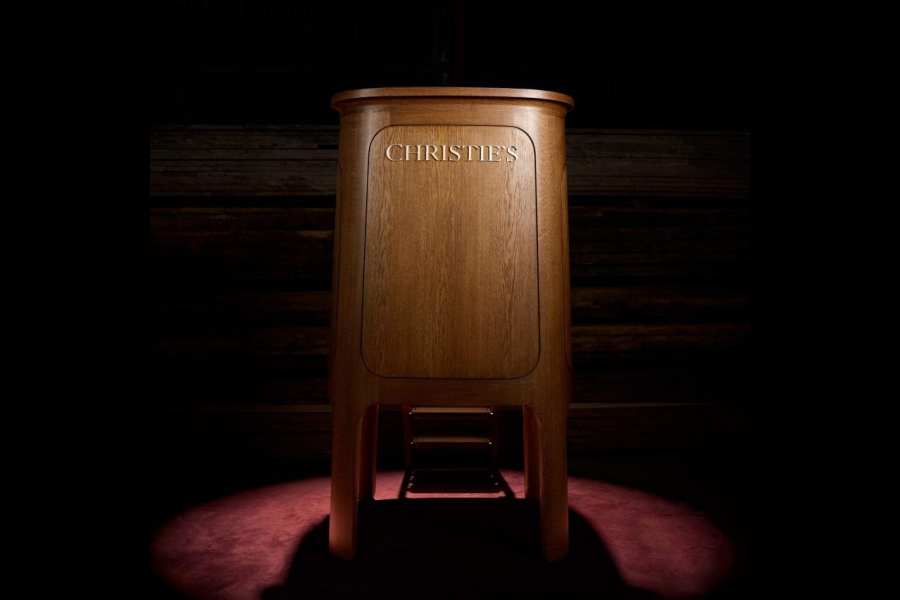
Christie’s rostrum: It replaced a Thomas Chippendale design used since 1776. The original was lost in 1941 when a bomb struck the HQ during the Blitz.